
Big-screen monitors change the feel of a desk fast. You get room for side-by-side windows, cleaner multitasking, and a far easier time keeping games, creative tools, and reference material visible without constant tab switching.
This roundup focuses on wide-format displays and large curved panels that suit home offices, gaming setups, and shared work areas. You’ll see where each pick earns its keep, and where a smaller, simpler screen still makes more sense.
The Shortlist At A Glance

INNOCN 49C1R Curved Ultrawide Monitor

Amazon Basics 24-inch Full HD IPS Monitor

INNOCN 40C1R Ultrawide Monitor 40-inch

Samsung 57-inch Odyssey Neo G9 (G95NC)

INNOCN 49Q1R QD-OLED Ultrawide Monitor
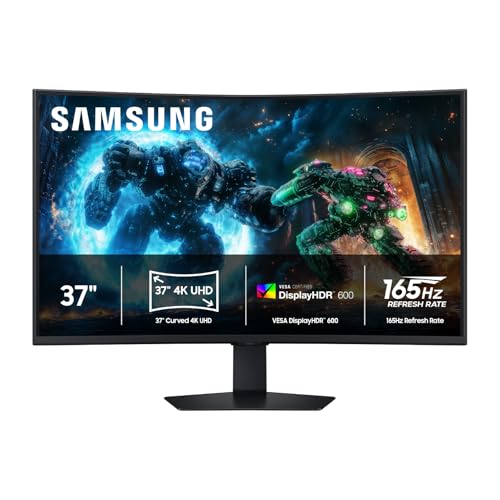
Samsung 37-inch Odyssey G7 (G75F)

Samsung 40-inch Odyssey G7 (G75F)
More Details On Our Top Picks
A 49-inch ultrawide like this gives you a wide, uninterrupted desk view without forcing you into a two-monitor setup. The 32:9 shape helps when you keep a spreadsheet open beside reference windows, or when you want a wide game view without a bezel in the middle.
The 5120 x 1440 resolution is the key detail here, because it keeps text and interface elements crisp across that wide panel. The trade-off is obvious, though, it asks for plenty of desk depth and a GPU that can keep pace, so this makes the most sense for a roomy setup rather than a cramped corner.
Strong Points
- 5120 x 1440 resolution gives you a lot of usable desktop space.
- The 32:9 layout suits side-by-side work without a second screen.
- USB-C, DisplayPort, and HDMI make source switching easier.
- Height and tilt adjustment help you line up the panel more naturally.
- Built-in speakers keep the desk setup a little cleaner.
Things To Consider
- The sheer width takes planning, especially on shallower desks.
- Curved ultrawides can feel oversized for everyday office layouts.
- Built-in speakers usually cover basic sound, not a full media setup.
Feature Snapshot
Who It Suits Best
You’ll get the most out of this pick if you want one screen for both productivity and gaming on a full-size desk.
A Better Fit Elsewhere
Samsung 40-inch Odyssey G7 (G75F) suits competitive gamers who want a faster-feeling ultrawide without going as physically large.
This one keeps things straightforward, which is useful on a home office desk where you just need a dependable screen for mail, documents, and video calls. The 24-inch size is easy to place, and the IPS panel, meaning in-plane switching for wider viewing angles and steadier color, helps the screen stay readable from off-center positions.
Unlike the bigger ultrawides in this roundup, it stays compact and uncomplicated. That makes it a smart fit for smaller desks, secondary workstations, or anyone who wants less setup fuss and more predictable behavior from day to day.
What We Like
- 24-inch footprint fits small desks and shared rooms well.
- IPS panel helps color stay more consistent from angles.
- HDMI, DisplayPort, and VGA cover older and newer devices.
- The adjustable stand helps with basic ergonomic setup.
Small Caveats
- 75Hz is fine for casual motion, but it’s not built for serious gaming speed.
- Full HD on 24 inches is practical, though not especially spacious for multitasking.
- Built-in speakers tend to be serviceable rather than rich.
At A Glance
Who Will Love This
You’ll appreciate this most if your setup needs a compact office monitor with flexible input options.
Another Choice May Suit
INNOCN 40C1R Ultrawide Monitor 40-inch fits home multitaskers who want a much wider workspace than a basic 24-inch screen can offer.
Compared with the larger 49-inch INNOCN above, this 40-inch model feels easier to place while still giving you that wide 21:9 canvas. The 3440 x 1440 resolution is a good middle ground for people who want room for editing timelines, documents, or game HUDs without jumping to a giant panel.
The IPS panel and 500-nit brightness point to a display that should feel comfortable in brighter rooms, while FreeSync Premium helps smooth out compatible gaming motion. It makes sense for mixed-use setups where a single display needs to handle work during the day and games later on, though the true ultrawide format still asks for a desk with decent width.
Bright Spots
- 21:9 shape gives you more horizontal room than a standard monitor.
- 144Hz support keeps fast motion feeling responsive.
- 95% DCI-P3 coverage is useful for color-aware creative work.
- USB-C, HDMI, and mounting support add setup flexibility.
- Tilt, swivel, and height adjustment help with longer sessions.
Points To Note
- The width is manageable, but still bigger than a typical office screen.
- Ultrawide layout can leave some apps stretched unless you manage windows carefully.
- Built-in audio usually serves as backup sound rather than your main system.
Details At A Glance
The Right Fit
You’ll get the most from this model if you want one screen for productivity, creative work, and casual gaming on a normal-sized desk.
Swap It Out When
Samsung 57-inch Odyssey Neo G9 (G95NC) suits high-end gaming spaces where sheer scale matters more than desk economy.
This is the kind of monitor that changes the whole desk, and the 57-inch size makes that clear before you even get to the specs. Dual 4K means the panel packs a very large amount of workspace into one curved surface, which helps when you want multiple windows open without stacking them too tightly.
The 1000R curve, a tight radius that wraps the screen closer to your field of view, is part of the appeal, especially for racing, flight sims, and other immersive games. The honest read is that this is not a casual fit, though, because the size, power, and desk demands make it best for serious setups with room to spare.
Upsides
- 57-inch size gives you a dramatic amount of screen real estate.
- Dual 4K resolution keeps the massive canvas detailed.
- 240Hz and 1ms response time suit fast gaming motion.
- DisplayPort 2.1 supports modern high-bandwidth connections.
- Quantum Mini-LED and DisplayHDR 1000 point to strong contrast and bright highlights.
Areas To Watch
- The footprint is large enough to require serious desk planning.
- Its scale can feel excessive for office-first use.
- Premium gear like this usually calls for a correspondingly strong PC.
Core Details
Best Suited To
You’ll appreciate this most if your desk is built around high-end gaming and you want a screen that feels almost wraparound.
Reach For A Different Pick When
INNOCN 49C1R Curved Ultrawide Monitor is the easier call for anyone who wants a wide setup without committing to this much physical scale.
QD-OLED, which combines quantum dot color tuning with OLED-style contrast behavior, is the headline feature here. In plain use, that means you’re looking at a panel built for deep blacks, punchy color, and a very fast-feeling image, which makes it a strong fit for games, media work, and anyone who stares at a screen for long stretches.
Compared with the INNOCN 49C1R, this one adds more premium display tech and a broader feature set, including KVM, picture-in-picture, picture-by-picture, and a 90W USB-C connection. The catch is that all that flexibility makes it better for enthusiasts who will actually use those extras, not just for someone who wants a basic large monitor.
Best Bits
- QD-OLED panel promises excellent contrast and vivid color.
- 5K2K resolution delivers a very detailed widescreen canvas.
- 90W USB-C can simplify laptop docking on a single cable.
- KVM, PIP, and PBP help you manage multiple devices.
- Adaptive-Sync and 144Hz support suit fluid gaming.
Trade Offs
- The feature list is broad, which adds setup choices you may not need.
- Like most large ultrawides, it asks for generous desk width.
- The menu and input setup can take a little more time at first.
Feature Rundown
Who Should Grab It
This is a strong match for creators and gaming enthusiasts who want premium contrast plus serious connectivity in one display.
Look Elsewhere When
Amazon Basics 24-inch Full HD IPS Monitor is easier to live with for simple office work and smaller desks.
The 37-inch size makes this easier to place than the giant Samsung 57-inch model, yet it still gives you a curved 4K gaming surface with serious motion support. For a smaller desk or a room where you want the screen to stay visually contained, that balance can feel much more livable.
VESA DisplayHDR 600 points to stronger highlight detail than a plain SDR display, while the 165Hz refresh rate and 1ms response time suit faster play. The main trade-off is simple, it offers less sheer horizontal space than the ultrawide picks, so it’s better for focused gaming than sprawling multitasking.
Reasons To Buy
- 37-inch form factor keeps the setup more manageable.
- 4K resolution provides clean detail for games and desktop use.
- 165Hz and 1ms support quick-feeling motion.
- Curved shape helps the image feel more immersive.
Minor Gripes
- The screen is still substantial, so desk depth matters.
- It gives you less spread than a 49-inch ultrawide.
- Premium gaming features can feel like overkill for basic office tasks.
Quick Facts
Built With In Mind
You’ll like this most if you want a curved gaming monitor that fits a tighter room but still feels premium.
Where A Sibling Pick Shines
Samsung 40-inch Odyssey G7 (G75F) gives you more horizontal workspace if your desk can handle a wider ultrawide.
This one sits in a useful middle lane, because the 40-inch size feels easier to manage than the 57-inch Neo G9 while still giving you a broad ultrawide view. The 180Hz refresh rate is a notable step up over the 165Hz Samsung above, so fast-moving games should feel a little more immediate on the screen.
It keeps the same 1000R-style immersive curve and DisplayHDR 600 support, which helps it feel like a serious gaming panel rather than a general office screen. The trade-off is that ultrawide layout planning still matters, so it suits desks with enough width to let that extra span breathe.
Positives
- 40-inch size offers a strong balance of scale and manageability.
- 180Hz refresh rate is excellent for fast-paced gaming feel.
- 4K ultrawide format gives you extra horizontal room.
- DisplayHDR 600 adds more depth in compatible content.
Worth Noting
- It still needs careful desk planning because of its width.
- Ultrawide desktop layouts work best with good window management.
- Premium motion features matter most for gaming, less for basic admin work.
Feature Card
Whose Shelf It Belongs On
You’ll get the best fit here if you want a fast ultrawide monitor for gaming with enough presence to feel special, but not so much scale that it dominates the room.
Skip It When
Amazon Basics 24-inch Full HD IPS Monitor is the easier route for simple workstations, school desks, and smaller spaces.
What To Weigh Before You Choose A Large Monitor
Where Shoppers Go Wrong
Screen size gets the headline, but desk depth and cable reach do the real work. A 49-inch or 57-inch panel can feel awkward fast on a shallow desk, especially once you add a keyboard, speakers, and a laptop stand.
Resolution matters just as much. A wide screen with too little pixel density can make text look rough, while a high-resolution ultrawide can look excellent but ask more from your graphics hardware.
When Paying More Pays Off
Higher-tier models usually spend the extra money on panel tech, faster motion support, and stronger HDR performance. That shows up in contrast, color depth, and how clean fast games feel across a wide span.
The upgrade also makes sense when you need better connectivity, such as USB-C power delivery, KVM switching, or multiple input modes for work and play. For a shared creative or gaming desk, those extras can save more time than they cost.
Frequently Asked Questions
Are 70 Inch Monitors really useful for work?
They can be, especially for spreadsheet-heavy jobs, editing, or side-by-side app use. The key is having enough desk depth to keep the panel at a comfortable distance.
Do ultrawide monitors replace dual screens?
For many setups, yes, because a 32:9 or 21:9 display can hold multiple windows without a center bezel. The trade-off is that some people still prefer separate screens for clearer app separation.
Is a curved screen better for gaming?
A curve can make a large display feel more natural in front of you, especially on wider panels. The benefit is most noticeable on immersive games and long play sessions.
What refresh rate should you look for?
For casual use, 75Hz or 120Hz is plenty. Fast gaming setups usually feel better at 144Hz, 165Hz, 180Hz, or higher.
Which size is easiest to fit on a normal desk?
The 37-inch and 40-inch picks are the easiest here to place without taking over the room. The 49-inch and 57-inch options need much more space and a stronger stand plan.
