
27-inch OLED gaming monitors sit in a useful middle zone: large enough for sharp QHD detail, small enough to keep fast motion centered. You notice the difference most in dense action games, late-night desk setups, and console-friendly rooms where desk depth matters. The seven picks below separate high refresh speed, panel type, stand adjustments, and console support so you can match the screen to your play style instead of guessing from a spec sheet.
Quick Look At The Shortlist
Samsung Odyssey OLED G5 (G50SF) QD-OLED Monitor
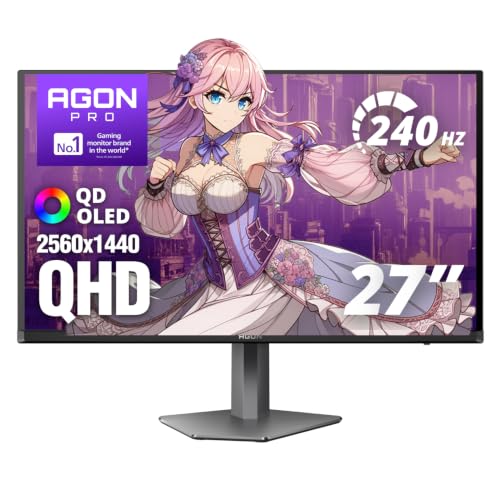
AOC Agon Pro 27 Inch Gaming Monitor QD OLED AG276QZD2

ASUS ROG Strix 26.5” 1440P QD-OLED Gaming Monitor XG27ACDNG

LG 27GS93QE Ultragear OLED Gaming Monitor

ASUS ROG PG27AQDP 27 Inch 1440p 480Hz OLED Gaming Monitor

Samsung Odyssey G5 (G51F) QHD Gaming Monitor

AOC 27″ Gaming Monitor QHD 240Hz QD OLED Q27GAZD
More Details On Our Top Picks
This Samsung keeps the pitch focused on motion and panel quality, which suits you well in twitchy shooters and action-heavy games. QD-OLED means quantum dot OLED, a panel approach that pairs OLED contrast with vivid color output, so dark scenes hold shape instead of turning muddy. The trade-off is simple, this model leans hard into gaming first, not desk extras.
Compared with the AOC AG276QZD2 below, it trims back the extras and stays more direct. The 180Hz refresh rate and 0.03ms gray-to-gray response time line up with fast desktop play, and that speed feels better suited to a clean, uncluttered setup than a do-everything station. For daily gaming at a single PC, that focus makes sense.
Strong Points
- QD-OLED panel gives deep contrast and vivid color separation for dark game scenes.
- 180Hz refresh keeps motion fluid for competitive PC play.
- 0.03ms gray-to-gray response suits fast camera movement and quick target swaps.
- Samsung’s 27-inch size stays comfortable on a standard desk without crowding your keyboard space.
Things To Consider
- It does not lean on extras like built-in speakers or a height-adjustable stand in the supplied details.
- QD-OLED owners commonly keep brightness and static HUD habits in mind during long sessions.
Feature Snapshot
Who It Suits Best
You get the most from this pick in a focused PC gaming setup where speed and image depth matter more than desk-oriented extras.
A Better Fit Elsewhere
The LG 27GS93QE suits you better when you want a more rounded stand arrangement and a slightly calmer all-purpose setup.
The AOC Agon Pro feels built for someone who wants speed and a few quality-of-life touches in the same frame. At 240Hz, it steps up from Samsung’s 180Hz pacing, and the height-adjustable stand matters more than it sounds when your chair, desk, or console position changes during the week. Built-in speakers also make it easier to keep a cleaner desk, though external audio still has the edge for most setups.
True Black 400 refers to an HDR certification tier aimed at stronger highlight and shadow handling, so it gives you a more convincing HDR target than plain SDR monitors. Compared with the Samsung G5 above, this AOC is the more desk-friendly all-rounder, especially for users who want the screen to adapt to the room instead of asking the room to adapt to the screen.
What We Like
- 240Hz refresh rate leaves extra headroom for high-frame-rate PC gaming.
- Height adjustment makes ergonomic placement easier across long sessions.
- Built-in speakers reduce accessory clutter on a smaller desk.
- True Black 400 support gives HDR content a more layered look.
- VESA mounting support helps you move the panel onto an arm or wall bracket.
Softer Spots
- Built-in speakers are convenient, but many gaming setups still rely on separate audio gear.
- The more feature-heavy frame can make cable routing a little busier than the Samsung G5.
Details At A Glance
Right Fit For
You suit this monitor well if you want a fast OLED panel with practical stand adjustments and a cleaner desk setup.
Where A Sibling Pick Shines
The ASUS ROG PG27AQDP works better for esports-first users who want an even higher refresh ceiling and are willing to pay for it.
The ASUS ROG Strix leans hardest into raw speed, and the 360Hz ceiling puts it in a different lane from the first two picks. A custom heatsink is there to help manage heat buildup, which matters on OLED panels where sustained output can be part of the conversation. You may appreciate that extra engineering more than the average gamer, especially in long sessions where consistency matters.
The 26.5-inch size is slightly smaller than the usual 27-inch label, but in practice it still sits in the same desk-friendly zone. Compared with the AOC Agon Pro, this ASUS trades built-in speakers and a height-adjustable stand for a more aggressive performance focus. It’s the sharper choice for serious esports play, though the lean feature set is a fair trade-off.
Upsides
- 360Hz refresh rate gives you headroom for ultra-fast competitive gaming.
- 0.03ms response time supports crisp transitions in flick-heavy play.
- Custom heatsink adds a practical thermal-management advantage.
- 99% DCI-P3 coverage points to wide color output for games and media.
- DP 1.4 and HDMI 2.1 broaden compatibility with modern PCs and consoles.
Areas To Watch
- The performance-first design leaves less emphasis on comfort extras like built-in audio.
- At this level, you need a strong PC to make use of the refresh headroom.
Core Details
Built With In Mind
You’ll get the most from this monitor in a high-frame-rate setup where every bit of speed matters more than extras.
Another Choice May Suit
The LG 27GS93QE suits you better if you want a similar gaming focus with a more balanced stand and a slightly less aggressive tuning.
The LG 27GS93QE reads like the practical middle ground in this group. You still get 240Hz OLED speed, but the included tilt, height, and pivot stand adds the kind of desk flexibility you notice on long workdays that turn into gaming nights. Pivot means the screen can rotate to portrait orientation, which is handy for coding, chat windows, or long documents.
Compared with the ASUS Strix above, this LG feels less extreme and easier to live with. HDMI 2.1 and DisplayPort make it straightforward to connect modern gear, while FreeSync Premium Pro and G-SYNC support help it fit into mixed AMD or NVIDIA setups. That’s the sort of balance that tends to age well in a home office or shared game room.
Bright Spots
- 240Hz refresh is quick enough for demanding play without pushing into ultra-premium territory.
- Tilt, height, and pivot adjustments make it easier to fit different desks and seating positions.
- FreeSync Premium Pro and G-SYNC support give you flexible GPU pairing.
- DisplayHDR True Black 400 points to stronger HDR handling than plain SDR panels.
Minor Gripes
- The feature balance is sensible, though it lacks the flashier extras found on the ASUS ROG lineup.
- Pivot is useful, but it also means you’ll spend a little more time positioning the stand.
Feature Rundown
The Right Fit
You’ll likely prefer this LG when you want a gaming monitor that also handles daily desk use without much fuss.
Swap It Out When
The Samsung Odyssey OLED G5 makes more sense for a simpler, more direct gaming-first setup with fewer moving parts.
This ASUS sits at the far end of the speed spectrum in this group, and the 480Hz refresh rate is the headline reason. WOLED, or white OLED, uses a different panel structure from QD-OLED and can appeal to users who care more about motion speed than color-pop styling. The custom heatsink and 0.03ms response time round out a spec sheet that clearly aims at high-end esports desks.
Compared with the ASUS Strix XG27ACDNG, this model pushes refresh even harder while keeping the same gaming-first tone. The honest read is that most setups will not fully exploit 480Hz, so this is a niche choice unless your PC, games, and habits are already at that level. For the right rig, though, it’s a serious step up.
Reasons To Buy
- 480Hz refresh is built for extremely fast competitive play.
- 0.03ms response time helps preserve clarity during sharp transitions.
- Custom heatsink supports sustained gaming sessions.
- True 10-bit color and 99% DCI-P3 give it media-friendly color depth.
- G-SYNC compatibility helps smooth out tear-prone gameplay on NVIDIA systems.
Points To Note
- The speed ceiling is impressive, but only certain PCs will make full use of it.
- Like other OLED panels, careful desktop habits still make sense over long ownership.
Quick Facts
Whose Shelf It Belongs On
You’ll appreciate this monitor most in a high-end gaming room where refresh rate is a priority, not an afterthought.
Reach For A Different Pick When
The LG 27GS93QE fits better for a more balanced gaming setup that still feels premium but asks for less from the rest of your system.
The Samsung Odyssey G5 (G51F) keeps the formula more straightforward than the OLED models above. You get 180Hz, a 1ms response figure, HDR10 support, and a height-adjustable stand, which makes it a sensible route for mainstream PC gaming without moving into premium panel pricing territory. Black Equalizer and Virtual Aim Point are the sort of game-side tools that can help you stay oriented in darker scenes.
Auto Source Switch+ is useful for anyone who flips between a PC and a console or multiple inputs on the same desk. Compared with the LG 27GS93QE, this Samsung is less about panel refinement and more about practical features you can feel in everyday use. It’s not as flashy, but the honest read is that many setups need exactly that.
Positives
- 180Hz refresh rate supports smooth play for most mainstream gaming rigs.
- Height adjustment makes day-to-night desk changes easier.
- Black Equalizer can make darker game scenes easier to read.
- Virtual Aim Point adds a simple targeting aid for casual competitive sessions.
- Auto Source Switch+ helps reduce input swapping friction.
Small Caveats
- It is more feature-practical than premium, so image depth is not the main attraction here.
- Those extra game tools are useful, but not everyone will use all of them regularly.
Feature Card
Made For
You fit this monitor well if you want a no-drama gaming screen with useful on-screen tools and a flexible stand.
Where Shoppers Go Wrong
The ASUS PG27AQDP is the better route for users chasing extreme refresh rates and a more premium performance ceiling.
The AOC Q27GAZD is a sensible final pick for smaller desks because it keeps the panel story focused and the connection set simple. You get QHD at 240Hz, G-SYNC compatibility, 0.03ms response time, and VESA support, which leaves you room to mount it or keep the stand footprint tidy. HDMI 2.0, DisplayPort 1.4, and an earphone output make it easy to wire into a PC or console corner.
Compared with the larger-featured AOC Agon Pro, this model trims back the extras and feels more compact in spirit. Console Ready is helpful language here, since the input mix makes the setup easier to adapt across devices. That said, the leaner port and feature mix makes more sense for a streamlined gaming station than a media-heavy desk.
Best Bits
- 240Hz refresh gives you plenty of motion smoothness for fast games.
- QHD resolution keeps the 27-inch size sharp without overloading your GPU.
- VESA support opens the door to arm or wall mounting.
- Earphone output helps keep audio routing simple on a compact desk.
- Console Ready support broadens its use across gaming devices.
Trade Offs
- HDMI 2.0 is less future-flexible than the HDMI 2.1 found on some rivals.
- It feels leaner than the Agon Pro, so you give up some convenience extras.
Core Details
Who Should Grab It
You fit this monitor best if you want a compact 27-inch OLED-style gaming setup that stays tidy and easy to place.
Look Elsewhere When
The AOC Agon Pro AG276QZD2 is the better fit for you if built-in speakers and a height-adjustable stand matter more than compactness.
How To Choose The Right 27 Inch Oled Gaming Monitors
Panel Type And Motion Speed
QD-OLED and WOLED both sit under the OLED umbrella, but they do not behave the same way in a spec sheet. QD-OLED usually aims for vivid color and strong contrast, while WOLED often appeals to users who want a different panel structure tied closely to motion-first tuning. For fast shooters and fighting games, refresh rate and response time matter just as much as the panel label.
That’s why 180Hz, 240Hz, 360Hz, and 480Hz matter as much as the word OLED itself. Higher refresh rates can make the image feel more fluid when your PC can feed them, though the payoff drops if your hardware cannot keep pace. You want the monitor to match your frame delivery, not fight it.
Stand Adjustments And Desk Fit
On a 27-inch display, stand flexibility changes how comfortable the whole setup feels. Height adjustment helps line the panel up with your eyes, tilt changes the viewing angle, and pivot lets the screen rotate for portrait use or narrow work tasks. Those details sound small, but they matter on desks shared with a keyboard, speakers, or a console dock.
Watch the physical footprint too. A compact stand or VESA mount support can free space for a mouse sweep, while a fixed or limited stand may crowd the desktop faster than you expect. For apartment setups and home offices, that space savings can matter as much as the panel spec.
Console Support And Connection Choices
HDMI 2.1 is the more flexible port for modern console and PC pairing, while DisplayPort 1.4 is still a strong fit for desktop gaming. Some models also add earphone outputs, built-in speakers, or auto input switching, and those extras can simplify a mixed-use station. The right choice depends on how many devices you switch between during the week.
Console players should check the monitor’s declared compatibility instead of assuming every gaming screen behaves the same way. A screen built around PC esports may still work well on console, but the port mix and feature set decide how smooth that swap feels. The cleanest setup is the one that matches your actual devices, not an idealized spec checklist.
What Fits Your Gaming Style
Esports-focused users benefit most from the fastest refresh rate they can genuinely use, plus a panel with quick response behavior. Story-driven players often care more about contrast, color, and comfort than chasing the highest number on the box. A hybrid setup sits in the middle, where a balanced stand and solid port mix matter more than chasing extremes.
Think about how you sit, how long you stay at the desk, and whether the monitor must also handle work. That keeps the choice grounded in your day instead of in abstract spec numbers. For many setups, the best screen is the one that disappears into the routine and simply keeps up.
Things Worth Knowing First
Mistakes Worth Dodging
Shoppers often focus on refresh rate alone and forget the stand, ports, or input mix. That shortcut can leave you with a fast panel that feels awkward on the desk or awkward with your console.
Another common miss is pairing a premium refresh rate with a PC that cannot feed it. You still get OLED contrast, but part of the speed investment goes unused.
What The Higher Tier Buys
More expensive models usually fund faster refresh rates, stronger cooling hardware, wider color support, and more adjustable stands. Those upgrades can matter a lot in a competitive room or a mixed work and play setup.
The upgrade pays off most when your games, GPU, and desk layout all demand the extra headroom. If your usage stays lighter, a well-balanced 240Hz model often makes more sense.
Frequently Asked Questions
Is 27 inches a good size for OLED gaming?
Yes, 27 inches lands in a sweet spot for QHD clarity and comfortable viewing distance. It also keeps fast-motion detail easy to track without turning the desk into a wall of glass.
Do you need 240Hz or more?
You benefit most from 240Hz and above in fast shooters and esports-style play. Single-player gaming still looks excellent at lower refresh rates, but faster panels feel cleaner in motion.
Is QD-OLED better than WOLED?
Neither format is universally better. QD-OLED usually emphasizes vivid color, while WOLED can appeal to users who want a different panel design and motion-first tuning.
Should you worry about stand adjustability?
Yes, especially on a 27-inch desk setup that doubles as a work station. Height, tilt, and pivot can make the screen much easier to place correctly.
What port setup matters most?
HDMI 2.1 and DisplayPort 1.4 are the most useful starting points for modern gaming gear. Earphone outputs, VESA support, and auto input switching can also help in multi-device setups.
Closing Thoughts
You have plenty of strong choices here, but the right one depends on how hard you push your games and how much desk flexibility you want. The Samsung G5 models keep things focused, the LG gives you the most balanced daily-use shape, and the ASUS pair pushes harder into premium speed. AOC fills the middle with useful extras and tidy layouts. Match the monitor to your room, your PC, and the way you actually play, and the choice gets much easier.
