
Twenty-seven inches gives you room to work, game, or manage a front desk without crowding your desk like a small island at high tide. The list below leans on Dell’s mainstream panels plus one touch option from ViewSonic, so you can match resolution, refresh rate, ports, and ergonomics to the way you actually use the screen.
You get the cleanest path for office setups, fast-paced gaming, and commercial touch use in one place. That makes the differences easier to see, especially once you compare USB-C convenience, QHD sharpness, and the simple practicality of HDMI-only models.
Quick Look At The Shortlist

Dell 27 Monitor S2725QS 4K UHD IPS 120Hz

Dell 27 240Hz Gaming Monitor SE2726HG

Dell 27 Plus Monitor S2725HSM Ash White

Dell 27 Plus QHD Monitor S2725DSM Ash White

Dell 27 Monitor SE2726H FHD 144Hz IPS
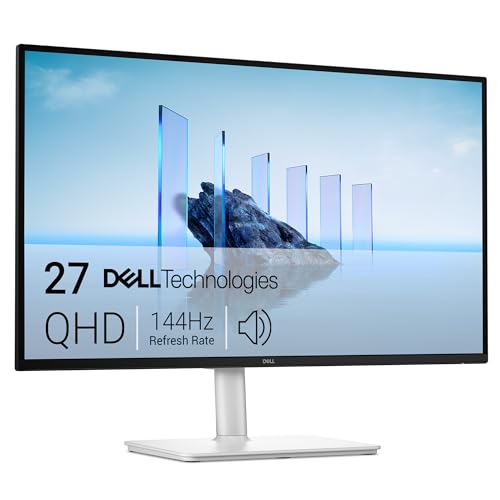
Dell 27 Plus QHD USB-C Monitor S2725DC Ash White

ViewSonic TD2760 27 Inch 1080p Touch Screen Monitor
More Details On Our Top Picks
4K on a 27-inch panel gives you crisp text and room for side-by-side windows, which matters on desks that carry spreadsheets, editing timelines, or dense browser tabs. The 120Hz refresh rate adds smoother motion than a standard office screen, while USB-C, DisplayPort, and HDMI keep cable choices flexible.
Height, swivel, and pivot adjustment make it easier to dial in posture without adding a third-party arm, and the anti-glare finish helps in bright rooms. The trade-off is simple, this is not the cheapest or most gaming-focused path, but for mixed work and media it lands in a very practical zone.
Strong Points
- 4K resolution keeps small text and UI elements clean on a 27-inch canvas.
- 120Hz motion feels smoother than typical office displays during scrolling and casual play.
- USB-C, HDMI, and DisplayPort make desk wiring easier to sort.
- Height, swivel, and pivot adjustments help you match the screen to your seating position.
- 99% sRGB coverage suits color-sensitive everyday work better than basic narrow-gamut panels.
Points To Note
- 4K scaling can take a little setup time on older software or smaller system fonts.
- The feature set leans toward versatility, so pure esports shoppers may want a faster model.
- Glossy reflections are reduced by the anti-glare coat, though bright windows still need placement care.
Feature Rundown
Who It Suits Best
Desk-bound professionals who want sharper text, cleaner cable routing, and a screen that still handles casual gaming well.
Where A Sibling Pick Shines
Dell 27 Plus QHD USB-C Monitor S2725DC Ash White suits laptop users who care more about one-cable convenience than 4K sharpness.
High refresh rate matters most here, and 240Hz pushes motion well beyond the typical office screen or even the 144Hz models in this list. For fast shooters and high-tempo action games, the SE2726HG is the clear speed-first choice, especially with IPS viewing angles and FreeSync Premium support.
The 1080p resolution keeps system demands lighter than 1440p or 4K, which many gaming rigs appreciate. The trade-off shows up in sheer detail, since text and fine image work look less crisp than on the S2725QS or either QHD Dell pick.
Highlights
- 240Hz refresh is built for very fluid on-screen motion.
- IPS panel keeps colors and viewing angles more consistent than older TN-style gaming screens.
- FreeSync Premium helps smooth variable frame delivery in supported game setups.
- Two HDMI ports and DisplayPort 1.4 give you flexible connection options.
Small Caveats
- 1080p on 27 inches looks softer than QHD or 4K for desktop work.
- Tilt-only adjustment is simpler than the fully adjustable stands on several Dell siblings.
- Competitive play gets the spotlight, so mixed productivity use feels less polished.
Core Details
Who Should Grab It
Competitive gamers who care more about speed and smoothness than desktop sharpness or extra features.
A Better Fit Elsewhere
Dell 27 Plus QHD Monitor S2725DSM Ash White suits mixed work and play better, especially when text clarity matters more than raw refresh.
The S2725HSM sits in a sweet spot for home desks that need a bit of everything, game time, video calls, and general browsing. Its Ash White finish gives it a calmer look than the darker Dell models above, and the built-in 2 x 3W speakers reduce the need for separate desktop audio in a compact setup.
144Hz and 1ms response time give it a lively feel, though the 1080p panel still prioritizes smoothness over image density. You may find the speaker output perfectly adequate for calls and casual viewing, but serious music listening or room-filling sound still calls for external audio.
Best Bits
- Built-in speakers simplify a desk that already feels crowded.
- 144Hz refresh gives a smoother experience than standard office displays.
- Height, tilt, pivot, and swivel support more flexible positioning.
- Ash White styling blends better into lighter rooms and minimalist setups.
Worth Noting
- 1080p on 27 inches is fine for general use, though not especially sharp.
- HDMI-only connectivity keeps it straightforward, but less adaptable than USB-C models.
- Integrated speakers suit convenience first, not room-filling audio.
Details At A Glance
Who Will Love This
Home office users and casual gamers who want a flexible screen with built-in sound and a lighter visual profile.
Skip It When
Dell 27 Plus QHD USB-C Monitor S2725DC Ash White is the better fit for laptop-heavy desks that need a single cable connection.
QHD is the practical middle ground here, because 2560 x 1440 gives you more working room and noticeably cleaner text than 1080p without pushing as hard as 4K. Compared with the S2725HSM, this model is the smarter step up for people who spend long hours in documents, browsers, or editing tools.
The two 3W speakers keep the desk tidy, and the full-height, tilt, pivot, and swivel adjustments help the panel sit correctly in a home office or studio corner. The honest read is that it makes the strongest sense when your computer and your desk setup are both already fairly settled.
Plus Points
- QHD resolution makes text and interface details look cleaner than 1080p.
- 144Hz keeps the screen feeling responsive for mixed work and play.
- Four-way adjustability helps with long sessions and better posture alignment.
- HDMI and DisplayPort 1.4 support a broader mix of desktops and laptops.
Areas To Watch
- QHD asks a little more from older graphics hardware than 1080p.
- It keeps the same 27-inch size, so desk depth still matters for comfort.
- Built-in speakers are useful, though separate audio still sounds fuller.
Spec Overview
Right Fit For
Professionals who want a sharper all-around panel for office work, light creative tasks, and everyday use.
Another Choice May Suit
Dell 27 Monitor S2725QS 4K UHD IPS 120Hz fits detail-focused desk work better when you want the sharpest text in this group.
This SE2726H keeps the formula simple, a 144Hz IPS screen with 1ms MPRT and thin bezels for a cleaner desktop look. For general browsing, everyday gaming, and streaming in a bedroom or small office, that lean approach often makes more sense than paying for extras you may never use.
The TÜV Rheinland 3-star eye comfort certification is part of its appeal, though the practical benefit still depends on your lighting and session length. One thing worth considering is that the tilt-only stand leaves less room to fine-tune posture than the taller, more adjustable Dell models above.
Reasons To Buy
- 144Hz and 1ms MPRT give motion a quick, responsive feel.
- IPS technology helps color consistency across a wider seating angle.
- Thin bezels make the display look cleaner on the desk.
- Two HDMI ports are handy for switching between devices.
Trade Offs
- 1080p is serviceable, though not especially sharp at this size.
- Tilt-only adjustment limits ergonomic tuning.
- It leaves out the extra convenience features seen on pricier Dell models.
Feature Card
Built With In Mind
Budget-focused desk setups that need a capable everyday panel without paying for height adjustment or USB-C.
Reach For A Different Pick When
Dell 27 Plus QHD Monitor S2725DSM Ash White is a better fit for long work sessions that need sharper text and more screen space.
USB-C changes the desk experience more than it looks on paper, because it can carry display, data, and power through one cable on compatible laptops. Paired with QHD resolution and 144Hz, the S2725DC is the cleanest fit for a modern work-first desk that still wants a fast, polished screen.
Compared with the standard QHD S2725DSM, this version is the one to favor when your laptop lives on the desk and you want to cut down on adapter clutter. The trade-off is that the best value here depends on USB-C actually fitting your setup, so desktop towers may not get the same upside.
Positives
- USB-C helps simplify a laptop desk with fewer separate cables.
- QHD resolution gives clear text and generous workspace.
- 144Hz keeps motion smooth for both work and downtime.
- Height, tilt, pivot, and swivel let you tune the screen precisely.
- Two 3W speakers add basic sound without extra hardware.
Honest Caveats
- USB-C adds the most value when your laptop supports the same connection.
- QHD is great for clarity, though power users may still prefer 4K for ultra-dense detail.
- Built-in audio helps with convenience, not with high-fidelity listening.
Quick Facts
Whose Shelf It Belongs On
Laptop users who want a cleaner desk and a sharp all-purpose monitor for office work, browsing, and media.
Look Elsewhere When
Dell 27 Monitor S2725QS 4K UHD IPS 120Hz makes more sense for text-heavy work where maximum pixel density matters.
This is the touch-first screen in the list, and that changes the whole conversation. Ten-point multi-touch suits kiosks, retail counters, hospitality desks, and control stations where direct input is more useful than a mouse-heavy workflow.
RS232 control gives it a more commercial angle than the Dell models, while HDMI and DisplayPort keep the input side straightforward. The trade-off is that 1080p and business-focused ergonomics make it a niche tool, so home users usually have less reason to choose it than a standard productivity panel.
What We Like
- 10-point touch supports multiple hands or gesture-style control.
- Commercial use case fits signage, hospitality, and counter work well.
- RS232 control adds integration value for managed environments.
- Advanced ergonomics help with shared stations and repeated interaction.
Room For Improvement
- 1080p is fine for touch tasks, though it is less crisp than QHD or 4K.
- The feature set is specialized, so it is less natural for a simple home desk.
- Installation is more involved than a basic office monitor because of the commercial orientation.
Key Specs
Built For In Mind
Business spaces, front desks, and kiosk-style stations that need direct touch control more than desktop sharpness.
Swap It Out When
Dell 27 Plus QHD USB-C Monitor S2725DC Ash White is the better match for laptop workstations and cleaner single-cable setups.
How To Choose The Right 27 Inch Touch Screen Monitors
Match Resolution To Your Main Job
A 27-inch screen can make 1080p look serviceable, but not especially refined, while QHD and 4K give you cleaner text and more working room. That matters most for spreadsheets, documents, and multitasking, where extra pixel density reduces visual clutter.
Touch-heavy commercial setups often tolerate 1080p just fine because finger input matters more than fine detail. Desk-first workspaces usually feel better with QHD or 4K, especially on days that run long.
Choose The Right Connection Mix
USB-C is the cleanest choice for modern laptops because it can reduce cable clutter. HDMI and DisplayPort still matter for desktop towers, consoles, and older notebooks, so a wider port set gives you more flexibility.
One port is not automatically better than another, it depends on the machine sitting under the desk. A touch monitor with commercial controls, like RS232, serves a very different job than a simple home-office display.
Refresh Rate And Motion Feel
For gaming or fast scrolling, 144Hz and 240Hz make motion look smoother than standard 60Hz panels. The gain is obvious during gameplay, though it matters less for static office work.
Faster refresh usually pairs well with 1ms response time claims, which point to quicker pixel changes. That does not replace good frame delivery from your PC, but it does help the display keep up.
Ergonomics And Desk Fit
Height, tilt, swivel, and pivot adjustment matter more than they sound, especially on a 27-inch screen used every day. A stand that moves well can reduce the need for extra accessories and make shared desks easier to manage.
Touch models add another wrinkle, because arm reach and angle affect comfort more than on standard monitors. For kiosk or counter use, sturdy placement matters as much as the panel itself.
What To Weigh Before You Decide
Mistakes Worth Dodging
Many people focus on refresh rate and ignore resolution, then end up with a panel that feels fast but looks soft on the desktop. Others choose touch support for a home setup where they will barely use it, which adds cost without much benefit.
Port selection matters too. A USB-C monitor makes sense for a laptop desk, while a commercial touch screen may be the right tool for a front counter and the wrong one for a gaming room.
What The Higher Tier Buys
More money usually goes into sharper panels, broader adjustment, better port layouts, and extras like USB-C or commercial control interfaces. Those features make day-to-day use easier, especially when your desk serves more than one task.
Higher-tier models also tend to suit mixed workloads better, because they reduce setup friction and improve readability. The upgrade is worth it when your screen stays in service for long work sessions or shared use.
Frequently Asked Questions
Can A 27-Inch Touch Monitor Replace A Tablet?
Not in the same way. A 27-inch touch display is better for desk-based control and shared use than for handheld work.
Is 1080p Enough At 27 Inches?
It works for general use and touch-based stations. QHD or 4K looks cleaner for text, dense windows, and long office days.
Do You Need USB-C For A Good Setup?
No, but it helps on laptop desks by reducing cable clutter. HDMI and DisplayPort still cover many desktop and console setups well.
Which Panel Type Fits Most People?
IPS is usually the safest all-around choice because it keeps color and viewing angles steady. That helps when the screen is shared or seen off-axis.
Are Touch Monitors Good For Gaming?
They can be, but touch is not the main reason to choose one for games. Refresh rate, response time, and resolution matter more in that use case.
Closing Thoughts
The right 27-inch monitor depends on what happens at your desk most often. For sharp office work, the Dell S2725QS and the two QHD Dell options make the strongest case, while the 240Hz SE2726HG suits fast gaming better than the rest. The ViewSonic TD2760 stands apart for touch-driven commercial use, so it solves a different problem entirely. Pick the panel that matches your daily task list, and the screen will feel right from the first login.
