
These 24-inch displays suit desk setups that need a clean footprint without giving up usable screen space. You get a practical size for office work, browsing, school tasks, and light gaming, with the main trade-offs landing in refresh rate, stand adjustability, and built-in extras.
The seven picks below cover simple home-office needs, sharper motion for casual gaming, and more flexible stands for shared workstations. You can match the panel and feature set to your space instead of paying for traits you won’t use.
Quick Look At The Shortlist
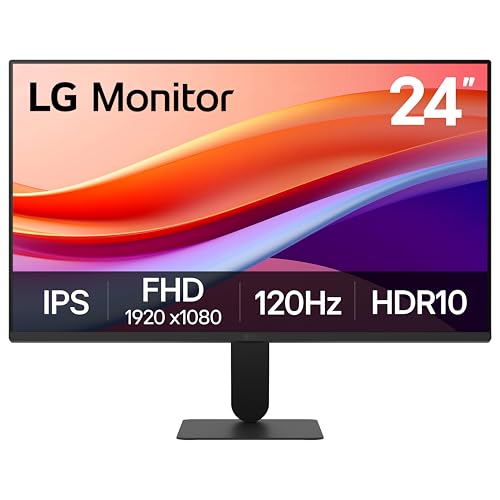
LG 24U411A-B 24-inch Full HD IPS Monitor

Amazon Basics 24-inch Full HD IPS Monitor
ViewSonic VA2448-MH 24 Inch 1080p Computer Monitor

Dell 24 Plus Monitor S2425HSM
ASUS 24 Inch Frameless Monitor VA24EHF

Dell 24 Monitor SE2426H
Philips 24 Inch Computer Monitor 24E2N2100
More Details On Our Top Picks
That 120Hz panel gives this LG a livelier feel than the 75Hz Amazon Basics option, especially for scrolling through documents or moving between windows all day. HDR10 is a high dynamic range format that lets compatible content carry more contrast, while Reader Mode and Flicker Safe point toward longer desk sessions with less visual strain from screen glare and backlight flicker.
The slim stand base matters in cramped setups, because it leaves more room for a keyboard, notepad, or dock. You may find the trade-off in the plain black finish and fewer extras, but that’s the point here, a tidy monitor that does the basics with more pace than the entry-level picks.
Strong Points
- 120Hz refresh gives everyday motion a smoother feel than standard office panels.
- IPS viewing angles suit shared desks and side-by-side collaboration.
- Reader Mode and Flicker Safe support longer screen time in a home office.
- Slim stand base helps on smaller desks with limited surface area.
Worth Noting
- The design stays plain, so you are paying for panel behavior more than styling.
- A slim base can still sit well, though cable routing around tight desks needs attention.
Feature Rundown
Who It Suits Best
Desk workers and home users who want a sharper-feeling 24-inch display with a restrained footprint fit this model well.
A Better Fit Elsewhere
Dell 24 Plus Monitor S2425HSM suits you better if you want more stand movement for a shared workspace or standing desk.
This one leans hard into practicality, with HDMI, DisplayPort, and VGA giving you broad compatibility for newer laptops and older office towers. The built-in speakers help in a pinch for calls or casual video, though separate speakers still sound better in a busy room.
The adjustable stand and VESA compatibility make it easier to place on a monitor arm or wall mount, which is useful in tight home offices. Compared with the LG, motion is slower at 75Hz, but that’s still enough for spreadsheets, browsing, and normal office rhythm.
Highlights
- Three input types make it easy to connect mixed hardware.
- Built-in speakers reduce desk clutter for basic audio needs.
- Adjustable stand helps match seated work to your desk height.
- VESA support gives you more mounting options than fixed-stand monitors.
Areas To Watch
- 75Hz feels fine for office work, but it trails the smoother 120Hz and 144Hz models here.
- Integrated speakers are handy, though they usually suit voice and light media more than fuller sound.
Core Details
Whose Shelf It Belongs On
Home-office users who want broad connection options and an easy setup will get the most out of this monitor.
Skip It When
ASUS 24 Inch Frameless Monitor VA24EHF is the better match for you if gaming and faster-feeling motion matter more than extra ports.
ViewSonic pushes harder on motion than the Amazon Basics screen, and the 120Hz refresh rate pairs well with the 1ms response time, which is the speed a pixel needs to change color. That combination matters for casual gaming, quick window movement, and any desk where you keep several apps open at once.
The frameless design gives it a cleaner look on a dual-monitor setup, while anti-glare and Eye Care language point toward easier daily use in bright rooms. One thing worth considering is the built-in 2W speakers, which keep the desk simple but won’t satisfy anyone chasing richer sound.
Upsides
- 120Hz and 1ms give it a snappier feel than basic office models.
- Anti-glare treatment helps in bright home offices or near windows.
- Frameless styling works neatly in multi-monitor layouts.
- HDMI and VGA keep it flexible for mixed device setups.
- Built-in speakers cover light audio without extra desk gear.
Small Caveats
- The speakers are useful, but separate audio equipment usually sounds fuller.
- Bright-room comfort depends on placement, so desk angle still matters.
- The feature mix is broad, which can add setup choices for first-time owners.
At A Glance
Built With In Mind
Hybrid users who split time between office work, streaming, and light gaming will find the mix of speed and simple inputs useful.
Where A Sibling Pick Shines
LG 24U411A-B 24-inch Full HD IPS Monitor makes more sense if you want Reader Mode and Flicker Safe for longer document sessions.
The stand is the story here. Height, tilt, pivot, and swivel adjustment give you more control over posture and placement than the fixed-feel LG and ViewSonic options, which matters in shared workstations or mixed-use desks. The 144Hz refresh rate and 1ms response time add motion polish that casual gamers will notice right away.
Ash white also changes the room tone a bit, so the monitor looks less utilitarian than the black models in this group. The trade-off is that you are paying for that physical flexibility and faster panel behavior, so it makes sense for desks that get used hard and often.
Best Bits
- Four-way stand adjustment gives you far more placement control.
- 144Hz refresh suits smoother motion in games and fast scrolling.
- Two 3W speakers help for everyday media and calls.
- Ash white finish brings a cleaner look to open desk spaces.
Trade Offs
- The more flexible stand takes up more visual and physical presence than simpler bases.
- Its stronger feature set makes sense most clearly on desks used by more than one task.
Details At A Glance
Right Fit For
Shared desks, standing desks, and casual gaming setups suit this Dell very well.
Look Elsewhere When
Amazon Basics 24-inch Full HD IPS Monitor is the easier pick for a simple office screen with more input variety.
ASUS threads the middle ground well, because 100Hz and 1ms give it a quicker feel than basic office monitors without pushing into the more specialized Dell 144Hz territory. Adaptive-Sync, a display feature that helps keep frames and refresh rate working together more smoothly, makes this an easy fit for light gaming after work.
The frameless design and VESA mount support help in small desks or wall-mounted setups, while tilt adjustment gives you the main angle correction you need. One honest caveat, the stand is simpler than the Dell 24 Plus, so posture tuning is more limited for shared spaces.
Reasons To Buy
- 100Hz refresh gives a smoother desktop feel than standard 60Hz screens.
- Adaptive-Sync helps reduce visual stutter in compatible games.
- Frameless design suits dual-monitor arrangements and compact setups.
- VESA support makes mounting straightforward.
- Tilt adjustment covers the basics for desk alignment.
Room For Improvement
- Tilt-only adjustment leaves less posture flexibility than height-adjustable models.
- It focuses on a clean everyday setup, so it gives up some extras found on the feature-heavy picks.
Quick Facts
The Right Fit
Home-office users who also want a light gaming monitor without moving up to a more elaborate stand will appreciate this ASUS.
Another Choice May Suit
Dell 24 Plus Monitor S2425HSM is the better match for you if stand adjustability matters more than the cleaner frameless look.
The SE2426H keeps the setup clean with two HDMI ports, which is convenient for a laptop-plus-console desk or a work machine paired with a streaming stick. Its IPS panel, AMD FreeSync, and 144Hz refresh rate put it closer to the faster Dell 24 Plus than to the simpler Amazon Basics screen.
The tilt-only stand is the main limitation, so placement matters more than it does on the S2425HSM. Still, the compact feature set makes sense for a straightforward desk where you want quick connectivity and a steady everyday picture.
Positives
- Two HDMI ports make source switching simpler than on single-input monitors.
- 144Hz refresh supports smoother motion for work and casual play.
- IPS technology helps keep the image stable from normal seating angles.
- FreeSync support benefits compatible gaming setups.
Points To Note
- Tilt-only adjustment limits ergonomic tuning on taller desks.
- The cleaner feature set is useful, though it leaves out the broader stand movement found on the Dell 24 Plus.
Feature Snapshot
Best Suited To
Desk users who want simple dual-HDMI connectivity with a faster panel fit this Dell well.
Where Shoppers Go Wrong
LG 24U411A-B 24-inch Full HD IPS Monitor suits you better if you want Reader Mode and a more comfort-focused screen for long document days.
Philips stacks comfort and support features more heavily than most of the field, starting with Flicker-Free and Low Blue Light, plus a 4-year advance replacement program that stands out for long ownership. Low Blue Light means the panel is designed to reduce the amount of blue light it sends at the screen level, which may suit you during late-night desk sessions.
The 120Hz IPS panel keeps the image responsive enough for everyday work, and HDMI 1.4, VGA, and VESA support make it easy to fit into older or more permanent setups. The honest read is that this model makes the most sense for cautious, long-term ownership rather than pure speed chasing.
Bright Spots
- Flicker-Free and Low Blue Light features favor longer desk sessions.
- 120Hz keeps motion smoother than standard office monitors.
- HDMI, VGA, and VESA expand setup flexibility.
- Advance replacement coverage adds peace of mind for long-term use.
Softer Spots
- Its strongest appeal sits in comfort and support features rather than raw speed.
- Older-device friendliness is useful, though the interface mix may feel plain beside newer, more aggressive gaming-focused picks.
Core Details
Who Will Love This
Careful home-office users and anyone planning to keep a monitor in service for a long stretch will appreciate this Philips.
Swap It Out When
ViewSonic VA2448-MH 24 Inch 1080p Computer Monitor makes more sense for you if gaming speed and speaker convenience matter more than long-term support features.
How To Choose The Right 24 Lcd Monitors
Start With Your Main Task
Office work, school work, and casual streaming all ask different things from a 24-inch screen. A 75Hz panel can be enough for documents and web apps, while 120Hz or 144Hz feels better for smoother scrolling and games.
That’s why the LG and Philips make sense for comfort-first desktop use, while the Dell pair and ViewSonic lean more toward motion. The right choice usually follows the task you spend the most time on, not the feature list that looks longest.
Check The Stand Before Anything Else
Height, tilt, pivot, and swivel matter more than most people expect once a monitor lives on the desk for hours. A fixed stand is fine for a simple setup, but a more adjustable base helps in shared workspaces, standing desks, and places where posture changes through the day.
The Dell 24 Plus shows why this matters, because its stand gives you more placement control than the simpler Amazon Basics and Dell SE2426H options. In a small room, that movement can be the difference between a screen that fits and one that feels awkward.
Ports And Mounting Shape Daily Convenience
HDMI is the standard connection for most modern laptops and desktops, yet extra ports can save you from swapping cables constantly. DisplayPort, VGA, and dual HDMI matter when you move between older hardware, a work laptop, and a second source.
VESA support also changes how you use the desk, since it lets you move the monitor onto an arm or wall mount. The Amazon Basics and ASUS models are strong examples of that flexibility, especially for compact rooms where every inch counts.
Comfort Features Are Not Window Dressing
Reader Mode, Flicker-Free panels, and Low Blue Light settings are practical features for long stretches at the screen. They do not replace good lighting or sensible breaks, but they can make extended office use feel less tiring in a busy room.
The LG and Philips lean hardest into that side of ownership, while ViewSonic adds anti-glare support for brighter spaces. For a home office, those small touches often matter more than an extra port or a flashy stand color.
A Quick Reality Check Before You Choose
Mistakes Worth Dodging
Do not focus on size alone. A 24-inch monitor can still feel wrong if the stand is too low, the ports do not match your gear, or the refresh rate lags behind the way you actually use the desk.
Another common miss is buying for gaming speed while ignoring everyday comfort. A 144Hz panel is appealing, but a better stand or easier connectivity may help more in a shared home office.
When Paying More Pays Off
Higher-priced 24-inch monitors usually spend the extra money on stand movement, faster panel behavior, and added comfort features. You also tend to see more thoughtful port layouts, better mounting support, and more polished finishes.
That upgrade is worth it for anyone who sits at the screen all day or splits time between work and play. For a basic email-and-spreadsheet desk, the simpler Amazon Basics model can be enough, and that keeps the decision grounded.
Frequently Asked Questions
Is 120Hz noticeable on a 24-inch monitor?
Yes, it usually feels smoother for scrolling, app switching, and light gaming. The difference is easier to notice when you move from a 60Hz or 75Hz screen.
Do IPS panels matter for office use?
IPS panels help keep color and viewing angles more consistent across a desk. That is useful for workstations where you lean left, right, or share the screen with someone else.
Are built-in speakers worth it?
They are handy for calls, casual video, and setups with limited space. Separate speakers still sound better, so built-ins work best as a convenience feature.
What does VESA support do?
VESA support lets you attach the monitor to a compatible arm or wall mount. That can free desk space and make the screen easier to position.
Which monitor here suits long office sessions best?
LG 24U411A-B 24-inch Full HD IPS Monitor and Philips 24 Inch Computer Monitor 24E2N2100 both lean toward comfort-focused use. Reader Mode, Flicker Safe, Flicker-Free, and Low Blue Light features make them sensible picks for long desk days.
Final Thoughts
For 24 Lcd Monitors, the smartest choice comes down to how you use the desk, not just the panel size. LG and Philips favor comfort, Dell pushes harder on adjustability or speed, and ASUS lands in the middle with a clean everyday balance. Amazon Basics keeps things simple for basic office work, while ViewSonic adds a useful blend of motion and extras. Pick the model that fits your room, your ports, and the hours you spend in front of it.
