
You want a mouse that fits your grip, keeps up with fast movement, and doesn’t add friction during long sessions. That matters just as much for a quick round after work as it does for a weekend marathon, especially when programmable buttons, sensor speed, and shape all play different roles.
The list below leans on clear feature sets and everyday use cases, from lightweight wireless models to wired options with extra controls. You’ll see where each pick fits best, and where a different shape, weight, or connection style makes more sense.
Quick Look at the Shortlist

TECKNET Wired Gaming Mouse 12800 DPI 8 Buttons
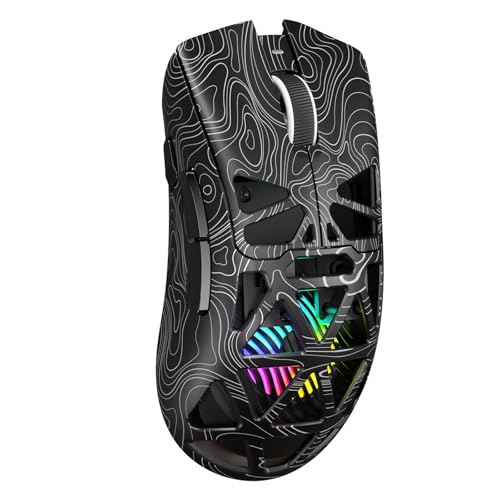
Aula SC620 Wireless Gaming Mouse, Tri-Mode 2.4GHz/USB-C/BT5.3

Logitech G PRO X Superlight 2 Wireless Gaming Mouse – Black
Logitech G502 Lightspeed Wireless Gaming Mouse – Black

Logitech G PRO X Superlight 2 DEX Wireless Gaming Mouse – Magenta

Logitech G305 Lightspeed Wireless Gaming Mouse – Black

Logitech G502 Hero Wired Gaming Mouse – Black
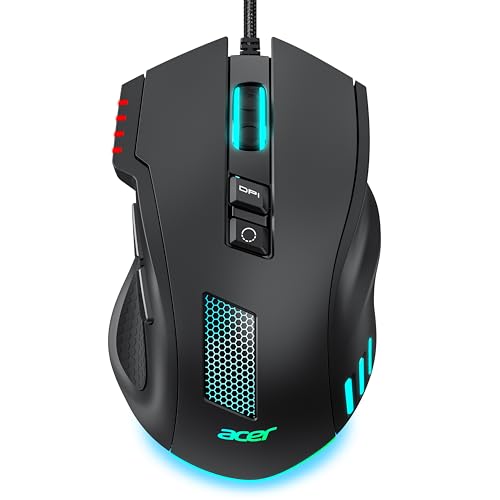
Acer Wired Gaming Mouse, 12,800 DPI RGB Ergonomic Computer Mouse for PC
More Details On Our Top Picks
TECKNET keeps things grounded with a wired layout, 12,800 DPI tuning through software, and eight programmable buttons. For everyday desk use, that mix gives you direct control without charging pauses, and the rapid-fire button plus side macros add some flexibility for games and shortcuts.
The honest read is that this suits you best when you want a straightforward mouse with extra inputs rather than a featherweight shape. Compared with the lighter Logitech options later in this list, it feels more like a practical workhorse than a specialist tool, which is exactly the point for many setups.
Strong Points
- Software-based DPI control helps you tailor sensitivity for different games or desktop tasks.
- Eight programmable buttons make room for shortcuts, spells, or repeated commands.
- The wired connection removes battery upkeep, which helps in a busy room or shared desk.
- Rapid-fire and side macro buttons add useful control without adding clutter to the shell.
Things To Consider
- The shape is more functional than fancy, so comfort depends on your grip style.
- RGB lighting adds visual interest, yet it also means more software settings to sort through.
- Wired use keeps latency simple, but it does leave a cable in your way on a cramped desk.
Key Specs
Who It Suits Best
You’ll get the most from this pick in a desktop setup where you want extra controls and don’t want to think about charging.
A Better Fit Elsewhere
Logitech G305 Lightspeed Wireless Gaming Mouse – Black fits you better if you want a cleaner wireless desk with a simpler button layout.
The SC620 stands out because it gives you three connection paths, 2.4GHz wireless, USB-C, and Bluetooth 5.3. That makes it handy for a laptop, a desktop, and a second device, especially when your workspace shifts between gaming and everyday work.
With 12,000 DPI, macro support, a rapid-fire key, and RGB lighting, it aims at people who want more than a plain wireless shell. Compared with the TECKNET, this one is less about a simple wired routine and more about flexibility across devices, though that also means more setup choices to manage.
What We Like
- Tri-mode connectivity gives you more ways to pair it with different machines.
- USB-C support keeps charging and wired fallback simpler than older micro-USB setups.
- Programmable macro control suits games, productivity shortcuts, and daily multitasking.
- Bluetooth 5.3 helps on laptops and tablets that share desk space with your main rig.
Worth Noting
- Tri-mode flexibility can feel busy at first, especially on a cluttered desk.
- RGB lighting is useful for style, but it adds one more setting you may or may not care about.
- The feature set is broader than the TECKNET, so it makes most sense for people who will actually use those extras.
Feature Snapshot
Who Should Grab It
You’ll appreciate this most in a mixed-use setup where one mouse needs to handle several devices and both work and play.
Swap It Out When
Logitech G305 Lightspeed Wireless Gaming Mouse – Black is the cleaner choice for a simpler, more stripped-back wireless desk.
Lightweight mice can feel like a fast lane for competitive play, and this 60g model follows that path closely. A symmetrical shape, up to 44K DPI, sub-8 kHz polling, USB-C, and PowerPlay support give it a stripped-back profile with serious speed potential.
The trade-off is pretty clear, it’s built for players who care more about speed and control than extra buttons or a bulky grip. Compared with the G502 models, this one trims away a lot of extras, which makes it easier to move quickly but less adaptable for people who want more onboard controls.
Highlights
- 60g weight keeps hand movement light during fast aim changes.
- Symmetrical shape suits a wide range of neutral grip styles.
- 44K DPI gives you a very wide sensitivity ceiling for fine tuning.
- USB-C keeps the connection point current and simple to manage.
- PowerPlay support matters for desks already built around that charging surface.
Areas To Watch
- Five buttons are enough for many games, but not for people who rely on lots of side inputs.
- The light shell leaves less room for the palm-filling feel some users prefer.
- PowerPlay support is only useful in a setup that already includes that ecosystem.
Core Details
Built With In Mind
This suits you best for competitive-style play, especially on PC or Mac, where a very light shell matters more than extra buttons.
Another Choice May Suit
Logitech G502 Hero Wired Gaming Mouse – Black is a better match for you if you want more buttons and a heavier, tuned feel.
For people who like a mouse that can be tuned instead of simply used, the G502 Lightspeed makes a strong case. Adjustable weights, 11 programmable buttons, RGB lighting, onboard memory, and POWERPLAY compatibility give it a much more customizable profile than the lighter Superlight 2 above.
That extra versatility does bring more setup work, and the shape is clearly aimed at users who want a fuller, more substantial feel in the hand. You may find it especially useful in strategy games, MMO hotbars, or long desktop sessions where button mapping matters more than raw minimalism.
Reasons To Buy
- Adjustable weights let you shape the feel to your own preference.
- Eleven programmable buttons support dense control setups and macros.
- Onboard memory helps keep your settings with the mouse instead of the PC.
- POWERPLAY compatibility is useful for desks already built around that charging approach.
Softer Spots
- The feature count makes it less minimal than the G PRO X Superlight 2.
- More buttons and tuning mean more setup time before everything feels right.
- The more complex shell can take a little getting used to for lighter-grip players.
Details At A Glance
Best Suited To
You’ll like this most in a desk setup where macros, button mapping, and a configurable feel matter every day.
Where A Sibling Pick Shines
Logitech G PRO X Superlight 2 Wireless Gaming Mouse – Black fits better for you if a lighter shell matters more than extra controls.
This version takes the Superlight formula and bends it toward right-handed ergonomics, which is the main reason it stands apart from the symmetrical black model. At 60g, with 44K DPI, sub-8 kHz polling, USB-C, and PowerPlay support, it keeps the same lean performance profile while changing the shape in a meaningful way.
For palm-oriented or right-hand focused use, that shape change can matter more than color, and Magenta gives it a bit of personality without changing the core hardware. The catch is that left-handed or ambidextrous grips will probably prefer the standard Superlight 2 instead, since this one is built around one side of the hand.
Bright Spots
- Right-handed ergonomic shaping gives the hand a more guided feel.
- The 60g weight keeps movement light and quick.
- USB-C and PowerPlay support keep the setup modern and tidy.
- High DPI and fast polling suit quick-turn gaming styles.
Minor Gripes
- The right-hand shape narrows the fit, so it’s not a neutral option.
- Five buttons keep things lean, but don’t leave much room for extra bindings.
- Magenta is a style choice, so it may not suit every desk setup.
Feature Card
Perfect Match For
You’ll get the most out of this one in a right-handed setup where shape matters as much as speed.
Look Elsewhere When
Logitech G PRO X Superlight 2 Wireless Gaming Mouse – Black is the more flexible call for a neutral, symmetrical fit.
The G305 is the kind of wireless mouse that keeps the setup simple without feeling stripped to the bone. A HERO sensor, 12,000 DPI, six programmable buttons, onboard memory, and a 250-hour battery make it a sensible daily option for people who want wireless freedom without a lot of clutter.
Compared with the heavier G502 family, this one is cleaner and easier to live with, though it gives up some of the extra control and customization. That trade-off works nicely for casual sessions, travel bags, or a second computer, because the button count and battery life help it stay low-maintenance.
Best Bits
- Wireless setup keeps your desk clear of cable drag.
- 250-hour battery figure suggests long stretches between charge or battery swaps.
- Six programmable buttons cover the basics without making the shell busy.
- Onboard memory helps preserve your settings across machines.
Small Caveats
- The simpler control layout is less flexible than the G502 models.
- The shell is practical rather than flashy, so it won’t appeal to everyone chasing a sculpted shape.
- For people who map a lot of commands, six buttons may feel modest.
Technical Sheet
Whose Shelf It Belongs On
This fits you best as a dependable wireless mouse for home, office, or a secondary gaming station.
Reach For A Different Pick When
Logitech G502 Lightspeed Wireless Gaming Mouse – Black is the stronger fit for you if you want more buttons and deeper tuning.
The wired G502 Hero sits on the more serious end of this group, with 25,600 DPI, RGB lighting, adjustable weights, 11 programmable buttons, and onboard memory. That makes it a strong fit for players who want a mouse that can be tuned for different games or work patterns without thinking about battery levels.
It overlaps with the G502 Lightspeed in spirit, but the wired connection keeps the setup simpler and usually feels more direct for a fixed desk. One thing worth considering is the added weight tuning and button density, which are useful for complex control schemes but less appealing if you just want a lean shape.
Upsides
- Adjustable weights let you steer the feel toward lighter or steadier movement.
- Eleven programmable buttons support rich mapping for games and shortcuts.
- Onboard memory keeps your settings with the mouse itself.
- The wired connection is straightforward for a fixed PC desk.
Room For Improvement
- The shape is more involved than simpler mice, so comfort depends on your grip.
- All those controls can feel excessive for casual play.
- The cable is the obvious trade-off versus the wireless G502 Lightspeed.
Quick Facts
The Right Fit
You’ll like this most in a fixed gaming desk where custom buttons and weight tuning matter more than wireless freedom.
Skip It When
Logitech G305 Lightspeed Wireless Gaming Mouse – Black makes more sense for you if you want simpler upkeep and less bulk.
Acer closes the list with a wired, feature-forward design that covers the basics well: 12,800 DPI, RGB lighting, 12 backlit modes, eight programmable buttons, software keybinds, and rapid-fire support. That makes it appealing for a first gaming setup or a desk where you want plenty of control without moving into a more expensive shape-heavy model.
Compared with the TECKNET, it goes further on lighting variety, while still staying in the same practical wired lane. The honest read is that the feature spread looks more adventurous than the shell itself, so comfort and grip style will matter just as much as the control count.
Positives
- Eight programmable buttons give you room for common shortcuts and game actions.
- Software keybind support lets you tailor commands to your setup.
- Rapid-fire support adds a useful control layer for repeated actions.
- 12 backlit modes offer more visual variety than the more restrained TECKNET.
Points To Note
- Lighting variety is nice, but it won’t matter much if you care more about pure shape comfort.
- The wired layout keeps things simple, though the cable stays part of the desk picture.
- Software-based keybinds can take a little setup time before everything feels right.
Core Details
Made For
This is a sensible match for beginners or casual players who want a wired mouse with more features than the plain basics.
A Better Fit Elsewhere
Logitech G502 Hero Wired Gaming Mouse – Black suits you better if you want a more mature, heavier-feeling control layout.
How To Choose The Right Mices For Gaming
Shape, Weight, And Grip Come First
The mouse shape matters because your hand meets it for hours, not minutes. A 60g shell like the Logitech G PRO X Superlight 2 feels very different from the fuller G502 family, and that difference shows up fast in long sessions or repeated flicks.
Palm users usually lean toward a more sculpted body, while claw and fingertip players often prefer a lighter, flatter feel. The right fit reduces hand strain and helps your aim feel consistent, which is more useful than chasing a long feature list you won’t use.
Connection Style Changes How You Use It
Wired mice keep power simple and remove battery management, which suits a fixed desk or a budget setup. Wireless models like the G305 or G502 Lightspeed clear the cable from your workspace, which helps more than you’d expect on a cramped desk or a laptop setup.
Tri-mode designs such as the Aula SC620 make even more sense for multi-device homes, because one mouse can move between a gaming PC, a work laptop, and a spare machine. That flexibility brings more setup choices, so the real question is whether you need that range or just want one dependable connection.
Buttons And Software Matter More Than You Think
Extra programmable buttons help in MMOs, strategy games, and shortcut-heavy work, but they also change the feel of the mouse. Eight or eleven buttons can speed up your routine, yet a simpler shape often feels cleaner for action games or plain desktop use.
Software support also deserves attention, because DPI steps, macro control, and on-board memory can change how easy the mouse is to live with. You’ll want enough control to match your games, but not so much complexity that setup turns into a chore.
Pick The Level Of Tuning You’ll Actually Use
Higher DPI numbers, adjustable weights, fast polling, and charging ecosystems sound technical, but they only help when they match how you play. A competitive mouse with 44K DPI and very low weight suits fast aim work, while a feature-rich wired shell makes more sense for users who want custom commands and a steadier hand feel.
Start with your grip, your desk space, and the games you play most. That order keeps you from paying for extras that stay unused, and it points you toward a mouse that feels right on day one.
A Quick Reality Check Before You Choose
Mistakes Worth Dodging
A common miss is choosing a mouse for the feature count alone, then finding the shape awkward after a week. Another slip is buying a wireless model for a fixed desk without checking whether you actually want cable-free space or just a cleaner setup.
Button-heavy mice can also backfire for people who only play simple shooters or do light browsing. The better move is matching the shell, connection, and control count to the way you spend your time at the desk.
Where The Extra Money Goes
Higher-tier mice usually spend money on lighter shells, more advanced sensors, faster polling, better switches, or extra tuning like weights and onboard memory. Those parts don’t change a game on their own, but they do shape how stable, quick, and custom the mouse feels in daily use.
The upgrade makes sense for competitive play, long sessions, or a desk setup that gets heavy use every day. For lighter gaming, a simpler wired or wireless model often gives you enough control without stretching the budget for features that stay idle.
Final Thoughts
Your best choice depends on how you hold the mouse and how much control you want under your fingers. The Logitech G PRO X Superlight 2 models suit speed-first play, the G502 options suit people who like tuning and extra buttons, and the TECKNET, Aula, Acer, and G305 cover the more practical middle ground. Pick the shape that matches your hand first, then let the specs do the rest. That’s usually the cleanest path.
