
Music production puts a mouse through a different kind of day. You’re moving between a DAW, plug-ins, mixers, and timeline edits, so comfort, pointer control, and device switching matter more than flashy extras.
This roundup focuses on trackball and ergonomic mice that suit long sessions at a desk or in a home studio. You’ll see where a thumb trackball helps, where a standard ergonomic mouse still makes sense, and which models feel better for fast editing versus relaxed control.
Quick Look At The Shortlist

Logitech MX Ergo S Advanced Wireless Trackball Mouse USB C – Graphite
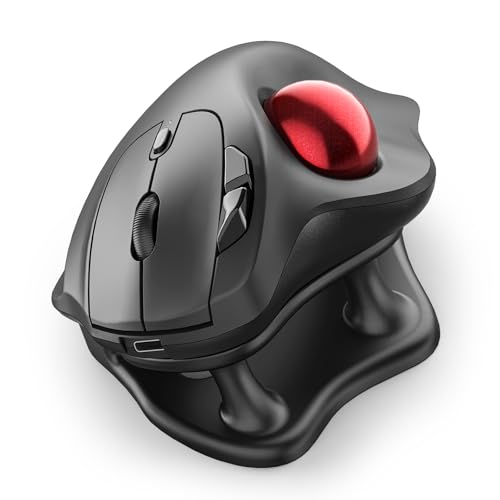
Nulea Wireless Trackball Mouse Ergonomic 21.7 Tilt Stand Thumb Control
Nulea Wireless Trackball Mouse Ergonomic Vertical Design Thumb Control

Ergonomic Wireless Trackball Mouse, Rechargeable Adjustable 0°/18° Angle – SABLUTE MAM1 Pro Thumb Control Mice

Nulea M501 Wireless Trackball Mouse Ergonomic Thumb Control

TECKNET Wireless Mouse, Bluetooth Mouse (BT5.3/5.0 & 2.4G) Rechargeable Ergonomic Optical Mouse

TECKNET Wireless Trackball Mouse, Bluetooth Mouse with Ergonomic, Black

Nulea M501 Wireless Trackball Mouse Ergonomic Thumb Control, 4 DPI Levels – Blue Grey
More Details On Our Top Picks
For long DAW sessions, the MX Ergo S leans into comfort first. The thumb-operated trackball keeps your hand planted, and the six programmable buttons give you room for shortcut-heavy work, from mixer jumps to plug-in toggles.
The rechargeable battery and USB-C charging fit a desk setup that stays busy all week, while Bluetooth and the encrypted dongle cover both tidy laptop rigs and more stable studio machines. The trade-off is simple, trackballs ask for a little acclimation, so fast cursor habits may feel different at first.
Strong Points
- Thumb trackball keeps movement contained, which suits cramped studio desks and keyboard-heavy workflows.
- Six programmable buttons help you map common DAW actions without hunting through menus.
- Bluetooth and the encrypted dongle give you two clean connection paths for different rigs.
- USB-C charging makes desk upkeep easier than juggling disposable batteries.
Things To Consider
- Trackball control takes a short adjustment period.
- Smudges and dust around the ball housing need occasional cleaning, like most trackballs.
Feature Snapshot
Who It Suits Best
Studio-focused musicians who stay at a desk for hours and want a polished, shortcut-friendly trackball will get the most out of it.
A Better Fit Elsewhere
Nulea M501 Wireless Trackball Mouse Ergonomic Thumb Control suits you better when you want a simpler thumb trackball without as much premium styling.
The 21.7-degree tilt stand is the detail that changes the feel here. It raises and angles the hand more naturally than a flat shell, which can matter during long editing passes or sample sorting sessions.
Three-device switching and Bluetooth plus 2.4G support make it useful across a desktop, laptop, and tablet-style setup. The honest read is that angle-based comfort is personal, so the fit depends on your hand position and how much desk space you keep near the keyboard.
Highlights
- Tilted stance can feel calmer on the wrist during long screen sessions.
- Three-device switching helps you move between studio, laptop, and backup machines.
- Bluetooth and 2.4G give you flexible pairing choices.
- Four DPI levels let you slow down for precise edits or speed up for broad movement.
Room For Improvement
- The angled body takes up a bit more presence on a crowded desk.
- Trackballs reward a quick clean now and then, especially around the thumb channel.
Core Details
Who Will Love This
Desk-based music makers who want a trackball with a more relaxed angle and multi-device convenience will appreciate it most.
Swap It Out When
Logitech MX Ergo S Advanced Wireless Trackball Mouse USB C – Graphite suits you better when you want a more premium-feeling button layout and a stronger shortcut focus.
Quiet clicks are the big everyday advantage here, especially in shared rooms where a sharp mouse tap can get old fast. The vertical form also nudges your hand into a more upright position than a classic flat mouse, which makes it an easy pick for general studio work.
Three-device Bluetooth and USB receiver support help it move between a production laptop and a main workstation without much fuss. Compared with the more premium-feeling MX Ergo S, this one keeps the pitch simpler and less elaborate, which is a good thing for people who want a straightforward setup.
Positives
- Quiet clicks suit late-night editing or shared office spaces.
- Vertical shape can feel less twisted in the hand than a standard low mouse.
- Bluetooth and USB receiver support keep setup options open.
- Three-device support helps you move between studio gear with less unplugging.
- Four DPI levels give you some control over precision and pointer speed.
Softer Spots
- Vertical mice are a preference thing, so the shape won’t suit every hand.
- Battery charging becomes part of your routine with any rechargeable mouse.
Details At A Glance
Best Suited To
You’ll like this most if your studio space is shared and you want a quieter mouse with simple multi-device use.
Another Choice May Suit
Nulea Wireless Trackball Mouse Ergonomic 21.7 Tilt Stand Thumb Control is the better match for someone who wants a more angled hand position.
The adjustable 0-degree and 18-degree angles are the hook here, and that matters more than it first sounds. You can keep it flat for a familiar feel or tilt it for a more relaxed wrist line, which gives this model a bit more adaptability than the fixed shapes above.
Three-way multi-device Bluetooth and USB receiver support make it easy to move between a DAW laptop, a desktop tower, and a secondary screen station. The caveat is that angle features are only useful when the shape fits your hand size, so the smartest move is thinking about your usual desk posture first.
Reasons To Buy
- Two angle settings let you choose between flatter control and a more tilted stance.
- Quiet clicks keep desk noise down during late edits.
- Three-device support is handy for studios with multiple machines.
- Rechargeable power keeps the desk cleaner than a battery-swap setup.
Points To Note
- Adjustable posture sounds great, but the right setting still depends on your hand shape.
- Trackball housings can collect dust around the ball area over time.
Core Details
The Right Fit
It suits you best when you want a trackball that can adapt to different wrist angles across a long studio day.
Look Elsewhere When
TECKNET Wireless Trackball Mouse, Bluetooth Mouse with Ergonomic, Black is a better fit for someone who wants RGB lighting and a more feature-heavy shell.
The M501 keeps the formula simple, and that’s exactly why it makes sense for a lot of music work. Thumb control, four DPI levels, and rechargeable power cover the basics without asking you to learn a lot of extra behavior.
It also moves cleanly between PC, Mac, and Windows setups, which helps in home studios that mix old and new gear. Compared with the adjustable SABLUTE model, this one is less about posture tuning and more about straightforward, low-drama control.
Best Bits
- Simple thumb-control shape is easy to settle into.
- Four DPI levels let you tighten cursor motion for detailed editing.
- Bluetooth and USB receiver support cover common desktop setups.
- Three-device use helps you shift between machines without a tangle of peripherals.
Small Caveats
- It stays fairly straightforward, so you don’t get extra controls for deep shortcut mapping.
- Trackball surfaces benefit from routine dust removal around the ball.
Quick Facts
Made For
This suits you well if you want a dependable thumb trackball for everyday arrangement work and general editing.
A Better Fit Elsewhere
Logitech MX Ergo S Advanced Wireless Trackball Mouse USB C – Graphite is the stronger match for you when premium controls and a more polished feel matter more.
This one steps away from trackballs and keeps things more familiar for anyone who still prefers a standard pointer shape. Six adjustable DPI settings, side scroll, and seven buttons give you more surface-level control than a plain office mouse, which can help in DAWs with wide timelines and lots of window movement.
BT5.3, BT5.0, and 2.4G support make it flexible across laptops and desktop machines, and the USB-A receiver should be easy to place in older rigs. The trade-off is that you give up the stationary thumb-ball workflow, so it suits people who want extra controls more than one-handed cursor stability.
Upsides
- Seven buttons create room for shortcuts and extra actions.
- Side scroll can help with wide timelines and plugin lists.
- Three connection options make it versatile across different computers.
- Six DPI settings let you adjust pointer speed to the task.
- Rechargeable power keeps it tidy for desk use.
Areas To Watch
- It’s a regular mouse, so it won’t give you the stationary feel of a trackball.
- Extra controls are useful only when you’re willing to map them into your workflow.
Feature Rundown
Who Should Grab It
You’ll get the most from this if you want a conventional ergonomic mouse with extra controls instead of a trackball.
Where A Sibling Pick Shines
TECKNET Wireless Trackball Mouse, Bluetooth Mouse with Ergonomic, Black is a better match for anyone who wants to keep the pointer hand planted on the desk.
RGB lighting gives this model a more expressive desk presence than the quieter Nulea options above, and that may matter in a music space that doubles as a general PC setup. The three-device connectivity is the practical part, though, because it keeps the mouse useful across a laptop, a desktop, and another machine.
Five DPI settings let you shift pointer speed without a lot of fuss, and the ergonomic shape should suit users who want a compact trackball rather than a large, deeply contoured shell. One thing worth considering is that the lighting is a style feature first, so you should value it for the look, not for workflow depth.
Bright Spots
- Three-device connectivity fits a multi-computer desk.
- Five DPI levels give you a usable range for everyday pointer work.
- Compact ergonomics can suit smaller setups where desk space matters.
- RGB lighting adds a bit of visual personality.
Trade Offs
- Lighting is cosmetic, so it doesn’t change editing performance.
- Trackball users still need occasional cleaning around the ball and housing.
At A Glance
Whose Shelf It Belongs On
This fits you best if your desk is tight and you want a compact trackball with a little visual character.
Skip It When
Nulea Wireless Trackball Mouse Ergonomic Vertical Design Thumb Control makes more sense for someone who wants quiet clicks over lighting.
This Blue Grey version keeps the same useful M501 shape while giving you a calmer finish than the graphite-style options above. Four DPI levels, Bluetooth, USB receiver support, and three-device use make it easy to drop into a studio without changing how you work.
That makes it a sensible fit for budget-aware music setups that still need dependable thumb control. The trade-off is that it stays fairly plain, so it earns its place through usable features rather than extra personality.
Best Bits
- Blue Grey finish offers a softer look for a shared desk or home studio.
- Four DPI levels keep pointer control flexible.
- Bluetooth and USB receiver support suit mixed hardware setups.
- Three-device use helps simplify a multi-computer workspace.
- Rechargeable power keeps routine upkeep simple.
Honest Caveats
- The design is practical rather than flashy.
- Trackball maintenance still includes the usual dust check around the ball area.
Feature Card
Perfect Match For
You’ll be happiest here if you want a straightforward trackball with a softer color and no unnecessary extras.
Where Shoppers Go Wrong
TECKNET Wireless Mouse, Bluetooth Mouse (BT5.3/5.0 & 2.4G) Rechargeable Ergonomic Optical Mouse suits someone who prefers a regular mouse with extra buttons and side scroll.
How To Choose The Right Mouses For Music Production
Focus On Control, Not Just Comfort
Music production asks a lot from small hand movements. A trackball keeps the mouse still and lets your thumb do the work, while a standard ergonomic mouse gives you a more familiar glide. That difference matters during detailed edits, automation moves, and plug-in tweaks that repeat over a long session.
DPI, or dots per inch, is the setting that shapes pointer speed. Lower levels help with fine editing, while higher levels make faster moves across a wide screen feel less tedious. The sweet spot depends on your monitor size and how often you jump between small controls and broad timeline work.
Match The Shape To Your Desk Habit
Angle and grip shape matter more than many people expect. A tilted trackball such as the Nulea 21.7-degree model can suit a hand that likes a more open position, while a vertical shell shifts the wrist differently and may feel calmer for some setups. Trackballs reward stillness, so they shine on crowded desks where keyboard and controller space already compete.
Standard ergonomic mice still have a place, especially for users who move between editing and normal computer work all day. TECKNET’s optical mouse shows that extra buttons and side scroll can be just as useful as a trackball, particularly in a DAW with long tracks and lots of window hopping. You’ll feel the difference most after a few hours, not in the first minute.
Think About Device Switching And Connections
Many studio desks now hold more than one computer, so multi-device support can save time. Bluetooth helps keep cables down, while a USB receiver can feel steadier on desktop towers and older laptops. A model with both options gives you more room to match the gear already on your desk.
Rechargeable power is handy for home studios because it removes one more routine chore. That said, charging habits matter, and a mouse that lives at the desk needs to fit your workflow without becoming another thing you remember only after a long session has started.
Things Worth Knowing First
Wrong Turns To Avoid
Plenty of music makers focus on shape alone and ignore shortcuts. That usually leads to a mouse that feels comfortable but does little to speed up editing, which is a missed opportunity in software-heavy work. Another common slip is choosing a device with too many features you won’t map or use.
Desk space is easy to underestimate too. Trackballs are excellent on crowded surfaces, yet a large shell or a tall tilt stand can still feel awkward beside a MIDI keyboard and pad controller. The cleaner your setup, the easier it is to judge whether the mouse’s footprint fits the rest of your gear.
What The Higher Tier Buys
More expensive models usually spend that extra cost on shape refinement, more programmable controls, and connection flexibility. In a category like this, that can mean smoother workflow shortcuts, more comfortable hand positioning, and a finish that feels better during long sessions.
The upgrade makes sense for serious home studios, freelance editors, and anyone who lives inside a DAW window. For lighter use, a simpler trackball like the Nulea M501 often covers the job without asking for more attention than it deserves.
Final Thoughts
Your best match depends on how you work, not just on whether you want a trackball or a regular mouse. Long editing days point toward the Logitech MX Ergo S or the Nulea trackball models, while extra buttons and side scroll make the TECKNET optical mouse a smart non-trackball option. A compact, quiet, and well-placed mouse can make a studio desk feel calmer and less cluttered, which matters more than flashy extras once the session starts. Pick the shape that matches your hand and your software habits, and the rest gets easier.
