
Trackball setups reward you when desk space is tight, wrist movement feels tiring, or you spend long stretches on detailed work. You keep the hand mostly planted, then steer with the ball and buttons instead of sweeping the whole mouse around. That makes these picks especially relevant for office desks, laptop stations, and home setups that need steadier control without clutter.
The seven options below span thumb control, finger control, wireless, wired, and multi-device use. Some lean simple and familiar, while others add programmable buttons, higher DPI, or a more adjustable stance. The right choice depends on how much customization you want and how much hand position matters during a long day.
The Shortlist At A Glance

Logitech MX Ergo S Advanced Wireless Trackball Mouse
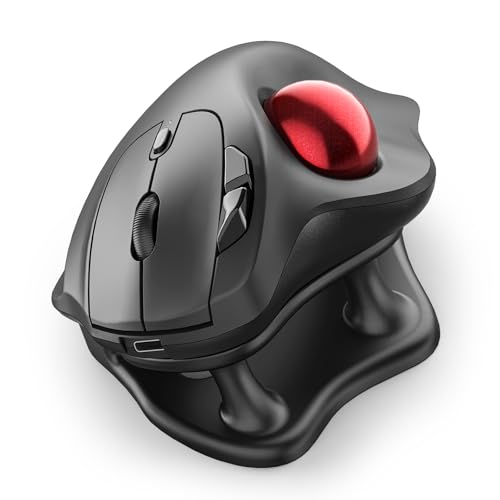
Nulea Wireless Trackball Mouse Ergonomic 21.7 Tilt Stand Thumb Control

Ergonomic Wireless Trackball Mouse SABLUTE MAM1 Pro

Wired Trackball Mouse for Large Hands

Nulea M512 Wireless Trackball Mouse

Wireless Trackball Mouse SABLUTE MAM2 Red Ball

ELECOM IST PRO Trackball Mouse
More Details On Our Top Picks
The MX Ergo S sits in the comfort-first lane, with an ergonomic shape that suits long desk sessions and a rechargeable battery that cuts down on routine battery swaps. Bluetooth and the encrypted dongle give you two connection paths, which matters when one laptop stays docked and another moves around the house.
The six programmable buttons add real value for spreadsheet work, photo edits, and repetitive navigation, especially once you map common commands. The trade-off is plain: you get more setup potential, but you also spend more time deciding how you want it configured.
Strong Points
- Shaped for a more relaxed hand position during long sessions.
- Rechargeable power suits daily desk use better than disposable cells.
- Bluetooth plus dongle support helps on mixed PC and Mac setups.
- Six programmable buttons can trim repetitive tasks in office software.
Things To Consider
- Setup takes a little thought before the button layout feels natural.
- The richer feature set may be more than you need for basic browsing.
Feature Snapshot
Who It Suits Best
Desk workers who want comfort, shortcut control, and a premium-feeling setup will get the most from this model.
Where A Sibling Pick Shines
ELECOM IST PRO Trackball Mouse makes more sense for power users who need wired, wireless, and Bluetooth options in one device.
That 21.7-degree tilt stand gives this Nulea a more angled hand position than the flatter designs, which can matter during longer office stretches. It also supports Bluetooth and 2.4 GHz wireless, so switching between a laptop and desktop stays tidy without moving adapters around constantly.
The four DPI levels let you slow down for accuracy or speed up for general navigation, and the three-device switching is handy in a mixed-device desk. One practical note, though, is that extra flexibility usually means more attention during setup, so this suits a user who likes a little tuning.
What We Like
- The tilted stand gives your hand a more open resting angle.
- Bluetooth and 2.4 GHz support make desk changes less fussy.
- Three-device switching helps you move between work gear cleanly.
- Four DPI levels make the pointer feel easier to tune.
- Rechargeable power fits a daily office routine.
Minor Gripes
- The angled design may take a short adjustment period.
- More modes mean a bit more setup attention at the start.
- Thumb-control layout is less familiar for people used to standard mice.
Details At A Glance
Made For
Multi-device office users who want a tilted thumb trackball with wireless flexibility will get strong value from this pick.
Another Choice May Suit
Logitech MX Ergo S Advanced Wireless Trackball Mouse suits you better when programmable buttons matter more than angle adjustment.
Quiet clicks and a 0-degree to 18-degree angle range make this SABLUTE a careful fit for shared offices or late-night desk sessions. Compared with the Nulea above, it feels more focused on keeping noise down while still giving you a choice in hand position.
The three-device setup with Bluetooth and USB receiver support adds flexibility for a laptop, tablet, and desktop mix. The trade-off is that thumb-control trackballs always ask for a short adjustment period, so it suits you best when you want a familiar layout with a calmer click sound.
Upsides
- Quiet clicks suit shared spaces and late work hours.
- Adjustable angle helps you settle on a hand position that feels natural.
- Bluetooth plus USB receiver support covers more desk setups.
- Rechargeable power reduces routine maintenance.
Room For Improvement
- Thumb-control layouts take some getting used to for first-time trackball users.
- The angle range is helpful, but it is still a narrower comfort tool than a full ergonomic shell.
Quick Facts
Best Suited To
Office users who want quieter clicks and a modest tilt range will find this a sensible middle ground.
Look Elsewhere When
ELECOM IST PRO Trackball Mouse suits advanced users better when they want more buttons and a higher-spec sensor.
Wired control keeps this PORLEI model straightforward, and that can be a virtue on a desk that stays in one place. The larger-hand focus is the real story here, because the shape aims to support a fuller grip rather than forcing your fingers into a compact shell.
It uses index-finger control, which some users prefer for precision work because the pointer hand and ball hand feel more separated. The honest read is that wired simplicity helps reliability in everyday office use, but it also means less freedom than the wireless picks above.
Best Bits
- Large-hand shaping gives the body more room to rest naturally.
- Wired connection removes charging concerns from the routine.
- Index-finger control can feel steady for detailed pointer work.
- Compatible with PC, laptop, Windows, and Mac setups.
Softer Spots
- The cord keeps the desk less flexible than wireless options.
- Index-finger control feels different from the thumb layouts used by most other picks here.
- The large-hand focus may feel roomy for smaller palms.
Core Details
Whose Shelf It Belongs On
Users with larger hands who want a wired, no-fuss trackball for a permanent desk setup will get the most from this model.
Skip It When
Nulea M512 Wireless Trackball Mouse fits better for shared desks that need cordless movement and ambidextrous use.
The M512 is the more adaptable Nulea in this list, mainly because the left-or-right-hand layout broadens who can use it comfortably. The 55 mm trackball is a fairly large control surface, so it may feel easier for steady, deliberate movement than smaller balls.
Four DPI levels give you room to tune cursor speed, and Bluetooth plus 2.4 GHz support suits a desktop that changes between machines. The trade-off is that broad compatibility and ambidextrous design usually come before flashy extras, so this is more practical than ornate.
Positives
- Left and right hand use makes it flexible in shared spaces.
- The 55 mm ball gives a generous control surface.
- Four DPI settings help you dial in pointer pace.
- Bluetooth and 2.4 GHz support cover common desk setups.
Areas To Watch
- The bigger ball may take a short adjustment period for people used to compact controls.
- Ambidextrous design is practical, but it does not add the angled shell found on the Nulea 21.7 Tilt Stand model.
At A Glance
The Right Fit
Shared desks, mixed-handed households, and simple workstations are the strongest match for this model.
Swap It Out When
Logitech MX Ergo S Advanced Wireless Trackball Mouse fits better for people who want programmable buttons and a more premium shell.
The MAM2 leans small and tidy, which helps on travel desks, compact home offices, or any setup where surface space is scarce. Thumb control, silent clicks, and support for three devices make it feel built for everyday switching rather than one heavy-duty workstation role.
It also adds an easy-clean note, and that matters more than it sounds when crumbs, dust, or carry-bag lint show up around the ball area. The compromise is familiar: smaller trackballs can feel less expansive than the larger Nulea M512, especially for users who like a bigger contact point.
Highlights
- Compact shape fits neatly into tight desk layouts.
- Silent clicks help keep the workspace quieter.
- Three-device support suits a laptop, tablet, and desktop mix.
- Rechargeable power keeps routine upkeep simple.
- Easy-clean design is practical for everyday dust buildup.
Points To Note
- Compact sizing may feel less roomy than larger-bodied alternatives.
- Thumb-control handling is less familiar for first-time trackball users.
- Smaller shells can feel a bit snug during all-day work.
Technical Sheet
Who Should Grab It
Space-conscious desk users and frequent movers between devices will benefit most from this compact SABLUTE.
Reach For A Different Pick When
ELECOM IST PRO Trackball Mouse is the stronger fit for advanced users who want more buttons and multiple connection types.
ELECOM’s IST PRO sits at the feature-heavy end of the field, with wired, 2.4 GHz, and Bluetooth 5.3 connectivity plus support for six devices. That mix makes sense on a workstation that juggles multiple computers, because you can move between them without rebuilding your whole desk around a single connection style.
The 12,000 DPI sensor and 10 custom buttons push it far beyond the simpler picks here, and the swappable bearings add another layer of refinement for trackball enthusiasts. The honest trade-off is complexity, because a device this configurable rewards users who are willing to shape it to their routine.
Best Points
- Six-device support is rare in this group and useful for multi-system desks.
- Wired, wireless, and Bluetooth paths give you real setup flexibility.
- 10 custom buttons can trim repetitive steps in demanding workflows.
- 12,000 DPI gives you a high ceiling for pointer response.
- Swappable bearings add a customization angle that serious trackball users will notice.
Small Caveats
- The menu of options can feel overbuilt for simple browsing or email.
- Advanced customization means a longer setup path than the more basic models.
- It makes the most sense once you know how you want your controls arranged.
Feature Rundown
Built With In Mind
Advanced users, multi-computer desks, and anyone who wants deep control over tracking and shortcuts will get the most from this ELECOM.
Where A Sibling Pick Shines
Logitech MX Ergo S Advanced Wireless Trackball Mouse is easier to live with for you if premium comfort matters more than dense customization.
How To Choose The Right Trackball Computer Mouses
Match The Control Style To Your Hand
Thumb-control models place the ball beside the thumb, which feels familiar for many people coming from standard mice. Finger-control designs move the ball to the center or top area, and that usually suits detail work where you want the hand to stay calmer.
The choice matters more than the spec sheet suggests. A trackball that looks perfect on paper can feel awkward after a full day if the control style fights your habits.
Think About Tilt, Shape, And Desk Space
Angled shells such as the Nulea 21.7 Tilt Stand or the SABLUTE MAM1 Pro can change how your wrist rests through the day. Flatter designs take up less mental adjustment, while larger shells, like the PORLEI option for large hands, can give your palm more room.
Desk size plays a role too. A trackball already saves room because it stays in place, but a compact shell still helps on crowded laptop setups or shared desks.
Check Connectivity Against Your Routine
Bluetooth works well for clean desks and laptop pairings, while a 2.4 GHz dongle can feel steadier on older machines or setups that need a dedicated connection. Wired models remove charging concerns entirely, which suits fixed workstations more than mobile use.
Multi-device switching matters for people who move between a work laptop, personal desktop, and tablet. The extra convenience is real, though it usually comes with a slightly more involved setup.
Use Case Should Decide The Extras
Programmable buttons help spreadsheet users, editors, and keyboard-light workflows. Quiet clicks matter more in shared rooms, and a larger ball or higher DPI range helps when you spend time on precise cursor work.
Think in terms of your actual desk habits, not just features. The best fit is the one that matches your hand position, connection needs, and patience for setup.
Things Worth Knowing First
Hidden Buying Traps
Trackball shoppers often focus on the ball size and miss the control layout. A thumb version and a finger version can feel very different, so the shape needs to match the way you already work.
Another common mistake is ignoring connection style. A wireless model can be tidy, but a wired or dongle-based option may suit a desktop that stays in one room.
The Upgrade Payoff
Higher-tier models usually cost more because they add more connection options, more buttons, better angle control, or a higher-spec sensor. Those extras matter most when you spend hours at the desk and want the pointer to feel tuned to your routine.
For casual browsing, a simpler model can be enough. For multi-computer work, shortcut-heavy tasks, or a need for finer control, the added flexibility can earn its place quickly.
Frequently Asked Questions
What makes a trackball different from a regular mouse?
You move the pointer with the ball instead of sliding the whole device across the desk. That can save space and keep your hand more settled during long sessions.
Is thumb control easier than finger control?
Thumb control often feels familiar faster, especially for people switching from a standard mouse. Finger control can feel steadier for detail work once the motion becomes natural.
Do wireless trackballs need much maintenance?
Most need only routine cleaning around the ball and sensors. Rechargeable models also reduce the hassle of swapping batteries.
Are programmable buttons actually useful?
They help most in office apps, editing work, and repetitive navigation. For simple browsing, you may not need many extra controls.
Can one trackball work across several computers?
Yes, many models support multi-device switching or multiple connection types. That makes a shared desk or mixed laptop setup easier to manage.
Closing Thoughts
Your best trackball depends on how your hand rests, how many devices you juggle, and whether you want simple control or deep customization. Logitech and ELECOM cover the higher-feature end, while Nulea, SABLUTE, and PORLEI handle comfort-first basics with less friction. Choose the shape that fits your workday, not the spec sheet that looks busiest. That’s the choice that tends to feel right after the first week, not just on day one.
