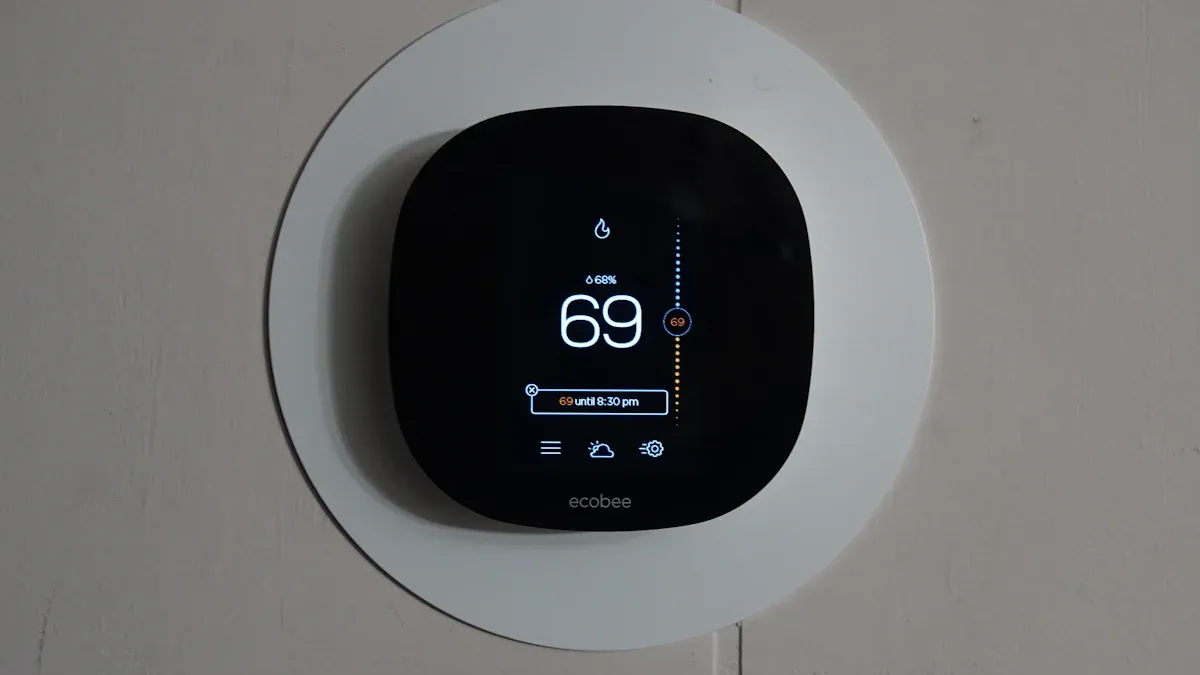
Smart thermostats revolutionize how you manage your home’s temperature. These devices learn your habits and adjust heating and cooling accordingly. This capability can lead to a remarkable annual energy consumption reduction of 10% to 15%. By using smart thermostats, you not only save on energy costs but also enhance your overall comfort at home. As their popularity grows, projections indicate that more households will adopt these energy-efficient products, transforming energy management for the better.
Key Takeaways
Upgrade to a smart thermostat to save 10-23% on heating and cooling costs annually.
Utilize features like intelligent scheduling and geofencing to reduce energy waste when you’re not home.
Control your home’s temperature remotely using a smartphone app for added convenience.
Enhance your comfort by allowing smart thermostats to learn your habits and adjust settings automatically.
Reduce your carbon footprint by using smart thermostats to optimize energy consumption.
What Are Smart Thermostats?
Smart thermostats are advanced devices that help you control your home’s heating and cooling systems more efficiently. Unlike traditional thermostats, which require manual adjustments, smart thermostats learn your habits and preferences. They automatically adjust the temperature based on your schedule and occupancy, making them a valuable tool for energy savings.
How Do They Work?
Smart thermostats connect to your home Wi-Fi network, allowing you to control them remotely using a smartphone app. This feature means you can adjust your home’s temperature from anywhere, whether you’re at work or on vacation. Here are some key features that set smart thermostats apart from traditional models:
Internet Connectivity: Smart thermostats connect to the internet, enabling remote access and control.
Occupancy Detection: They can sense when you’re home or away, adjusting the temperature accordingly.
Energy Tracking: Many smart thermostats provide real-time energy usage data, helping you understand your consumption patterns.
Geofencing: This feature allows the thermostat to adjust settings based on your location, ensuring comfort when you arrive home.
To illustrate the differences between smart thermostats and traditional programmable thermostats, consider the following table:
Feature | Smart Thermostats | Traditional Programmable Thermostats |
|---|---|---|
Internet Connectivity | Yes | No |
Occupancy Detection | Yes | No |
Remote Control | Yes (via app) | No (manual adjustment only) |
Scheduling | Yes | Yes |
Energy Tracking | Yes (real-time) | No |
Geofencing | Yes | No |
Smart thermostats significantly enhance your ability to manage energy use in your home. They integrate with other smart home devices, allowing for seamless automation. For example, you can set routines that adjust your thermostat when you turn on lights or appliances. This level of control not only improves comfort but also helps reduce energy consumption.
Smart Thermostat Features to Save Energy
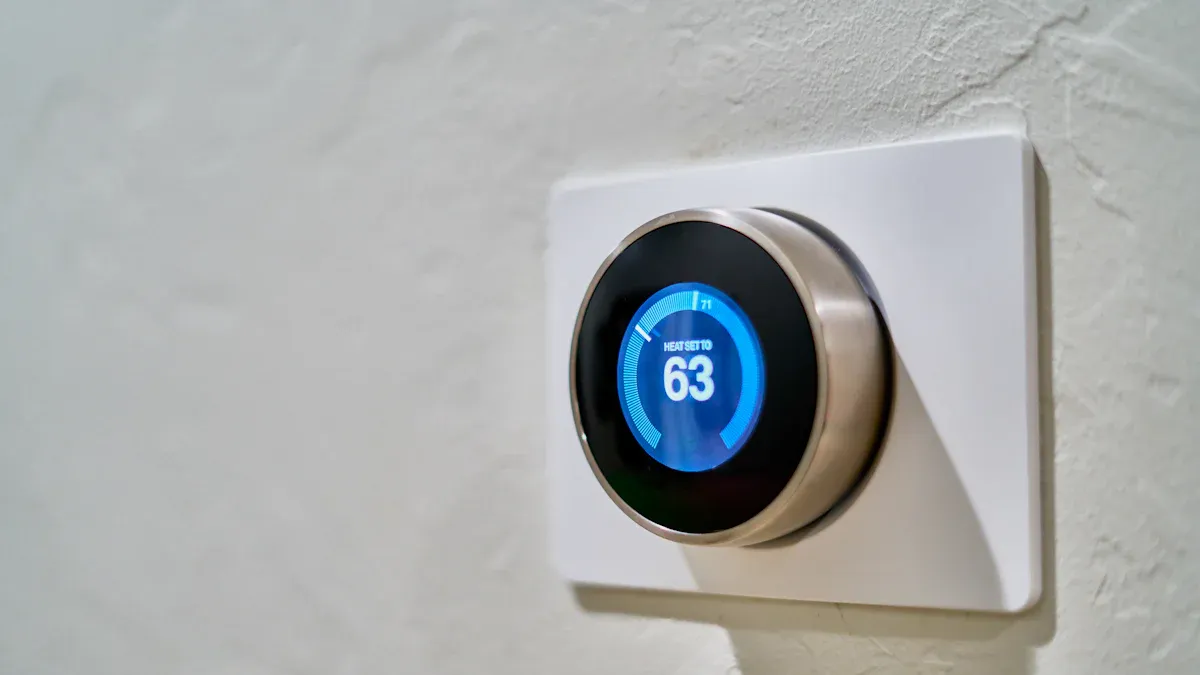
Smart thermostats come equipped with several features that help you save energy and reduce your utility bills. Understanding these features can empower you to make the most of your device.
Intelligent Scheduling
Intelligent scheduling is one of the standout features of smart thermostats. These devices learn your daily routines and adjust the temperature accordingly. For example, when you leave for work, the thermostat can automatically lower the heating or cooling. This adjustment prevents energy waste when no one is home. Studies show that using smart scheduling can help you save up to 10% a year on heating and cooling costs. By simply adjusting the thermostat temperature back 7°-10°F for eight hours a day, you can significantly reduce your energy consumption.
Geofencing Capabilities
Geofencing technology takes energy savings a step further. This feature uses your smartphone’s location to determine when you are home or away. When you leave your home, the thermostat adjusts the temperature to save energy. When you return, it pre-conditions your home to your preferred temperature. Research indicates that smart thermostats with geofencing can reduce HVAC energy use by approximately 10% to 15% annually. This capability ensures that your home remains comfortable while minimizing unnecessary energy consumption.
Learning User Preferences
Smart thermostats also utilize learning algorithms to adapt to your behavior. They track your temperature adjustments and create a personalized schedule that optimizes energy use. For instance, if you typically lower the temperature at night, the thermostat will learn this pattern and adjust automatically. This feature ensures comfort when you are home while conserving energy when you are away. Users of Honeywell Home thermostats report an average savings of 22% on heating and 17% on cooling energy consumption by using these recommended scheduling features.
Impact on Utility Bills
Average Savings Statistics
Smart thermostats can lead to impressive savings on your utility bills. Homeowners typically report annual savings ranging from 10% to 23% on heating and cooling costs. Here’s a breakdown of the estimated savings from various sources:
Source | Estimated Savings |
|---|---|
Ambient Air Solutions | 10% to 23% annually, up to $180 a year |
Nest | Average 12% savings |
Ecobee | Up to 23% savings |
You can expect to save around $50 annually on average, according to the Environmental Protection Agency (EPA). Nest Learning Thermostat users often see savings of 10-12% on heating and 15% on cooling, which can total about $140 per year. Ecobee users can achieve even higher savings, potentially reaching $200 annually.
Real-Life Examples
Real-life case studies illustrate the financial benefits of adopting smart thermostats. Many consumers experience significant cost reductions after installation. Here are some key findings:
Findings | Description |
|---|---|
Financial Savings | Adoption of smart thermostats leads to significant cost reductions for consumers. |
Renewable Energy Consumption | Consumers are motivated to adopt smart technologies due to the ability to utilize energy generated from renewable sources. |
Technological Benefits | Features like vehicle-to-home capabilities enhance the appeal of smart thermostats, contributing to their adoption. |
Smart thermostats also help you manage energy consumption during extreme weather events. For instance, during high temperature spikes, these devices can lower the temperature before peak demand times. This adjustment reduces the frequency of air conditioning usage, keeping your home comfortable while minimizing energy costs.
Additional Benefits of Smart Thermostats
Enhanced Comfort Levels
Smart thermostats significantly improve your comfort at home. They utilize sensors and occupancy data to learn your behavior. This learning allows them to adjust heating and cooling patterns effectively. Here are some ways they enhance comfort:
They maintain consistent indoor temperatures, which is especially beneficial for those sensitive to temperature changes.
These devices automatically adjust settings based on your habits and local weather, ensuring a comfortable environment without manual intervention.
Smart thermostats can create autism-friendly living spaces by stabilizing indoor temperatures, reducing sensory overload.
Convenience and Control
The convenience of smart thermostats cannot be overstated. You can manage your home’s temperature from anywhere using your smartphone. This feature allows you to adjust settings even when you are away. Here are some valued convenience features:
Remote control capabilities let you manage devices from any location.
The ability to set routines helps streamline daily tasks, reducing cognitive load for busy individuals.
Environmental Impact
Smart thermostats play a crucial role in reducing your home’s carbon footprint. They help you save energy, which directly correlates with lower carbon emissions. Here are some ways they contribute to environmental sustainability:
Smart thermostats ensure heat pumps operate only when necessary, minimizing energy waste.
They track and optimize auxiliary heat usage in colder climates.
Integration with outdoor sensors enhances efficiency.
Compatibility with eco modes and smart HVAC accessories further reduces energy consumption.
Research shows that homes using smart thermostat features can achieve energy savings of 10-15%. This reduction in energy usage leads to a smaller carbon footprint, promoting a healthier planet.
Smart thermostats offer numerous benefits that can enhance your home’s energy efficiency. Consider these key points:
Cost Savings: You can save 10-23% on heating and cooling costs by upgrading to a smart thermostat.
Energy Efficiency: Features like scheduling and geofencing reduce unnecessary HVAC runtime.
Convenience: Remote control capabilities allow you to manage your home’s temperature from anywhere.
Investing in a smart thermostat not only lowers your utility bills but also contributes to a healthier planet by reducing carbon emissions. Make the switch today for a more comfortable and efficient home! 🌍💡
FAQ
What is a smart thermostat?
A smart thermostat is a device that automatically adjusts your home’s heating and cooling based on your preferences and schedule. It connects to Wi-Fi, allowing remote control via a smartphone app.
How much can I save with a smart thermostat?
You can save between 10% to 23% on heating and cooling costs annually. Savings depend on your usage patterns and the specific features of your smart thermostat.
Can I control my smart thermostat remotely?
Yes! You can control your smart thermostat from anywhere using a smartphone app. This feature allows you to adjust settings even when you are away from home.
Do smart thermostats work with all HVAC systems?
Most smart thermostats are compatible with various HVAC systems, including central heating, air conditioning, and heat pumps. Check the manufacturer’s specifications to ensure compatibility with your system.
Are smart thermostats easy to install?
Yes, many smart thermostats come with user-friendly installation guides. You can often install them yourself, but consider hiring a professional if you feel unsure about the process.