
Digital oscilloscopes can feel intimidating until you need to trace a noisy signal, confirm a car repair, or keep a classroom demo moving without guesswork. This roundup focuses on models that fit real jobs, from bench setups with deeper memory to handheld units you can carry into a garage or attic. The right choice usually comes down to channel count, bandwidth, screen readability, and whether you want a pure scope or a multi-tool with meter and generator functions.
The Shortlist At A Glance
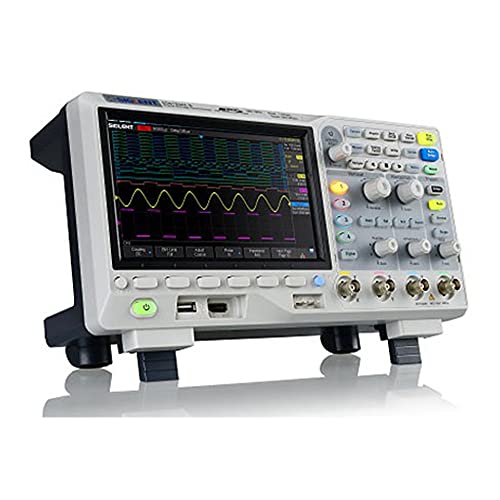
Siglent SDS1104X-E 100Mhz Digital Oscilloscope 4 Channels

FNIRSI 2C53T 3-in-1 50MHz 2CH Oscilloscope Multimeter DDS Signal Generator

Rigol DS1054Z 50 MHz 4-Ch 1 GSa/s 24 Mpts

RIGOL DS1202Z-E 200 MHz 2-Ch 1 GSa/s 24 Mpts

FNIRSI DSO-510 2-in-1 10MHz Handheld Oscilloscope DDS Signal Generator

FNIRSI DSO152 Handheld Oscilloscope 200kHz Bandwidth, 2.5MS/s

3 in 1 Handheld Oscilloscope Automotive Dual Channel 50MHz

FNIRSI 1013D Plus 100MHz Oscilloscope, 2 Channel Oscilloscope 7″ TFT Touch
More Details On Our Top Picks
Bench users usually notice the Siglent first for its four channels, which give you room to compare multiple signals without swapping probes. The 100 MHz bandwidth keeps it in a comfortable middle ground for mixed analog and digital work, and the standard decoder matters when serial lines start acting odd in a lab or workshop.
Compared with the handheld FNIRSI models later in this list, this one clearly belongs on a desk, not in a pocket. That trade-off makes sense for repair benches, classroom stations, and hobby setups where screen stability and channel count matter more than portability.
Strong Points
- Four analog channels give you more room for comparison work.
- 100 MHz bandwidth suits many common bench tasks.
- The decoder support helps you follow serial traffic more easily.
- Lower-noise behavior is a plus for signal clarity.
- Best suited to a fixed workspace with probes left in place.
Things To Consider
- It’s a bench unit, so it’s less convenient for field service.
- The feature set is geared toward hands-on learning and debugging, which may feel like more tool than some casual users need.
- Owners usually keep models like this in one spot, so dust cover habits and cable management matter.
Core Details
Who It Suits Best
You get the most value here in a lab, repair bench, or training space where four channels and decoding tools matter every week.
Where A Sibling Pick Shines
Rigol DS1054Z 50 MHz 4-Ch 1 GSa/s 24 Mpts fits better for students and hobbyists who want a deep-capacity starter scope with more long-capture flexibility than a portable unit can offer.
The 2C53T packs a lot into one handheld shell, and that matters during roadside troubleshooting or bench repairs where you want fewer tools in your bag. You get scope, multimeter, and signal generation in a single unit, so you can move from tracing a waveform to checking continuity without changing devices.
Compared with the Siglent bench model, this FNIRSI is less about deep desk work and more about fast, mobile problem solving. The trade-off is clear, though, because a packed feature set can still feel tighter than a full-size scope when you’re staring at several signals at once.
What We Like
- Three functions in one body cut down the kit you need to carry.
- The 50 MHz scope section is useful for common repair tasks.
- Multimeter mode broadens the job range in a practical way.
- Signal generation helps you inject test tones during troubleshooting.
- Handheld format suits car work and quick checks away from a bench.
Small Caveats
- The all-in-one layout asks you to trade some screen room for versatility.
- Handheld tools like this usually reward careful case storage, since they get tossed into bags more often.
- The many modes can slow first-time setup a little until you learn the menu flow.
Feature Rundown
Built With In Mind
You’ll get the best use from this in automotive and portable repair work, especially when you need a scope and meter in the same bag.
A Better Fit Elsewhere
Rigol DS1202Z-E 200 MHz 2-Ch 1 GSa/s 24 Mpts suits you better for bench debugging that needs more bandwidth and a larger fixed setup.
The DS1054Z sits in a useful middle zone for people who want a serious bench scope without jumping straight into a bigger, pricier machine. Its four channels, deep memory, and intensity-style display make it a steady choice for lessons, circuit checks, and long captures where brief glitches matter.
Compared with the Siglent above it, this one gives you the same four-channel feel but leans into capture depth and review tools rather than outright speed. That balance works well in a home lab, where you may be tracing one stubborn fault for a while and want the waveform history to stay readable.
Positives
- Four channels support more complete signal comparisons.
- Deep memory helps preserve longer events for review.
- Intensity grading makes faint activity easier to spot on the display.
- Serial decode support is useful for embedded work and coursework.
- The bench form factor suits a permanent workspace.
Worth Noting
- It’s not a pocket tool, so it rewards a dedicated desk space.
- The feature mix is rich enough that casual users may not touch everything right away.
- As with most bench instruments, neat probe storage helps keep the setup manageable.
Details At A Glance
The Right Fit
You suit this scope best in a home lab, classroom, or repair bench where long capture history matters more than portability.
Look Elsewhere When
FNIRSI DSO-510 2-in-1 10MHz Handheld Oscilloscope DDS Signal Generator fits better for carry-around troubleshooting and mixed-tool convenience.
This Rigol raises the ceiling with 200 MHz bandwidth, so faster signals stay in better view on the bench. Two channels keep the layout simpler than the DS1054Z, but the deeper bandwidth and the same 24 Mpts memory make it a strong fit for work where signal speed matters more than channel count.
For electronics repair or embedded debugging, the sharper capture rate and intensity display help intermittent issues stand out without forcing you to stare at a flat trace. You may find it a better match than the Siglent if your work leans toward quicker signals rather than many simultaneous channels.
Highlights
- 200 MHz bandwidth gives you more room for faster signals.
- Two channels keep setup simple on a crowded bench.
- Deep memory supports longer looks at tricky events.
- The capture and display style helps reveal brief anomalies.
- Serial decode support adds value for digital troubleshooting.
Areas To Watch
- Two channels can feel limiting for multi-point comparison work.
- It still belongs on a desk, so mobility stays secondary.
- Owners often benefit from keeping probes labeled, since the work tends to be more focused and faster paced.
Core Details
Whose Shelf It Belongs On
You fit this model best on a serious repair bench or engineering desk where bandwidth matters more than having four channels.
Swap It Out When
Siglent SDS1104X-E 100Mhz Digital Oscilloscope 4 Channels works better for training rooms and workbench jobs that need broader multi-channel viewing.
The DSO-510 keeps the idea simple, a handheld scope with signal generation built in, which is handy in a garage or on the move. Its 10 MHz bandwidth and 48 MS/s sampling rate suit lower-speed diagnostic work, and the 2.8-inch TFT keeps the footprint small enough for a tool bag.
Compared with the 2C53T, this one feels narrower in scope but lighter in purpose, which can be exactly what you want for quick checks on basic circuits. The honest read is that it works best for straightforward troubleshooting rather than heavy bench analysis.
Upsides
- Handheld shape makes it easy to carry between jobs.
- Built-in generator adds useful signal output in one tool.
- The small screen keeps the tool compact.
- Auto and trigger modes help with basic waveform handling.
- Good fit for DIY electronics and vehicle-side checks.
Softer Spots
- 10 MHz bandwidth keeps it in a lower-speed lane.
- The display size may feel tight during long inspection sessions.
- Portable tools like this usually need regular charging habits and careful cable packing.
Technical Sheet
Who Should Grab It
You suit this pick best for light automotive work, hobby fixes, and carry-along troubleshooting where compact size matters.
Another Choice May Suit
FNIRSI 1013D Plus 100MHz Oscilloscope, 2 Channel Oscilloscope 7″ TFT Touch fits better for you if you want a larger screen and much more bandwidth.
The DSO152 is the smallest-minded pick in this group, built for quick checks rather than serious bench analysis. A 200 kHz bandwidth and 2.5 MS/s sampling rate keep it in low-frequency territory, which makes sense for car audio, simple signal tracing, and a tool you want close at hand.
Compared with the DSO-510, it gives up generator versatility and a stronger scope front end, but it also looks easier to stash in a glove box or compact kit. That trade-off is fair for occasional use, especially around basic amplifier tuning and casual troubleshooting.
Best Bits
- Very compact form is easy to store and carry.
- Simple one-click auto handling reduces setup fuss.
- USB-C recharge support makes daily charging less awkward.
- Good for low-frequency audio and signal checks.
- Useful for quick, occasional inspection tasks.
Points To Note
- Its bandwidth is modest, so it fits only simpler work.
- The small screen favors short jobs over long analysis sessions.
- Portable gear like this benefits from a padded pouch to keep probes and cables together.
Feature Snapshot
Made For
You fit this pick best for basic car audio checks, simple bench verification, and compact carry kits.
Where Shoppers Go Wrong
Rigol DS1054Z 50 MHz 4-Ch 1 GSa/s 24 Mpts is the safer choice for anyone who expects deeper capture depth and broader bench capability.
Some handheld tools try to do too much, but this one keeps the logic easy to follow: scope, meter, and generator in a single shell. That makes it useful for car repair or home electronics work where you want to move from waveform shape to component checks without unpacking a second device.
Compared with the FNIRSI DSO-510, this ZOYI model gives you a dual-channel layout and a more traditional multimeter side, which helps in mixed troubleshooting jobs. The trade-off is that the interface may feel busier than a plain scope, so it suits hands-on tinkerers more than casual users.
Reasons To Buy
- Three tools in one reduce the number of devices you carry.
- Dual-channel scope mode handles comparison work better than single-input units.
- Multimeter functions cover resistance, capacitance, continuity, diode checks, and current.
- Good for mixed electrical and automotive diagnosis.
- Useful for compact repair kits and mobile bench bags.
Minor Gripes
- The many functions can take a little practice to move through smoothly.
- All-in-one tools usually ask you to keep the battery topped up more carefully.
- The busier layout may slow quick grab-and-go use for absolute beginners.
Core Details
Whose Shelf It Belongs On
You fit this model best if you want one portable tool for automotive checks and general electronics repair.
Skip It When
FNIRSI 2C53T 3-in-1 50MHz 2CH Oscilloscope Multimeter DDS Signal Generator suits you better if you want a more feature-heavy handheld with a built-in generator and higher meter count.
The 1013D Plus feels like the most screen-forward handheld in this set, with a 7-inch touch display that makes tracing easier to follow at arm’s length. Add 100 MHz bandwidth, two channels, and a 6000 mAh battery, and you get a portable scope that leans toward longer repair sessions instead of quick pocket use.
Compared with the DSO152 and DSO-510, this model is much closer to a true handheld workhorse, which is why it makes sense for car repair or circuit work that benefits from more display room. The built-in high-voltage protection module and 100X probe also suit practical field use, though the touch interface may feel less immediate than physical controls for some hands.
Bright Spots
- The 7-inch touchscreen gives you a roomier view than smaller handheld models.
- 100 MHz bandwidth keeps it useful for more demanding portable jobs.
- Two channels let you compare signals without guessing.
- The 6000 mAh battery supports longer cordless sessions.
- Built-in protection and the included high-voltage probe fit car repair use.
Honest Caveats
- Touch-based control can take some getting used to in fast repairs.
- It still isn’t as expansive as a full bench scope for deep lab work.
- As with other portable units, keeping the screen and probe lead tidy helps the setup last longer in a toolbox.
Quick Facts
Best Suited To
You fit this scope best for portable repair work, especially in garages, driveways, and compact service kits.
Reach For A Different Pick When
Siglent SDS1104X-E 100Mhz Digital Oscilloscope 4 Channels is the better fit for a fixed lab where four-channel viewing matters more than touch portability.
How To Choose The Right Digital Oscilloscopes
Bandwidth And Sample Rate Work Together
Bandwidth tells you how fast a signal can be before the scope starts to miss useful shape details. Sample rate, measured in samples per second, affects how densely the scope records the waveform, so a faster number usually gives you cleaner timing detail on sudden edges. For repair work on motors, audio gear, or digital boards, the pair matters more than either figure alone.
A 10 MHz handheld can be fine for simple checks, while a 100 MHz or 200 MHz bench model gives you more room for faster electronics. The trade-off is cost and size, so your job range should set the ceiling, not a spec sheet impulse.
Channel Count Changes How You Work
Two channels suit side-by-side comparison on many repairs, especially when you want to compare input and output. Four channels help when you need to watch power, clock, data, and trigger lines together, which can save a lot of probe swapping on embedded boards. That’s where the Siglent SDS1104X-E and Rigol DS1054Z start to make more sense than the smaller handhelds.
More channels usually mean a larger bench footprint and a little more setup complexity. For quick field diagnostics, a dual-channel handheld can feel calmer and easier to carry.
Memory, Capture, And Display Matter More Than They Sound
Deep memory helps hold longer events so you can inspect a fault after it happens. Intensity-style displays, 30,000 wfms/s capture rates, and record or playback functions help intermittent glitches stand out instead of vanishing into a flat line. The practical payoff shows up during troubleshooting sessions that drag on for an hour or more.
For students and hobbyists, these features make a scope easier to learn from because the trace stays readable. For field repair, they reduce the need to repeat the same measurement over and over.
Portable Tools Versus Bench Models
Handheld scopes make sense for car work, site visits, or a packed garage drawer. Bench models are better for desk-based diagnosis, long sessions, and setups where you want the screen steady and probes always within reach. A pocket unit is a lantern, while a bench scope is closer to a work light.
Your daily routine should decide the shape of the tool. A portable model saves space, but a full-size scope usually gives you more control and a less cramped interface.
A Quick Reality Check
Mistakes Worth Dodging
Many people start with bandwidth that’s too low for the signals they actually work on. That mismatch can turn a repair into guesswork, especially on faster digital circuits. Another common slip is buying a feature-heavy handheld and then realizing the screen or menu flow feels crowded for regular use.
It also helps to think about where the scope will live. A bench model left in a drawer wastes its strengths, and a field unit without a proper case tends to collect cable clutter fast.
Where The Extra Money Goes
Higher-tier digital oscilloscopes usually spend more on capture depth, channel count, display quality, decoding tools, and cleaner front-end behavior. You also tend to get better visibility into brief faults, which matters a lot when a signal only misbehaves once in a while.
That upgrade makes sense for students who expect to grow into embedded work, and for repair techs who rely on quicker fault isolation. For light audio checks or occasional hobby use, a smaller handheld often gives you enough without extra complexity.
Closing Thoughts
Your best match depends on how you work, not on chasing the biggest number on the page. Bench-focused users will feel at home with the Siglent or Rigol units, while mobile repair work points you toward the FNIRSI and ZOYI handhelds. Keep your eye on channels, bandwidth, and how much screen room you actually want during a normal session. That’s the part that keeps the purchase useful long after the first project.
