
You want Dj Studio Monitors that help you hear balance, not just volume. In a home studio, bedroom setup, or dual-use desk, the right pair can make mixes, edits, and everyday listening feel far less guessy. This roundup focuses on compact active models, fuller bookshelf-style options, and familiar reference speakers, so you can match sound, inputs, and footprint to your space.
Some picks lean practical for desks with Bluetooth and multiple inputs, while others are built for tighter monitoring habits and more critical listening. The differences matter most once you start placing them beside a laptop, audio interface, turntable, or gaming setup.
Quick Look At Our Top Picks

Ortizan C7 Powered Studio Monitors Pair with Bluetooth 5.3, Black

Edifier MR3 Powered Studio Monitor Speakers, White

Edifier MR3 Powered Studio Monitor Speakers, Black

Sanyun SW206 80W 2.0 Active Bookshelf Speakers, White

Sanyun SW206 80W 2.0 Active Bookshelf Speakers, Black

Sanyun SW206 80W 2.0 Active Bookshelf Speakers, Red
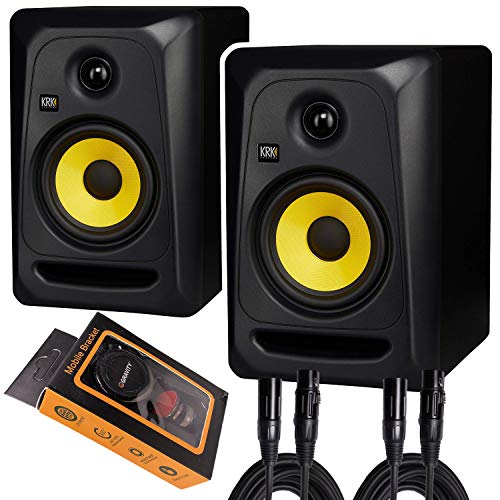
KRK Classic 5 Professional Bi-Amp 5″ Powered Studio Monitor

YAMAHA Hs5 Powered Studio Monitor, Pair
More Details On Our Top Picks
The Ortizan C7 suits a desk that has to do a little bit of everything, from late-night editing to casual music playback. Bluetooth 5.3 matters here because it trims cable clutter, while the RCA and 3.5mm AUX options keep older gear in play.
The honest trade-off is simple, you get convenience first, not a sprawling feature set. That makes it a tidy fit for a dorm room, starter studio, or gaming corner where space is tight and connection flexibility matters more than big-box scale.
What We Like
- Bluetooth 5.3 gives you a clean wireless path for phones and tablets.
- RCA input keeps it friendly with TVs, interfaces, and other wired sources.
- 3.5mm AUX broadens compatibility with everyday devices.
- Compact styling helps the pair sit neatly beside a laptop or small controller setup.
Small Caveats
- The compact frame helps on cramped desks, but it also leaves less room for fuller low-end output.
- Wireless convenience is handy, though a wired signal still makes more sense for critical work.
Core Details
Who Will Love This
Beginners and casual creators who need a small, flexible pair for a desk setup will get the most from the C7.
Where A Sibling Pick Shines
Edifier MR3 Powered Studio Monitor Speakers, White is the better fit for you if you want a more source-heavy desk with balanced TRS and headphone output in the mix.
The MR3 lands in a useful middle ground for you if the desk does double duty, one side creative work and the other side daily listening. The Hi-Res Audio certification points to a flatter response approach, which usually matters more than hype when you want mixes that translate beyond your room.
It also gives you a richer connection spread than the Ortizan C7, especially with balanced TRS alongside RCA, AUX, Bluetooth, and a headphone output. That mix feels well suited to a small studio that grows in stages, though the extra flexibility adds a little setup decision-making.
Highlights
- Balanced TRS input is useful for cleaner signal runs from interfaces and pro-style gear.
- RCA and AUX can stay connected at the same time, which is handy on crowded desks.
- Headphone output gives you a simple private-listening option.
- Bluetooth with multi-point support works well for switching between a phone and laptop.
- The 52Hz to 40kHz range signals a monitoring-first tuning approach.
Areas To Watch
- The feature spread is broad, so first-time setup can take a little more thought than a basic pair.
- White finish looks clean, though it can show dust sooner in a busy room.
- The pair is compact, but a larger workspace may leave you wanting more physical scale.
Feature Rundown
Built With In Mind
Music makers who want one compact pair for both monitoring and desk listening will find this model especially easy to place.
Another Choice May Suit
YAMAHA Hs5 Powered Studio Monitor, Pair fits you better if your priority is stricter reference listening and a more old-school studio approach.
The black MR3 keeps the same working formula as the white version, just in a finish that tends to suit darker desks and less reflective setups. That matters more than it sounds, because a monitor pair that blends into the room is often easier to live with every day.
Compared with the Ortizan C7, you get a more studio-minded connection spread and the same tidy desktop scale. It feels like a sensible step up for you if your setup includes both audio work and regular computer use, though the pared-back design won’t feel flashy.
Upsides
- Black finish fits neatly into understated workspaces.
- Balanced TRS, RCA, and AUX make source swapping less awkward.
- Bluetooth V5.4 supports modern wireless use without cluttering the desk.
- Headphone output is useful for quiet editing sessions or shared rooms.
Worth Noting
- The two MR3 versions overlap heavily, so your choice may come down to finish rather than function.
- Its compact size is practical, but larger rooms may call for a bigger cabinet.
Details At A Glance
Who Should Grab It
Desk-based creators who want a modest footprint and a darker finish should feel right at home with this pair.
Swap It Out When
Sanyun SW206 80W 2.0 Active Bookshelf Speakers, White is the better match for you if you want a wider input menu and dual-mode listening behavior.
The SW206 in white is aimed at setups that need more than a single use case. Creator Mode focuses on a cleaner monitor-style presentation, while Music Mode adds a more relaxed feel for listening, gaming, or watching video, so the pair can live in a room that does double duty.
The hardware list is the main attraction here, especially the carbon fiber 4-inch driver, 25mm silk dome tweeter, and MDF cabinet. That combination usually points to a more substantial desktop presence than the smaller Ortizan C7 or MR3 pairs, though the trade-off is a larger visual footprint.
Reasons To Buy
- Creator Mode and Music Mode let you switch the sound profile to suit the task.
- 4-inch carbon fiber driver helps the cabinet feel more substantial on a desk or shelf.
- 25mm silk dome tweeter is a good fit for smoother high-frequency detail.
- 24-bit DAC supports a more direct digital signal path from compatible sources.
- Inputs include optical, coaxial, AUX, USB, BT, and 6.35mm TRS, so the pair can anchor a busy setup.
Points To Note
- The many input paths are useful, though they also make first-time setup a bit more involved.
- White finish brings a clean look, but it can stand out more in a dark room.
- The cabinet size is fine for shelves and desks, yet it will feel less discreet than the Ortizan C7.
Technical Sheet
Best Suited To
Creators who juggle several devices and want one pair to cover work, games, and music will get a lot out of this model.
Look Elsewhere When
Edifier MR3 Powered Studio Monitor Speakers, White is the better match for you if you want a smaller cabinet and a slightly simpler path to a desk setup.
The black SW206 keeps the same dual-mode idea as the white version, but the darker finish tends to sit more quietly in a room full of gear. That makes it a good match for home offices and music corners where you want the speakers to blend into the background.
The nice part is that you still get the same broad source support, so the color choice doesn’t force a sound compromise. The trade-off is mainly visual, and that feels fair for anyone comparing this directly with the more understated Edifier MR3 Black.
Best Bits
- Black cabinet suits darker desks, racks, and mixed-media rooms.
- Creator Mode supports more honest listening for edit-heavy sessions.
- Music Mode adds a more relaxed feel for casual playback.
- Optical, coaxial, AUX, USB, BT, and 6.35mm TRS help it plug into many setups.
Minor Gripes
- The feature set is wide, so cable management can take a little planning.
- Its larger enclosure will ask for more shelf depth than a compact monitor pair.
Core Details
The Right Fit
You should look at this pair if your desk mixes creative work, casual music, and several wired sources in one place.
Where A Sibling Pick Shines
Sanyun SW206 80W 2.0 Active Bookshelf Speakers, White is the better match for you if your room already leans light-colored and you want the speaker finish to pop a little less.
The red SW206 is for you if the speakers sit in plain sight and you want the system to say something about your space. Same core hardware, same dual-mode idea, just a much bolder cabinet finish than the black version.
That can be a plus in a streaming corner, creative studio, or gaming room where visual personality matters as much as the gear list. The caveat is obvious enough, the finish will dominate more of the room, so it suits confident setups better than quiet ones.
Positives
- Red finish gives your desk a stronger visual identity.
- Dual-mode design supports both monitoring habits and casual listening.
- The same broad input list keeps source switching practical.
Things To Consider
- The color is the whole story here, so the choice is mostly about style.
- It will feel less subtle than the black SW206 in a minimal room.
Feature Snapshot
Whose Shelf It Belongs On
Style-conscious home creators who want their monitors to carry a bit of visual character should feel good about this one.
Reach For A Different Pick When
YAMAHA Hs5 Powered Studio Monitor, Pair is the better fit for you if the room calls for a more restrained, reference-first look.
The Classic 5 feels built for a more serious monitoring desk, especially if you already think in terms of cable runs, placement, and reference habits. Compared with the Edifier MR3 and Sanyun SW206 pairs, it reads less like a multipurpose desktop speaker and more like a familiar studio workhorse.
The included XLR cable and phone holder make the bundle more practical right away, though the real draw is the 5-inch powered monitor format. That extra cabinet size usually suits you better in a room that has room to breathe, and the honest read is that it can feel overbuilt for a tiny desk.
Strengths
- 5-inch monitor format gives you more physical presence than the smaller compact pairs.
- The bi-amp design points to separate amplification stages for the drivers.
- Included XLR cable makes the starter setup more straightforward.
- Phone holder is a useful desk accessory for reference tracks and session notes.
Room For Improvement
- The larger cabinet is less forgiving on shallow shelves or cramped desks.
- The bundle is handy, though you still need the right room layout to get the most from it.
- It feels more studio-focused than casual, so it may not be the smoothest fit for mixed entertainment use.
Feature Card
Made For
Home engineers and mix-focused creators who want a classic studio layout will appreciate this pair most.
Where Shoppers Go Wrong
Sanyun SW206 80W 2.0 Active Bookshelf Speakers, Black is the easier fit for a smaller room that still needs wide source support and a more flexible listening profile.
The Hs5 is the most reference-minded choice here, and that makes sense for you if accuracy sits ahead of everything else. Yamaha’s long-running studio-monitor approach has always leaned toward hearing what is actually in the mix, not a softened or polished version of it.
Compared with the more lifestyle-friendly Ortizan and Edifier picks, this pair feels more focused and less forgiving of sloppy placement. That can be a strength in a controlled studio, because the speakers push you to make decisions with care instead of decorating the sound.
Positives
- Reference-first tuning suits mix work and critical listening.
- Pair format keeps the setup simple and familiar.
- Works well as a long-term anchor for a serious production desk.
Softer Spots
- The stripped-back approach can feel plain beside the more feature-rich Sanyun and Edifier options.
- It asks more of your room and placement, so a cramped corner may not flatter it.
Core Details
Best Suited To
Mix engineers, producers, and committed home-studio users who want a plainspoken reference pair should put this at the top of the short list.
Consider Something Else When
Edifier MR3 Powered Studio Monitor Speakers, White is the friendlier pick for you if you need a more flexible desk speaker with Bluetooth and multiple input paths.
How To Choose The Right Dj Studio Monitors
Match The Monitor To Your Room
Room size changes everything, more than most people expect. Compact pairs like the Ortizan C7 fit a crowded desk, while the KRK Classic 5 and YAMAHA Hs5 give you a bigger reference feel that needs more breathing room around the cabinet. In a small bedroom studio, a monitor that looks modest on paper often turns out to be the easier daily choice.
Pay attention to cabinet depth, desk width, and how close the speakers will sit to walls. A small speaker in a poor spot can sound less useful than a larger one placed well, which is why placement matters just as much as the spec sheet.
Decide How You’ll Connect Everything
Connection variety matters fast once your setup grows past one device. Bluetooth is convenient for quick playback, RCA works well with consumer gear, and balanced TRS or XLR is more at home with studio interfaces and cleaner signal runs. The Edifier MR3 and Sanyun SW206 families stand out here because they cover more connection types than the Ortizan C7.
You also want to think about private listening and source switching. A headphone output can save time in shared spaces, and multi-input support helps you leave a computer, phone, and interface connected without constant unplugging.
Choose Between Flat And Flexible Sound
Studio monitors are meant to show you detail, but not every pair handles that job the same way. The YAMAHA Hs5 and KRK Classic 5 lean more toward reference-style listening, while the Sanyun SW206 pairs add a creator mode and a music mode for a softer hand when the session ends. That split is useful for people who edit by day and relax with games or playlists at night.
More flexible tuning can feel friendlier, yet a flatter sound usually helps you make mix decisions with less guesswork. Your best match depends on whether your priority is honest playback or a more adaptable speaker for mixed use.
Think About Cabinet Size And Daily Habits
Larger drivers and cabinets can bring more physical scale, but they also ask for more space and a sturdier desk. If you move gear often, a lighter compact pair is easier to shuffle; if you keep one setup in place, a heavier monitor can make more sense. Maintenance stays simple either way, though darker finishes usually hide dust a bit better than white ones.
Daily habits matter more than marketing language. A creator who plugs in one interface and works quietly has different needs from a DJ-style desktop setup with multiple sources, a phone, and casual listening all in rotation.
A Quick Reality Check
Common Shopping Slip Ups
People often buy too much speaker for too little space. A 5-inch monitor can be a smart studio tool, but it can also crowd a shallow desk and leave you fighting placement instead of listening. The safer move is to measure first, then match the cabinet to the room you actually have.
Another common miss is ignoring connection needs. A pair with only basic inputs can be fine for a simple laptop setup, but it becomes awkward once you add an audio interface, console, or phone.
When Paying More Pays Off
Higher-tier models usually cost more because they give you better input options, more controlled driver setups, or a more reference-minded tuning approach. That extra money often goes into cabinets, amplification layout, and a design that helps the speakers behave more predictably in a studio room. The payoff shows up most clearly when your mixes need to translate beyond the desk.
Spending up also makes sense when your room is already organized and you know exactly how you work. In that case, a more capable monitor is less about excitement and more about reducing second-guessing during long sessions.
Final Thoughts
The best Dj Studio Monitors for you depend on room size, connection needs, and how strictly you want to hear the source. The Ortizan C7 keeps things simple, the Edifier MR3 offers a broader set of connections, and the YAMAHA Hs5 stays closest to a reference-first studio mindset. If your desk has to do double duty, the Sanyun SW206 line is the most flexible middle ground. Choose the pair that fits your space first, and the rest tends to fall into place.
