
You want monitors that help you hear small mix choices, not speakers that flatter everything. That matters just as much in a home studio as it does in a desk setup for editing, beat making, or long listening sessions.
This roundup focuses on gear that makes daily decisions easier, from balanced desktop speakers to closed-back monitoring headphones and sturdy stands. You’ll also see where each pick fits best, because the right match depends on your room, your source gear, and how close you sit.
Quick Look At Our Top Picks
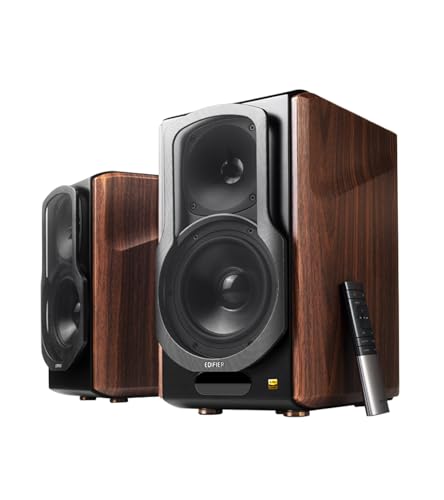
Edifier S2000MKIII Tri-Amped Bookshelf Speakers 130W Studio Monitor Walnut

Edifier MR3 Powered Studio Monitor Speakers Black Pair

Edifier MR3 Powered Studio Monitor Speakers White

beyerdynamic DT 770 Pro X Wired Over-Ear Headphones Black

YAMAHA Hs5 Powered Studio Monitor Pair

Liquid Stands Studio Monitor Stands 2 Pack 12×9 Clamp-on Adjustable

Edifier MR5 2.0 Studio Monitor Bookshelf Speakers Black

Edifier MR5 2.0 Studio Monitor Bookshelf Speakers White
More Details On Our Top Picks
These are the sort of desktop speakers you reach for when you want a fuller presentation without losing the detail that helps during editing or casual reference listening. The walnut finish gives them a warmer furniture-like presence, which suits a living room desk as much as a small studio corner.
The source inputs cover Bluetooth, optical, coaxial, RCA, and line-in, so you can keep a computer, turntable, streamer, or interface connected without constant swapping. That flexibility makes sense for you if your setup changes often, though the trade-off is more cabling and a little more planning around source selection.
Strong Points
- Multiple input paths make it easier to keep several sources ready at once.
- The tri-amped design helps separate duties across the drivers, which usually pays off in clearer playback at mixed listening levels.
- Bluetooth support suits casual listening, while the wired inputs keep the speaker pair useful for desk work.
- The bookshelf shape fits neatly on stands or a wide desk without turning the setup into a tangle.
Things To Consider
- The broader feature set also means you’ll spend a bit more time organizing connections.
- Bookshelf speakers like these still need placement care, so a cramped desk can hold them back.
- The wood finish looks polished, though it can show dust more clearly than a matte black cabinet.
Feature Snapshot
Who It Suits Best
You’ll get the most from this pair if you want one speaker setup that can move between music, desktop work, and multiple source components without feeling stripped down.
Where A Sibling Pick Shines
Edifier MR5 2.0 Studio Monitor Bookshelf Speakers Black suits you better if you want a newer three-way layout with room tuning tools for a more controlled mixing desk.
MR3 sits in that practical middle ground where a small studio or bedroom desk needs honest sound without a bulky footprint. The black finish keeps things plain, which helps the pair disappear into a setup that already has a keyboard, interface, and screen crowding the surface.
The real draw is the mix of balanced TRS, RCA, AUX, headphone output, and Bluetooth multipoint, meaning you can keep work gear and casual playback sources in reach. For most desktop setups, that’s a better daily experience than a speaker pair with only one or two paths, though the lower output keeps expectations realistic for larger rooms.
What We Like
- The balanced TRS input helps suit audio interfaces and other studio hardware.
- RCA and AUX can stay connected at the same time, which saves you from constant cable swapping.
- Bluetooth multipoint is useful for quick source changes from a laptop and phone.
- The headphone output adds a simple late-night monitoring path.
- The 3.5-inch mid-low drivers and 1-inch tweeters create a compact stereo pair that fits tight desks well.
Points To Note
- The output level is suited to smaller rooms, not big open-plan spaces.
- Compact cabinets leave less room for low-end reach than larger speaker designs.
- Keeping multiple sources connected is handy, but it also asks for a cleaner cable layout.
Core Details
Whose Shelf It Belongs On
You should gravitate toward MR3 if you want a compact active pair for a desk, computer setup, or small creative room where flexibility matters more than raw size.
Look Elsewhere When
Edifier S2000MKIII Tri-Amped Bookshelf Speakers 130W Studio Monitor Walnut makes more sense if you want a fuller, more lounge-friendly speaker pair with broader source options and a larger cabinet feel.
This white version follows the same compact MR3 shape, but it suits lighter desks and brighter rooms where black cabinets can feel visually heavy. That makes it an easy fit for a creator who wants the gear to look calm rather than studio-brash.
Because the source feature set matches the black pair, you still get the same flexible input mix and headphone output for everyday switching. The main trade-off is cosmetic rather than functional, so your decision mostly comes down to room styling and how visible you want the speakers to be on the desk.
Highlights
- White finish pairs nicely with pale furniture and clean desk builds.
- The format stays compact, so it works in tighter home workspaces.
- Balanced and unbalanced inputs keep it useful with both studio and casual sources.
- The headphone output is convenient for private listening after hours.
Areas To Watch
- The white cabinet will usually ask for a little more cleaning to stay crisp-looking.
- Functional differences are minimal compared with the black MR3, so style is the main reason to choose this one.
- The footprint stays small, which helps placement, though it also limits cabinet size.
Details At A Glance
Right Fit For
You’ll appreciate this one most if your desk setup leans light, bright, and compact, and you want the same MR3 feature mix without a darker cabinet finish.
Another Choice May Suit
Edifier MR3 Powered Studio Monitor Speakers Black Pair suits you better if your desk hides wear more easily and you prefer a darker cabinet that blends into cables and peripherals.
Closed-back headphones like this matter when your room isn’t quiet enough for open speakers, or your session needs isolation from the outside world. The 48-ohm design keeps the impedance moderate, which is helpful for a lot of everyday audio gear without making the setup feel fussy.
You get a monitoring tool that works well for tracking, editing, and late-night listening, especially if your monitors need to stay muted. Compared with the Edifier pairs above, this is the more private option, though the trade-off is obvious: headphones don’t give you the same speaker spread in a room.
What We Like
- The closed-back design helps keep sound contained during recording or focused desk work.
- 48-ohm impedance makes it easier to pair with a broad range of gear.
- Over-ear cups usually sit more comfortably for longer sessions than on-ear styles.
- The wired connection avoids battery checks and wireless pairing steps.
- Made in Germany gives it a craft-led feel that many studio users appreciate.
Small Caveats
- Closed-back tuning can feel less airy than open headphones.
- Long sessions still benefit from regular breaks, especially in hot rooms.
- Headphones solve isolation, but they don’t replace monitor placement for mix checks.
Technical Sheet
Best Suited To
You’re the right fit here if you record at home, need isolation for monitoring, or want a dependable wired headphone for desk sessions.
Skip It When
YAMAHA Hs5 Powered Studio Monitor Pair is the better route when your room is ready for speaker placement and you want a more traditional near-field monitor setup.
HS5 has long appeal for people who want a straightforward near-field monitor pair rather than a feature-heavy desktop speaker. The shape is simple, the purpose is clear, and that usually suits mixing desks where accuracy matters more than extras.
You’ll like this approach most in a room where placement and listening distance are already under control. Compared with the Edifier MR5 pair, it reads as more stripped back and purpose-built, which some engineers prefer because the workflow stays focused and uncluttered.
Positives
- The plain powered-monitor format keeps the setup direct and easy to understand.
- It works well as a reference pair for checking balance and tone on a desk.
- The compact footprint helps it slot into smaller mixing spaces.
- The no-frills design tends to appeal to people who want fewer distractions around the desk.
Points To Note
- It is less feature-rich than newer wireless-oriented options.
- A focused monitor like this asks more from room placement than casual bookshelf speakers.
- The minimalist style is practical, though it won’t feel decorative on a display shelf.
Feature Rundown
Whose Shelf It Belongs On
You should look at HS5 if you want a clean, straightforward monitor pair for mixing and you’re comfortable letting the room do its share of the work.
Where A Sibling Pick Shines
Edifier MR5 2.0 Studio Monitor Bookshelf Speakers Black is the smarter fit if you want more connection flexibility and a newer active design with room tuning controls.
Stands like these can matter more than people expect, because speaker height and desk clearance shape what reaches your ears. The clamp-on approach helps reclaim surface space, which is a real advantage in a crowded home studio or a compact production corner.
The adjustable tilt and the ability to mount them in different orientations make them useful for desks that don’t have a lot of room to breathe. Compared with the actual speaker picks in this roundup, these don’t create sound, but they can make an existing pair feel better placed and less boxed in.
Bright Spots
- The clamp-on setup helps keep the desktop open for controllers, notebooks, or a keyboard.
- Adjustable tilt makes it easier to aim speakers toward your listening position.
- The heavy-duty stainless steel build should suit gear that stays in one place.
- The 12 x 9 format gives you a defined platform for small to mid-size monitors.
Worth Noting
- Clamp-on hardware means you need a desk edge that works with the mounting style.
- Stands add setup steps, so cable routing deserves a little care.
- Heavier speaker pairs need a careful match with the stand size and mounting setup.
Core Details
Made With In Mind
You’ll get the most out of these if your desk is tight, your monitors need better height, and you want the layout to feel more deliberate.
A Better Fit Elsewhere
Edifier MR5 2.0 Studio Monitor Bookshelf Speakers Black suits you more if you still need the actual speaker pair and want room compensation features built in.
MR5 moves into a more serious studio lane than MR3, thanks to the three-way active layout and the room-compensation tools. That combination matters in real rooms, because a desktop near a wall, a shelf, or a reflective surface rarely behaves like a textbook setup.
The mix of XLR, TRS, and RCA inputs gives it a more studio-friendly profile than the simpler bookshelf-style pairs in this list. You may find it especially useful for a home studio that doubles as a listening space, where tuning options and source flexibility carry real weight.
Reasons To Buy
- The three-way active design splits duties across woofer, mid driver, and tweeter for more organized playback.
- Room compensation tools help you adapt the sound to the desk and walls around you.
- XLR, TRS, and RCA support make it comfortable in interface-heavy setups.
- Bluetooth 6.0 adds a modern wireless option for quick listening.
- The 110W RMS rating gives the pair a more substantial headroom profile than compact desktop options.
Room For Improvement
- The extra tuning options are useful, though they also ask for a little more setup attention.
- It makes more sense in a dedicated desk or studio corner than on a tiny side table.
- The feature set is rich enough that casual listeners may not use every control.
Core Details
The Right Fit
You should lean toward MR5 if your desk already has serious audio gear and you want a pair that can grow with a home studio workflow.
Where A Sibling Pick Shines
Edifier MR3 Powered Studio Monitor Speakers Black Pair suits you better if you want a simpler, smaller, and easier-to-place option for a compact desk.
This is the same MR5 concept with a white finish, so the appeal is partly visual and partly practical. In a room with lighter furniture, it can feel less visually dense than the black version, almost like the speakers settled into the setup instead of standing apart from it.
The larger point stays the same, though, because you still get the three-way active layout, room compensation, and the same XLR, TRS, and RCA connection mix. That makes it a stronger fit than the MR3 pair for a creator who wants a cleaner look without giving up studio-oriented control.
Standout Traits
- The white cabinet gives you a softer visual match for light desks and shelves.
- The three-way speaker layout supports more organized monitoring than smaller two-way designs.
- Room tuning tools help the speakers adapt to less-than-perfect spaces.
- XLR, TRS, and RCA inputs keep it comfortable in both studio and home-listening setups.
Softer Spots
- The light finish can show smudges and dust more readily than black.
- Like the black MR5, it rewards a little setup attention before it feels dialed in.
- Its feature depth makes it a bit much for someone who only wants a basic desktop speaker pair.
Feature Card
Built With In Mind
You’ll like this if your studio or desk area leans bright, modern, and tidy, and you want monitor speakers that blend into that look.
Swap It Out When
Edifier MR5 2.0 Studio Monitor Bookshelf Speakers Black fits better if you want the same feature set in a darker finish that can hide desk clutter a little more easily.
How To Choose The Right High End Studio Monitors
Match The Output To Your Room
Room size matters before almost anything else. Near-field monitors, meaning speakers designed for close listening at a desk, work best when you sit within a short distance and want direct sound without a lot of room bloom.
For a compact apartment desk, a smaller pair like the MR3 can make more sense than a bigger cabinet. In a larger creative room, the MR5 or S2000MKIII gives you more physical presence, which helps the sound feel less constrained.
Choose The Connection Mix You Actually Use
Audio interfaces, laptops, turntables, and game consoles do not all connect the same way, so the rear panel matters more than it first appears. Balanced TRS and XLR connections reduce noise over longer cable runs, while RCA and AUX suit simpler consumer gear.
If you change sources often, the S2000MKIII and MR5 lineups are easier to live with. The MR3 is still versatile, but its smaller format makes it a more obvious desk-first choice rather than a central hub.
Think About Tuning Before You Think About Volume
Room compensation lets you adjust the speaker response for a wall-heavy desk, shelf placement, or an untreated corner. That matters because even a well-built monitor can sound wrong in a bad spot, and the room sometimes shapes the result more than the cabinet does.
MR5 stands out here because it gives you both physical controls and app-based adjustment. That extra control is useful for home studios, while simpler sets like HS5 suit you better when your room is already sorted and you want less to adjust.
Don’t Ignore The Support Pieces
Stands, isolation, and listening height can change the result as much as the speaker choice. Clamp-on stands like the Liquid Stands pair help clear desk clutter and point the drivers toward your ears, which often improves clarity in a small room.
Headphones still deserve a place in the plan, especially closed-back models for tracking or late-night work. They don’t replace speakers, but they do give you a quiet reference path when the room itself is busy.
What To Weigh Before You Decide
Wrong Turns To Avoid
Many people start with output and forget placement. A monitor that looks strong on paper can disappoint on a crowded desk, especially when the rear port or cable layout ends up pressed against a wall.
Another common miss is buying for a room you don’t actually have. A larger pair can feel impressive, yet a small untreated corner often benefits more from smarter positioning than from bigger drivers.
The Upgrade Payoff
Higher-tier models usually cost more because they add driver complexity, better tuning options, sturdier enclosures, and more connection flexibility. That’s not just spec padding, it gives you more control over how the speaker behaves in a real room.
The upgrade starts to make sense once your desk, interface, and listening habits are already settled. At that point, paying for room compensation, broader inputs, or cleaner separation across the frequency range gives you something you’ll use often, not just admire on the product page.
Final Thoughts
You have a lot of workable directions here, and the right choice depends on how close you sit, how much gear you connect, and how much room control you want. MR3 suits compact desks, MR5 moves into more serious studio territory, and the S2000MKIII offers a more flexible speaker path for mixed-use setups. If your room is tight, the stands can matter as much as the speakers themselves. Pick the setup that fits your space first, then let the sound follow.
