
A 40-foot HDMI run can be easy or annoying, depending on the cable’s build, bandwidth, and how forgiving your setup is. You may be wiring a wall-mounted TV, a projector across the room, or a game console that sits far from the display, and the wrong cable can make the whole setup feel fussy. The picks below focus on long-run stability, practical features, and the kinds of trade-offs that matter in real living rooms, media corners, and home offices.
Quick Look At Our Top Picks
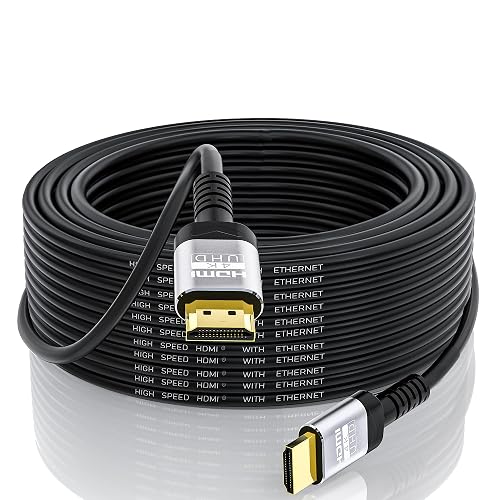
Soonsoonic 4K HDMI Cable 40 Feet
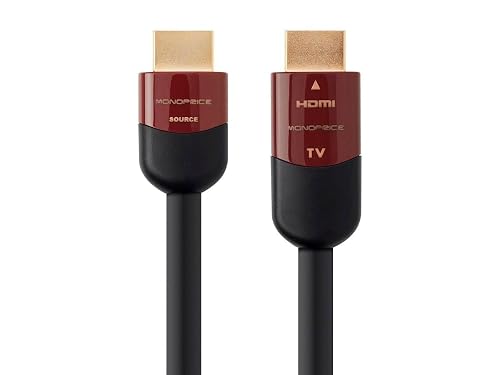
Monoprice 4K High Speed HDMI Cable 40ft Black

8K HDMI 2.1 Cable 40ft Fiber Optic

40 ft HDMI Cable Fiber Optic 8K 48Gbps
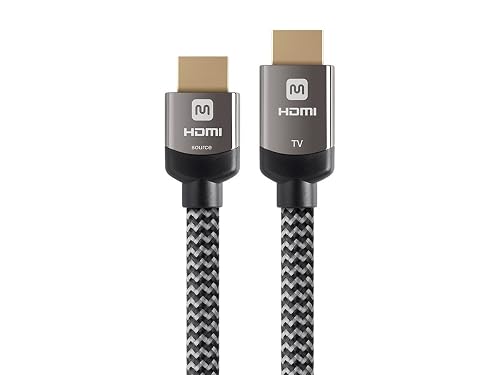
Monoprice 4K High Speed HDMI Cable Braided 35ft Grey
Monoprice Active High Speed HDMI Cable 30 Feet Gray Luxe Series
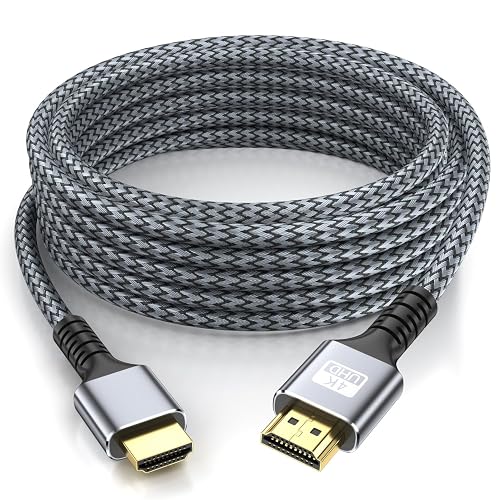
4k Hdmi Cable 40ft Ultra High Speed HDMI 2.0 Cable Silvery

Highwings HDMI Cable 40 ft 4K Ultra High Speed Braided
More Details On Our Top Picks
Long HDMI runs are where a sensible spec sheet starts to matter, and this Soonsoonic cable leans into that with 18Gbps bandwidth, 4K at 60Hz support, and HDR handling. The gold-plated connectors, aluminum alloy shell, and triple-layer shielding point toward steadier signal delivery in a living room with a console, TV, and sound system all sharing space.
The honest read is that this fits everyday setups better than fussy pro racks, yet it still gives you mirror, extended, and game modes for a laptop or console at the far end of the room. Compared with the Monoprice CL2 and CL3 options below, it feels more like a general-purpose long cable than a cabling-system piece.
Strong Points
- 4K at 60Hz support keeps it aligned with common TV and console use.
- 18Gbps throughput gives you room for high-bandwidth video and audio paths.
- Triple shielding helps reduce the kind of signal drop that can show up in long, busy setups.
- Gold-plated connectors add a tougher contact surface for repeated plugging and unplugging.
- Mirror, extended, and game modes suit a desk-to-TV setup or a shared family room.
Points To Note
- It is still an HDMI 2.0 cable, so it does not aim at the newest 8K use cases.
- The listing reads more like a broad-use cord than a tightly defined installation cable.
- At 40 feet, cable management matters, especially behind a media console or wall mount.
Core Details
Who It Suits Best
You get the most from this in a family room, dorm, or home office where the display sits well away from the source device and you want steady 4K playback without overcomplicating the setup.
Where A Sibling Pick Shines
Monoprice 4K High Speed HDMI Cable 40ft Black is a better match for a wall-embedded install because its CL2 rating speaks more directly to that kind of routing.
Monoprice takes a more installation-focused route here, and that matters in rooms where the cable has to disappear into walls. The CL2 in-wall rating points to residential wall use, while active design helps the signal travel farther than a passive cable usually can.
For a finished theater room or a clean TV mount, that combination is more useful than flashy extras. Compared with the Soonsoonic pick, this one feels less casual and more suited to a planned run that you do once and then mostly leave alone.
Upsides
- CL2 wall rating makes it a natural fit for hidden routing in residential spaces.
- Active signal regeneration helps long-distance playback stay usable in a larger room.
- 4K at 60Hz support lines up with common UHD devices and streaming boxes.
- HDR compatibility helps preserve contrast-rich content in movie and game setups.
Small Caveats
- The active design adds a little more planning than a simple passive cord.
- Black finish keeps things discreet, but it also makes label checks and tracing harder in crowded bundles.
- The feature set is practical rather than flashy, so it suits utility-first setups more than spec chasers.
Feature Snapshot
Who Will Love This
You get the best fit here in a finished room, behind a wall-mounted display, or in a projector setup where the cable path needs to stay tidy and out of sight.
Look Elsewhere When
Soonsoonic 4K HDMI Cable 40 Feet is the simpler call for a basic living room run, especially where you want a more universal cable without the installation lean.
This RUBMUD cable moves into 8K territory with a fiber optic build, which is a different play entirely from the copper-style cords above. The thin profile can be a relief behind a media wall or along a trim path, and the 48Gbps rating points toward bandwidth headroom for newer gear.
For a gaming setup with a current console or a future TV upgrade, that extra headroom is the point. The trade-off is simple enough: fiber designs tend to be more directional and less forgiving to casual re-routing than a basic cable.
Bright Spots
- 8K at 60Hz and 4K at 120Hz support give you room for newer display hardware.
- 48Gbps bandwidth is suited to heavier video and audio streams.
- Thin fiber construction helps in tight channels, raceways, and cleaner wall runs.
- Dynamic HDR, eARC, and HDCP 2.2 and 2.3 support make it a flexible home theater option.
Worth Noting
- Fiber optic HDMI usually asks for more careful source-to-display placement.
- The direction-sensitive design can make installation less casual than a standard cord.
- It suits advanced gear more than a simple spare cable for a guest room TV.
Technical Sheet
Built With In Mind
You get the most from this in a gaming den, theater room, or workstation that already uses newer HDMI hardware and needs a thinner long run.
A Better Fit Elsewhere
Monoprice 4K High Speed HDMI Cable 40ft Black is the easier choice for a wall-install job that calls for simpler routing and less concern about directionality.
Fibopitcal takes the long-run fiber idea and pushes it toward more demanding AV layouts, especially where source and display sit far apart. The directional source-to-display design matters here, because that is exactly the kind of detail that keeps a fiber install from becoming annoying later.
It also brings VRR, ALLM, and eARC into the mix, which makes sense for a game room or a theater setup that mixes consoles, TVs, and audio gear. The honesty check is that this is less casual than a standard HDMI cable, but that extra structure is part of what you pay for.
Reasons To Buy
- 8K at 60Hz and 4K at 120Hz support keep it ready for newer displays.
- VRR and ALLM suit a game-focused setup with responsive display gear.
- eARC gives you a cleaner path for compatible sound systems.
- The fiber optic build suits long, complex cable routes where copper can be awkward.
Softer Spots
- Directional installation means the source and display ends matter.
- The feature depth may feel like overkill for a simple bedroom TV.
- Careful labeling helps during install, especially if you ever move components around.
Feature Card
Who Should Grab It
You benefit most from this in a dedicated home theater, gaming space, or media room where the cable path is planned and the gear already leans toward higher-end HDMI features.
Swap It Out When
RUBMUD 8K HDMI 2.1 Cable 40ft Fiber Optic is the softer fit for a less complex room because its thin profile and feature set are easier to live with day to day.
This Monoprice cord lands in a useful middle ground, with a braided jacket that feels more durable than plain PVC and an active chipset that helps longer runs stay stable. The CL3 rating matters in residential wall paths that call for that level of jacket treatment, so it makes more sense in planned installs than in a loose entertainment center.
Compared with the CL2 Monoprice cable above, this one brings a different wall rating and a slightly shorter length, which can suit a route where 35 feet is enough and a cleaner exterior finish matters. The braided outside also tends to handle the kind of everyday bending that happens behind a TV stand a little more gracefully.
Highlights
- Braided nylon outer layer adds a tougher feel without making the cable stiff.
- CL3 wall suitability fits many home routing plans.
- Active chipset helps long signal runs stay balanced.
- Grey finish blends easily with neutral walls and furniture.
Areas To Watch
- At 35 feet, it sits just short of the 40-foot target named in this roundup.
- The active design is best for planned placement, not constant reshuffling.
- Like most braided cables, it can collect dust along the weave over time.
Details At A Glance
Right Fit For
You get a good match here for a tidy family room or media wall where cable appearance matters as much as function and you do not need the full 40-foot length.
Where Shoppers Go Wrong
Soonsoonic 4K HDMI Cable 40 Feet is the more direct match for a true 40-foot run, especially if you need the extra slack to avoid tension behind furniture.
Monoprice packs a lot into a shorter run here, which can be useful in a den or office where 30 feet is enough but picture quality still matters. The 26AWG conductor size, active chipset, braided jacket, and CL3 rating all point toward a cable built for a more deliberate install than a cheap spare in the drawer.
The standout here is YUV 4:4:4, a color sampling mode that keeps fine text and interface details looking cleaner on compatible displays. Compared with the 40-foot picks above, this one is less about distance and more about signal quality at a slightly shorter span.
Best Bits
- YUV 4:4:4 support is useful for sharp desktop text and UI work.
- Active signal handling suits longer than average indoor runs.
- Braided jacket helps the cable stand up to route changes and handling.
- CL3 wall suitability supports more serious home-routing plans.
Room For Improvement
- The 30-foot length makes it a mismatch for a full 40-foot routing need.
- Its feature density may be more than you need for a simple TV-only hookup.
- The braided surface can take a little more effort to dust off than smooth jacket material.
Spec Overview
Made For
You get the most from this in a compact office, bedroom media corner, or mixed-use display where clear text and reliable 4K output matter more than raw length.
Another Choice May Suit
Highwings HDMI Cable 40 ft 4K Ultra High Speed Braided is the better fit for a full-length wall-mounted TV run that needs the extra distance.
looyotul keeps this one broad and easy to place, which can be handy in a household with mixed devices and one long run to a TV or projector. The gold-plated connector, Ethernet support, ARC, and 3D compatibility give it a familiar feature mix without leaning too hard into any one niche.
That makes it a sensible everyday choice for a living room where you want one cable to handle a console, a streaming box, or a laptop hookup. Compared with the more specialized fiber options, this looks less technical and more forgiving, especially for casual rearranging.
Positives
- 4K at 60Hz support covers standard UHD viewing and console use.
- ARC and Ethernet support help it fit common home theater layouts.
- Gold-plated connector ends add a sturdier contact surface.
- The familiar HDMI 2.0 feature set makes it easy to place in mixed setups.
Minor Gripes
- The listing leans on broad compatibility rather than a clearly specialized use case.
- It is not aimed at 8K or other newer high-bandwidth needs.
- Long cables still need neat storage, especially if the extra slack sits behind a console.
Core Details
The Right Fit
You get the strongest match here in a typical household media setup where ease of use matters more than chasing the newest HDMI format.
Skip It When
RUBMUD 8K HDMI 2.1 Cable 40ft Fiber Optic makes more sense for a next-gen gaming room or a display upgrade path that needs more headroom.
Highwings takes a balanced route with braided construction, 18Gbps bandwidth, and the usual long-run HDMI 2.0 features that still matter in many homes. The 48-bit color support gives it a little more appeal for displays that can show finer gradations, and the braid helps it feel more ready for repeated handling.
That mix makes sense behind a wall-mounted TV or Roku-based streaming setup where you want one cable that does a lot without getting precious about it. Compared with the looyotul option, this one reads as a touch more polished in materials, while still staying in the practical lane.
Positives
- Braided exterior helps the cable cope with regular handling behind furniture or mounts.
- 18Gbps and HDMI 2.0 support keep it aligned with familiar 4K use.
- Ethernet, ARC, and 3D support make it a flexible home media option.
- 48-bit color wording suggests better fit with displays that handle richer color depth.
Trade Offs
- It is still a standard HDMI 2.0 cable, not an 8K-focused upgrade path.
- Braided jackets can look tidy, but they also tend to show dust more than smooth finishes.
- The feature set is broad, so a very specialized installation may want a more targeted model.
Feature Rundown
Whose Shelf It Belongs On
You get the best match here if your setup needs a long, general-purpose HDMI run for a wall-mounted TV, streaming box, or mixed living room gear.
Reach For A Different Pick When
Fibopitcal 40 ft HDMI Cable Fiber Optic 8K 48Gbps is the stronger choice for a more demanding console or theater room that needs directional fiber handling and extra bandwidth.
How To Choose The Right 40 Ft Hdmi Cables
Bandwidth And Resolution Go First
A 40-foot run magnifies weak cable choices, so bandwidth deserves the first look. HDMI 2.0 models with 18Gbps handle 4K at 60Hz well for most TVs, consoles, and streaming boxes, while HDMI 2.1 fiber options with 48Gbps step into 8K at 60Hz and 4K at 120Hz territory.
The catch is that newer numbers do not help unless your TV, console, or PC can use them. For many living rooms, 4K at 60Hz is enough, and the extra money for 8K support only makes sense when your gear already points that way.
Build Type Changes The Experience
Copper-style cables are usually simpler to place, bend, and re-route behind furniture. Fiber optic models tend to hold signal better over long distances and often come in thinner jackets, which helps in tight wall channels or crowded AV racks.
That benefit comes with a trade-off, because directional fiber cables need the source and display ends set correctly. For a fixed home theater, that’s manageable, but for a room you rearrange often, a standard copper cable can feel less fussy.
Installation Ratings Matter In Real Homes
CL2 and CL3 ratings matter when the cable passes through walls, because they speak to how the jacket is treated for residential in-wall use. That detail matters more than shiny marketing copy when you’re building a clean TV mount or projector line.
In open-room use, those ratings are less central than length, bend radius, and connector quality. A 40-foot cord that sits behind a console without strain is usually more satisfying than a technically fancy cable that fights the layout.
Match Features To The Room
ARC, Ethernet support, eARC, VRR, and ALLM all serve different setups, so you want the features that match your actual devices. A soundbar setup may value ARC or eARC, while a gaming room benefits more from VRR and ALLM.
Think in terms of the whole path, not just the cable itself. A well-matched cable feels invisible once it’s installed, and that quiet reliability is usually the real goal.
A Quick Reality Check Before You Choose
Common Shopping Slip Ups
Length mistakes are common here, and a cable that comes up even a few feet short can create tension behind a TV stand or projector mount. Another easy miss is buying 8K hardware for a room that only needs stable 4K, which adds cost without changing the daily experience much.
People also overlook where the cable will live after install. Braided jackets, active signal designs, and directional fiber cables all have different upkeep needs, so the neatest choice on paper is not always the easiest one to live with.
What The Higher Tier Buys
The more expensive end of this category usually pays for better materials, more advanced signal handling, and a design that holds up better over long distances. Fiber optic builds, active chipset designs, and installation-friendly ratings all cost more because they solve harder routing problems.
That upgrade makes sense for a dedicated theater room, a long projector route, or a gaming setup that already uses newer display hardware. For a basic bedroom TV, a simpler 4K at 60Hz cable often feels like the smarter spend.
Frequently Asked Questions
Do 40-foot HDMI cables need active signal support?
A 40-foot run often benefits from active design, especially in rooms with more interference or longer device spacing. Passive cables can still work in some setups, but the margin gets thinner as distance grows.
Is fiber optic HDMI better than copper for long runs?
Fiber optic HDMI usually handles long distances with less signal worry and a thinner profile. Copper is easier to route and usually simpler for casual rearranging.
Can a 40-foot HDMI cable carry 4K at 60Hz?
Yes, many HDMI 2.0 cables at 18Gbps support 4K at 60Hz. Your source and display also need to support that output path.
What does CL2 or CL3 mean on an HDMI cable?
Those labels point to in-wall suitability for residential installs. CL3 is the more demanding rating of the two, so it can be useful where the cable passes through walls.
Do braided HDMI cables last longer?
Braided jackets usually resist scuffs and look tidier in visible runs. They can still gather dust, and the braid does not replace proper strain relief or careful placement.
Closing Thoughts
A 40-foot HDMI cable should solve distance without adding new headaches, and the best match depends on how fixed your setup is. For a simple TV run, the Soonsoonic and looyotul options make sense because they keep the feature mix familiar. For wall routing or a theater room, Monoprice brings more installation logic, while the fiber optic picks suit newer gear and more demanding layouts. Choose the cable that fits your room first, then the spec sheet will feel a lot more useful.