
Finding a gaming laptop with the right processor means balancing raw compute power against thermal limits, battery drain, and your daily workload. The models here cover the spectrum from budget-friendly entry points to high-refresh machines built for competitive titles. Each pairs a specific CPU architecture with a GPU class, so the real question is which combination fits your routine.
The Shortlist At A Glance

ASUS ROG Strix G16 (2025) G615JMR-AS74
ASUS ROG Strix G16 (2025) G615LR-AS96
ASUS TUF Gaming F16 (2025)
NIMO 17.3″ Light Gaming-AI-Laptop

Acer Nitro V Gaming Laptop ANV15-52-586Z

Acer Nitro V 16S AI Gaming Laptop
More Details On Our Top Picks
ASUS pairs the Intel Core i7-14650HX with an RTX 5060 here, landing in a sweet spot for 1080p gaming at high settings. The 16-core, 24-thread CPU handles multitasking without breaking a sweat, letting you stream, run Discord, and play simultaneously. A 165Hz refresh rate with a 3ms response time keeps fast-paced shooters feeling sharp. ROG Intelligent Cooling, a tri-fan thermal design, manages sustained loads better than dual-fan setups common at this tier.
You get 16GB of DDR5 RAM, which is plenty for current games but leaves little headroom for heavy creative work. Wi-Fi 7 support means you are set for next-generation routers, assuming your network infrastructure is equally current. For most mainstream gamers, this configuration hits a practical balance of compute and graphics horsepower.
Highlights
- 16-core Intel i7-14650HX delivers strong multi-thread headroom for streaming while gaming
- 165Hz panel with 3ms response keeps competitive titles visually crisp
- Wi-Fi 7 support future-proofs your wireless connectivity for newer routers
- Tri-fan ROG Intelligent Cooling sustains performance during long sessions
- 1TB PCIe 4.0 SSD provides fast load times and ample storage
Things To Consider
- 16GB of soldered DDR5 limits upgrade paths for memory-heavy workflows
- FHD+ resolution may feel restrictive on a 16-inch panel for productivity tasks
- Tri-fan cooling can get audible under sustained synthetic loads
Core Details
Who Will Love This
Mainstream gamers who want high-refresh 1080p play with enough CPU headroom for streaming will appreciate this configuration.
A Better Fit Elsewhere
Shoppers wanting a higher-resolution 2.5K panel and more VRAM for creative work should consider the ASUS ROG Strix G16 G615LR-AS96 instead.
Stepping up from the G615JMR-AS74, this Strix variant swaps in an Intel Core Ultra 9 275HX and an RTX 5070 Ti, targeting enthusiasts who want desktop-class frame rates on the go. The ROG Nebula display jumps to a 2.5K resolution at 240Hz, offering sharper visuals and higher frame headroom for competitive titles. You also get 32GB of DDR5 RAM, doubling the memory of the lower-tier Strix for heavy multitasking. Dolby Atmos audio support rounds out the multimedia experience.
The Core Ultra 9 brings an NPU, or Neural Processing Unit, which accelerates AI-assisted workloads like background blur and noise cancellation. You may notice the benefit during video calls or local AI inference tasks. The 1TB SSD matches the base Strix, so storage capacity is identical despite the performance gap. This is a serious machine for users who need compute headroom for both gaming and creative applications.
Strong Points
- Intel Core Ultra 9 275HX with integrated NPU accelerates AI-assisted workloads
- 32GB DDR5 RAM provides comfortable headroom for video editing and heavy multitasking
- ROG Nebula 2.5K 240Hz panel delivers crisp visuals and high refresh headroom
- RTX 5070 Ti handles modern titles at higher resolutions and settings
Trade Offs
- Higher-tier components generate more heat, increasing fan noise under load
- Enthusiast pricing reflects the premium CPU and GPU combination
Perfect Match For
Enthusiasts and content creators who need serious compute power for gaming alongside video editing will find this configuration fits their workflow.
Look Elsewhere When
Shoppers whose budget sits closer to the entry level will get better value from the ASUS TUF Gaming F16, which covers 1080p gaming for less.
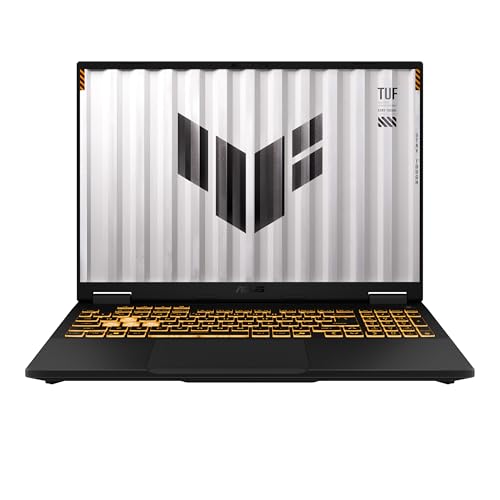
The TUF Gaming F16 drops the price of entry with an Intel Core i5-13450HX and an RTX 5050, targeting 1080p gamers on a budget. You still get a 165Hz refresh rate on a 16:10 FHD+ panel, matching the refresh speed of the more expensive Strix G16 base model. The 100% sRGB color coverage means colors look accurate for everyday media consumption. ASUS builds the TUF line around durability, and this chassis carries that focus forward.
Storage drops to a 512GB PCIe Gen4 SSD, which fills up fast with modern game installs. You may find yourself managing library space sooner than on the 1TB Strix models. Wi-Fi 6E handles current wireless needs well, though it lacks the Wi-Fi 7 forward compatibility of the ROG line. For students or casual gamers, the trade-offs are reasonable given the lower tier.
Bright Spots
- 165Hz 16:10 display with 100% sRGB delivers smooth, color-accurate visuals
- TUF chassis design focuses on long-term durability
- Wi-Fi 6E provides solid wireless performance for current networks
Minor Gripes
- 512GB SSD fills quickly with large modern game installs
- RTX 5050 limits graphical settings in demanding titles
- Wi-Fi 6E lacks the forward compatibility of Wi-Fi 7 on pricier models
Quick Facts
Who Should Grab It
Entry-level gamers and students who want a durable 165Hz machine for 1080p play will find this configuration practical.
Swap It Out When
Shoppers who want more storage and a stronger GPU for higher settings should look at the ASUS ROG Strix G16 G615JMR-AS74.
This NIMO laptop takes a different route from the ASUS and Acer models by relying on integrated graphics. The AMD Ryzen 7 8745HS runs with a 54W power envelope, delivering solid multi-core performance for productivity. Its Radeon 780M integrated graphics handle esports and older titles at reduced settings. The 17.3-inch FHD screen gives you a larger workspace, which helps for multitasking and video editing.
You get 32GB of RAM and a 1TB SSD, matching the memory and storage of the premium Strix G16. USB 4.0 support offers fast peripheral connectivity. The honest read is that this machine targets productivity and light gaming rather than high-refresh competitive play. For remote video creators and multitaskers, the large screen and generous RAM make sense.
Reasons To Buy
- 32GB RAM handles heavy multitasking and video editing workloads
- 17.3-inch FHD display provides a spacious workspace for productivity
- USB 4.0 connectivity supports fast data transfer and external displays
Points To Note
- Integrated Radeon 780M graphics limit performance in demanding modern games
- Larger 17.3-inch footprint reduces portability for travel
- Brand support networks may not match the scale of ASUS or Acer
Right Fit For
Remote video creators and multitaskers who need a large screen and ample RAM for productivity will benefit most from this setup.
Where A Sibling Pick Shines
Shoppers who want a dedicated GPU for actual gaming should look at the Acer Nitro V 16S AI Gaming Laptop instead.
Acer keeps the entry barrier low with an Intel Core i5-13420H and an RTX 4050 in the Nitro V. The 15.6-inch FHD IPS panel runs at 165Hz, giving you smooth visuals on a slightly smaller chassis than the 16-inch options. This configuration targets 1080p gaming at medium settings. You get 8GB of DDR5 RAM, which meets minimum requirements but leaves little room for heavy multitasking.
The 512GB Gen 4 SSD matches the ASUS TUF F16 in capacity, so library management remains a consideration. Wi-Fi 6 covers standard wireless needs without the 6E or 7 upgrades found elsewhere. Compared to the NIMO, you get a dedicated GPU here, which makes a noticeable difference in game performance. The backlit keyboard rounds out the feature set for low-light play.
Plus Points
- RTX 4050 dedicated GPU outperforms integrated graphics in actual gaming
- 165Hz IPS panel delivers smooth visuals at a budget tier
- 15.6-inch form factor improves portability over 16 and 17-inch models
Softer Spots
- 8GB DDR5 RAM bottlenecks multitasking and may need an upgrade
- 512GB storage fills quickly with modern game installs
- Older RTX 4050 GPU trails the 5050 and 5060 in newer models
Built With In Mind
Budget-conscious casual gamers who want a dedicated GPU for 1080p play without spending on premium tiers will find this laptop fits.
Reach For A Different Pick When
Shoppers who need more RAM and a newer GPU generation should consider the Acer Nitro V 16S AI Gaming Laptop.
The Nitro V 16S bridges the gap between the budget Nitro V and the premium Strix models with an AMD Ryzen 7 260 and an RTX 5060. Acer highlights the 572 AI Tops rating of the GPU, which measures its throughput for AI-accelerated tasks. The 16-inch WUXGA IPS display runs at 180Hz, sitting between the 165Hz and 240Hz panels of other picks. You get 32GB of DDR5 RAM and a 1TB Gen 4 SSD, matching the premium Strix configuration.
The slim design improves portability, making it easier to carry for gaming on the go. Wi-Fi 6 covers wireless connectivity, though it lacks the Wi-Fi 7 found on both Strix G16 variants. For shoppers wanting a balance of modern GPU power, ample memory, and a portable chassis, this configuration covers the bases well.
Best Bits
- RTX 5060 with 572 AI Tops handles gaming and AI-accelerated workloads
- 32GB DDR5 RAM supports heavy multitasking and creative applications
- Slim chassis design improves portability for gaming on the go
- 180Hz display offers a middle ground between 165Hz and 240Hz panels
Areas To Watch
- Wi-Fi 6 lacks the forward compatibility of Wi-Fi 7 on the Strix models
- Slim chassis may limit thermal headroom under sustained loads
Feature Rundown
Whose Shelf It Belongs On
Portable gamers and streamers who want modern GPU power with ample RAM in a slim chassis will find this configuration hits a practical middle ground.
Skip It When
Shoppers who need the highest refresh rate and Wi-Fi 7 connectivity should look at the ASUS ROG Strix G16 G615LR-AS96 instead.
What Matters Most When Evaluating Processors For Gaming Laptops
Core Count and Clock Speed
Modern laptop CPUs pack a mix of performance cores (P-cores) for heavy tasks and efficiency cores (E-cores) for background work. A chip like the Intel Core i7-14650HX uses 16 total cores, letting you game while streaming without stuttering. Higher clock speeds push frame rates up in CPU-bound titles like strategy games. The trade-off is heat, as more cores running at higher speeds demand robust cooling.
Integrated NPUs and AI Features
Newer processors, including the Intel Core Ultra 9 275HX, integrate a Neural Processing Unit (NPU) dedicated to AI workloads. This offloads tasks like webcam background blur and noise cancellation from the GPU. You benefit from cleaner video calls and local AI tool acceleration. The catch is that software adoption is still catching up, so the NPU may sit idle depending on your applications.
Thermal Design Power (TDP)
TDP, or Thermal Design Power, measures how much heat a chip generates under load. A 54W part like the AMD Ryzen 7 8745HS runs cooler and draws less battery than a high-wattage Intel HX chip. Laptops with higher TDP processors need larger cooling systems, which adds thickness and fan noise. Your choice depends on whether you prioritize raw performance or portability.
Memory and Storage Bandwidth
DDR5 RAM provides higher data transfer rates than DDR4, feeding the CPU faster and reducing bottlenecks. Pairing it with a PCIe Gen 4 SSD ensures quick game loads and fast file transfers. Soldered RAM, common in slim designs, limits future upgrades. Check whether the laptop uses standard SO-DIMM slots if you plan to add memory later.
Before You Click Buy
Traps First Timers Fall Into
Shoppers often fixate on the GPU and overlook the CPU, assuming any processor will keep up. In CPU-heavy titles like multiplayer strategy games, a weak processor bottlenecks even a strong graphics card. Another common slip-up is ignoring RAM capacity. Eight gigabytes struggles with modern multitasking, so aim for 16GB as a realistic floor for gaming plus background apps.
What Separates Premium From Basic
Higher-tier laptops cost more because they pack newer CPU architectures, dedicated NPUs, and higher-wattage GPUs. Premium models also feature better display panels, like the ROG Nebula 2.5K screen, and advanced cooling. Spending up makes sense for enthusiasts who game at higher resolutions or run creative workloads. For casual 1080p play, mid-tier options deliver nearly the same experience for less.
Frequently Asked Questions
What is the difference between HX and HS series processors?
HX processors run at higher wattages and offer more cores for maximum performance. HS chips balance performance with power efficiency, making them better for thinner laptops with moderate battery life.
How much RAM do you need for a gaming laptop?
Sixteen gigabytes of DDR5 RAM covers most modern games and multitasking. Thirty-two gigabytes provides headroom for video editing, heavy multitasking, and future-proofing as game requirements increase.
Does an integrated NPU improve gaming performance?
An NPU does not directly boost game frame rates. It accelerates AI-assisted workloads like background blur and noise cancellation, freeing the GPU and CPU to focus on gaming tasks.
Is Wi-Fi 7 necessary for gaming?
Wi-Fi 7 offers higher bandwidth and lower latency on compatible networks. Your current router likely does not support it, so Wi-Fi 6E remains sufficient for most online gaming today.
Can you upgrade the RAM and storage on these laptops?
Storage upgrades are generally straightforward using the M.2 SSD slot. RAM upgradeability varies, as some models solder memory to the board, so check the specification before purchasing.
Final Verdict
Choosing the right processor for your gaming laptop comes down to matching compute power with your daily routine. Mainstream gamers get strong value from the ASUS ROG Strix G16 G615JMR-AS74, while enthusiasts should look at the premium G615LR-AS96 variant. Budget shoppers have solid options in the Acer Nitro V and ASUS TUF F16. Pick the configuration that fits your play style and workload, and the hardware will keep up.
