
A bike computer becomes most useful when it answers practical questions without distracting from the ride. I focused on route tracking, ride data, display readability, wireless connectivity, and the added convenience of a compact pump, helping me separate purpose-built cycling tools from broader emergency gear.
How The Shortlist Stacks Up
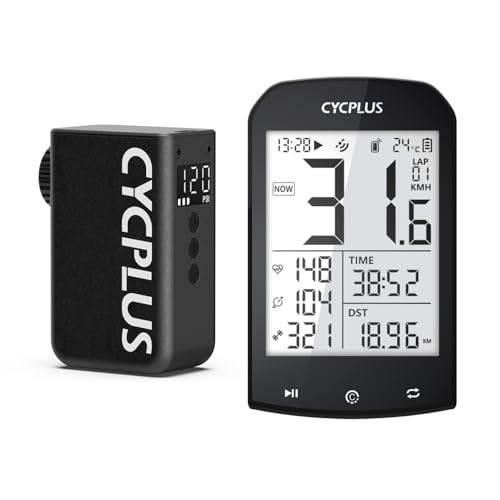
CYCPLUS AS2PRO Pump + M1 GPS Computer

CYCPLUS Speed & Cadence Sensor

CYCPLUS AS2PRO Pump + M3 GPS Computer

CYCPLUS G1 GPS Computer, 2-Inch
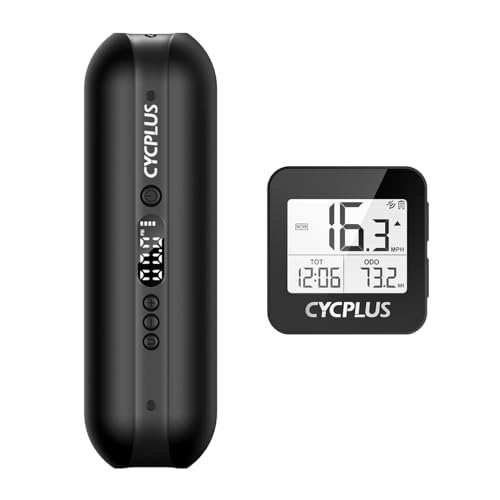
CYCPLUS A2 Inflator + G1 Computer

CYCPLUS M1 GPS Bike Computer, 2.9-Inch Screen
The Strengths Of Each Pick
A flat tire can turn an ordinary commute into an extended roadside stop, so I appreciate this bundle pairing the AS2PRO pump with an M1 computer. The pump weighs 4.23 ounces and fits into a 2.75 x 1.10 x 1.92-inch body, while the M1 handles Global Positioning System (GPS) route tracking and connects to a phone through Bluetooth.
Compared with the standalone CYCPLUS M1, this package covers two frequent needs without adding a large device to my kit. It suits road riders and commuters who prefer carrying less, although a dedicated cycling computer may offer a more prominent display.
A Few Strong Suits
- The 4.23-ounce pump is small enough for a jersey pocket or backpack attachment.
- Automatic shutoff stops inflation at the selected pressure, with readings shown to ±1 PSI.
- The pump reaches 120 PSI and handles Presta or Schrader bicycle valves through the included kit.
- The M1 records speed, cadence, altitude, power, and route data through compatible sensors.
- Bluetooth and ANT+ support make it practical for mixed phone and sensor setups.
Points To Keep In Mind
- Two separate pieces mean the pump and computer still need separate storage and charging.
- Sensor compatibility depends on the protocols supported by each connected device.
Feature Snapshot
Made For
I recommend this bundle to compact-kit riders who handle road, city, mountain, or e-bike tires and also want route and workout data.
Consider Something Else When
The CYCPLUS AS2PRO Pump + M3 GPS Computer offers a larger display and longer stated battery life for riders who value those attributes more than bundle size.
This is a companion sensor rather than a complete cycling computer, so I would pair it with a display such as the CYCPLUS M1. Its purpose is straightforward: collect wheel-speed and pedaling-cadence information for a compatible cycling computer or cycling app.
The combination of Bluetooth and ANT+ gives it more flexibility than a single-protocol sensor. For a mixed equipment setup, I would confirm that both the receiving device and app can accept the relevant signal before relying on the data.
Everyday Perks
- One unit records both speed and cadence, reducing the number of separate sensors in my kit.
- Bluetooth and ANT+ support cover two widely used wireless cycling protocols.
- A physical mode switch lets the sensor operate as a speed or cadence source.
- IP67 water resistance suits exposure to rain, splashes, and dusty trail conditions.
Small Caveats
- The sensor has no display, navigation, or ride screen of its own.
- Real-time data depends on a compatible receiver and correctly selected mode.
Quick Facts
Right Fit For
I would choose this sensor for riders whose existing computer or app supports both Bluetooth and ANT+ and needs a compact source of speed and cadence data.
Another Choice May Suit
The CYCPLUS M1 GPS Bike Computer, 2.9-Inch Screen is the better choice for a complete setup with route tracking, a display, and direct sensor syncing.
The M3 changes the emphasis from simple portability to a more readable, long-duration riding setup. It retains the compact 120 PSI AS2PRO pump, then adds a 2.8-inch FSTN glass display, five-satellite positioning, and a stated battery life of up to 100 hours.
That larger screen feels meaningful on a touring bicycle or during a long commute, where I want navigation and ride metrics visible at a glance. Compared with the M1 bundle, this package is the more practical choice when readability, satellite support, and charging intervals matter.
What It Does Well
- The 2.8-inch display provides more room for ride data than the 2.0-inch G1 and 2.9-inch M1 families.
- Automatic backlighting responds to changing light conditions for clearer viewing.
- The 1500 mAh battery is stated to last as long as 100 hours, depending on use.
- USB-C charging reaches full capacity in about 2.5 hours.
- Five satellite systems support positioning, with offline ephemeris available through the CYCPLUS FIT app.
Practical Considerations
- First positioning can take three to five minutes outdoors, so the computer may need time before setting off.
- The 2.8-inch display and separate pump may take more bag space than a standalone computer.
Built With In Mind
I favor this bundle for long-distance riders, commuters, and touring setups that benefit from a larger screen and fewer charging stops.
Look Elsewhere When
The CYCPLUS AS2PRO Pump + M1 GPS Computer is the better fit for minimalists who prioritize the smaller 4.23-ounce pump and a less substantial computer bundle.
A small handlebar computer can feel less distracting than a phone on a quick neighborhood loop, and the G1 takes that compact approach seriously at 70 grams. Its 2.0-inch FSTN screen uses reflective display technology for sunlight readability and includes an automatic backlight for darker conditions.
I see this as a straightforward route-and-metrics option rather than a bundle with emergency equipment. It suits riders who already carry a pump and mainly want the G1 to display elapsed time, distance, total riding time, mileage, clock information, altitude, and the route.
The Practical Payoff
- The 70-gram body keeps handlebar clutter under control.
- GPS tracking records the route without relying on a phone screen.
- The reflective FSTN display is designed for readable outdoor viewing.
- Core ride statistics cover time, distance, mileage, clock, and altitude.
Where It May Fall Short
- The 2.0-inch screen has less space for dense data layouts than the 2.9-inch M1.
- The G1 arrives without the pump found in the A2 and G1 bundle.
The Numbers That Matter
Who Will Love This
I recommend the G1 to minimalist riders who want lightweight GPS navigation and basic ride statistics without a large display or bundled pump.
Reach For A Different Pick When
The CYCPLUS M1 GPS Bike Computer, 2.9-Inch Screen suits riders who want a larger viewing area plus Bluetooth and ANT+ sensor syncing.
The A2 changes the usual bicycle-computer bundle by pairing the G1 with a cordless inflator capable of handling bicycle and vehicle tires. Its 150 PSI limit, 10.3-bar equivalent, and four pressure units make it more versatile than the bicycle-focused AS2PRO included with the M1 and M3 bundles.
At 380 grams, the inflator is considerably bulkier than the 4.23-ounce AS2PRO, but the trade-off is broader valve and vehicle compatibility. I see this package as useful for cycling households that also keep cars or motorcycles, particularly for emergency inflation away from a service station.
What Makes Sense
- The 150 PSI capacity covers common bicycle tires and higher-pressure vehicle applications.
- Presta, Schrader, and ball-needle attachments broaden the range of compatible equipment.
- PSI, bar, kPa, and kg/cm² units help match familiar pressure references.
- Storage bag and cordless design support convenient vehicle storage.
- The included G1 provides GPS routes, ride time, distance, mileage, clock, and altitude.
Trade Offs
- The 380-gram inflator needs more carrying space than the pocket-oriented AS2PRO.
- Road riders focused on minimal weight may prefer a bicycle-only inflation kit.
Multi-Use Pick
I favor this bundle for households that need one cordless inflator for bicycles, cars, and motorcycles while also wanting a basic GPS computer.
Swap It Out When
The CYCPLUS AS2PRO Pump + M3 GPS Computer is the better fit for road riders who prioritize a 4.23-ounce pump, larger computer display, and longer stated battery life.
The standalone M1 combines one of the larger displays in this roundup with broad sensor connectivity. Its 2.9-inch FSTN LCD includes an automatic backlight, while GPS, Bluetooth, and ANT+ support create several ways to gather and synchronize ride information.
For a commuter who wants route history and workout data without carrying a phone on the handlebars, this setup feels more complete than the smaller G1. The screen, battery, and app support are useful, although the M3 offers five satellite systems and a longer stated runtime for riders who regularly spend hours outside.
The Helpful Details
- The 2.9-inch screen gives navigation and metrics a generous viewing area.
- Four satellite positioning systems support route tracking.
- Bluetooth and ANT+ allow connection with compatible cycling sensors.
- The 1200 mAh battery is rated for more than 60 hours of operation.
- CYCPLUS FIT and Strava synchronization keep recorded rides available in the connected app.
Details To Watch
- App and sensor compatibility should be checked before setting up a mixed device ecosystem.
- Its larger screen may be less appealing than the 2.0-inch G1 for minimalist handlebars.
Core Details
Who Should Grab It
I recommend the M1 to data-focused cyclists and commuters who want a large screen, flexible sensor connections, and app-based route syncing.
Where A Sibling Pick Shines
The CYCPLUS G1 GPS Computer, 2-Inch is the better fit for riders who prioritize a lightweight 70-gram body and a smaller handlebar footprint.
What Matters Before Choosing a Bicycle Computer
Map the ride first
Global Positioning System, commonly called GPS, is the starting point for route recording. I would check satellite support, phone synchronization, and offline map or ephemeris features, especially for riders whose routes pass through areas with inconsistent cellular reception.
Read the display at speed
Screen size changes more than the number itself. A 2.0-inch G1 suits compact handlebars, while the 2.9-inch M1 and 2.8-inch M3 offer more room for navigation and metrics. I would also consider sunlight readability and automatic backlighting for early starts and evening rides.
Match connections to my setup
Bluetooth and ANT+ are wireless protocols used to exchange data with compatible cycling devices. The CYCPLUS Speed & Cadence Sensor supports both, as do several of the computers, but I would confirm that the receiving unit, sensor, and preferred app work together before relying on recorded speed, cadence, power, or route data.
Decide between a computer and a bundle
A standalone computer keeps the kit focused on navigation and training data. The AS2PRO bundles add a highly compact 120 PSI pump, while the A2 bundle favors broader bicycle and vehicle inflation at the cost of greater bulk. I would choose the bundle that solves another recurring roadside problem rather than purchase a computer and pump together by default.
Picking Between Basic and Advanced Bicycle Computers
Mistakes Worth Dodging
I would avoid focusing only on screen size while overlooking protocol support, battery needs, and the receiving app. Another common mistake is assuming every bundle includes the same pump, since the AS2PRO and A2 differ in weight, pressure range, and valve compatibility. Checking the actual riding data and connection requirements prevents an inconvenient setup later.
The Upgrade Payoff
A larger screen, stronger satellite positioning, and longer stated battery life can justify spending more for regular riders, especially during long commutes or multi-hour tours. The extra capability matters most when the larger display reduces repeated glances, the positioning lock is dependable in the usual riding environment, and charging interruptions would disrupt the routine. For occasional neighborhood rides, a compact basic model may provide everything needed without added complexity.
Frequently Asked Questions
Do I need a bike computer for short rides?
A bike computer remains useful for short rides when I want distance, elapsed time, route tracking, and sensor data without using a phone. For a brief errand on familiar roads, a computer may add less value than a basic phone mount.
Can I use the same sensor with different computers?
The CYCPLUS Speed & Cadence Sensor supports Bluetooth and ANT+, so compatibility depends on the receiving computer and app. I would confirm the required protocol, operating mode, and app support before a longer ride.
Is a larger bicycle computer screen easier to read?
A larger screen generally provides more room for navigation and data, which can help during movement. Readability also depends on sunlight performance, backlighting, display layout, and the mounting position.
Does a bike computer need a phone nearby?
GPS route recording can work without a phone, but Bluetooth synchronization may require the CYCPLUS FIT app or another compatible service. I would download the relevant route or ephemeris data before leaving cellular coverage.
Should I choose a computer and pump bundle?
A bundle makes sense when roadside inflation is a regular concern and the included pump matches my tires. I would choose a standalone computer when I already carry suitable inflation equipment or prioritize a lighter cycling setup.
Closing Verdict
My shortlist covers several practical setups: the M1 for a large display and app syncing, the M3 for extended riding, the G1 for minimal weight, the AS2PRO bundles for compact inflation, and the A2 combination for mixed bicycle and vehicle use. I would match the computer to my display preferences, data ecosystem, and riding routine, then add the pump only where a real roadside need exists.
