
A producer setting up a home studio needs more than a fast-looking machine. Processing power, memory, storage, display space, and dependable audio connections all affect the experience, especially during long sessions with recording software open. I selected these HP desktops for light music production, editing, and playback, with clear distinctions for compact setups, larger workspaces, and storage-heavy projects.
The Essentials At A Glance
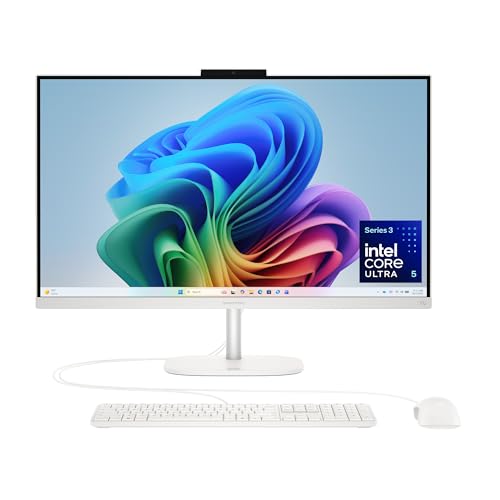
HP OmniStudio 27-inch All-in-One Desktop Core Ultra 5 325 27-cy0002

HP OmniStudio 27-inch All-in-One Desktop Ryzen 5 220 27-cv0002

HP OmniDesk Slim Desktop Core i5-14400 8GB 512GB SSD S03-0012

HP OmniStudio 27-inch All-in-One Desktop Ryzen AI 7 445 16GB 27-cw0102

HP OmniStudio 23.8-inch All-in-One Desktop Ryzen 5 40 8GB 24-cv0002
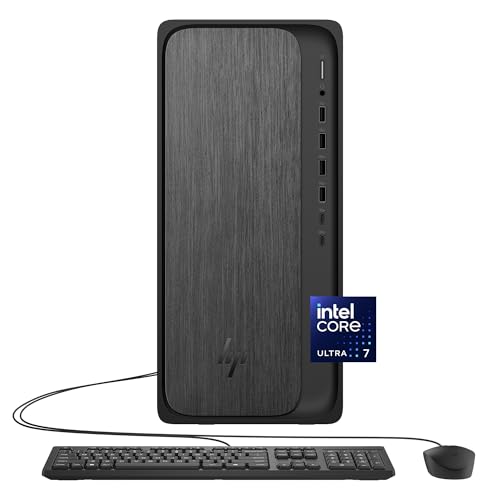
HP OmniDesk AI Desktop Core Ultra 7 265 1TB SSD M03-0102
More On The Choices That Made The List
The large screen makes this the most natural fit for arranging tracks, editing video, and moving between a DAW and reference material. Its adjustable stand also helps place the display more comfortably than a fixed-position panel, which matters during a lengthy session.
For a bedroom producer, the Core Ultra 5 325 and 16GB of DDR5 memory form a sensible foundation for everyday editing. I would still pair it with proper studio monitors and an audio interface, since the built-in Intel graphics and DTS sound make this more of a versatile creative system than a dedicated monitoring rig.
Strengths Worth Knowing
- The 27-inch Full HD panel leaves useful room for track controls, plug-in windows, and notes.
- 16GB of DDR5 memory supports smoother multitasking across recording software, browsers, and reference tracks.
- A 512GB NVMe solid-state drive keeps project files in fast local storage.
- The infrared camera supports facial sign-in, while AI noise reduction helps remote creative calls sound clearer.
Points To Note
- Built-in Intel graphics may not suit projects that depend heavily on GPU-accelerated visual processing.
- 512GB can become tight once large audio libraries and multiple project archives are added.
Quick Facts
Made For
Home producers handling arrangement, editing, and media-heavy projects on a large integrated display.
Consider Something Else When
Large local sample collections call for the HP OmniDesk AI Desktop Core Ultra 7 265 1TB SSD M03-0102 and its roomier drive.
Cotton White gives this all-in-one a softer appearance than the Jet Black models, which can make a small studio feel less like an office. The 27-inch Full HD display offers a broad canvas for arranging sessions, and the single-unit format reduces the number of separate desk components.
Inside, the Ryzen 5 220, 16GB of memory, and Radeon 740M graphics create a reasonable foundation for lightweight music production. In my view, it suits learning, podcast-style recording, song editing, and a compact workstation where full-screen monitoring remains important.
What Helps Most
- The 27-inch display creates room for mixer views and editing windows.
- 16GB of memory helps a DAW coexist with browser-based references and communication tools.
- Radeon 740M graphics provide integrated visuals without requiring a separate graphics card.
- Windows 11 Home covers current music and productivity software requirements.
Soft Spots
- The shared 512GB drive may require careful sample-library management.
- An all-in-one offers less freedom to select a separate studio display than the slim HP OmniDesk models.
Feature Snapshot
Who Will Love This
Style-conscious beginners and home producers who want a spacious display in a coordinated studio setup.
Look Elsewhere When
Small desks and limited shelf space make the HP OmniStudio 23.8-inch All-in-One Desktop Ryzen 5 40 8GB 24-cv0002 the more practical option.
A slim desktop is attractive when the studio desk has room for a separate monitor and only a small computer enclosure. The Core i5-14400 provides a familiar Intel platform, while Windows 11 Home and Microsoft Copilot support the software mix common to home production work.
The trade-off appears in memory. With 8GB of RAM, lighter projects and fewer background applications are the sensible target, and adding large sample libraries may reduce flexibility. I would treat this as a learning or secondary production machine rather than the centerpiece of a busy commercial studio.
What Makes Sense
- The slim chassis leaves more desk freedom than an all-in-one computer.
- A 512GB SSD provides quick local access to sessions, stems, and active instruments.
Small Caveats
- 8GB of memory is limited for heavy plug-in collections and many simultaneous applications.
- A separate display, speakers, and audio interface may be needed to complete a production station.
- The 512GB capacity offers less room for samples and archived projects than the 1TB alternative.
Best Suited To
Budget-conscious learners and producers building a modest editing and arrangement setup around a separate display.
Reach For A Different Pick When
Producers running heavier sessions benefit more from the 16GB memory in the HP OmniStudio 27-inch All-in-One Desktop Ryzen 5 220 27-cv0002.
This model combines the larger OmniStudio format with the higher-tier Ryzen AI 7 445 processor and Radeon 840M graphics. That combination gives it a stronger foundation than the Ryzen 5 220 version for demanding sessions that keep a DAW, several utilities, and media applications open together.
The 16GB memory is more comfortable for music production than 8GB, while the 27-inch Full HD display keeps track controls and plug-in panels visible. For my money, this is the most convincing all-in-one here for a producer who wants fewer separate components and a higher processing tier.
What It Does Well
- The Ryzen AI 7 445 sits above the lower-tier Ryzen 5 configurations in this group.
- 16GB of memory supports heavier multitasking and a larger working set.
- Radeon 840M graphics support visual work without a separate card.
- The 27-inch display provides a generous editing and arrangement canvas.
Points To Keep In Mind
- The 512GB drive remains the deciding constraint for large sample libraries.
- A fixed all-in-one design cannot be matched to a separate monitor in the same way as the slim HP OmniDesk.
Technical Highlights
Built With In Mind
Producers wanting a capable all-in-one workstation for editing, arranging, and resource-heavy creative applications.
Swap It Out When
Storage-heavy projects fit the HP OmniDesk AI Desktop Core Ultra 7 265 1TB SSD M03-0102 more closely because of its larger drive.
The 23.8-inch screen makes this the least imposing all-in-one in the group, which can help in a compact bedroom studio or shared workspace. Its Ryzen 5 40 processor, Radeon graphics, and 512GB SSD cover essential production tasks without requiring a full-size tower.
The 8GB memory is the main limitation. Light arrangements, basic editing, and playback sessions should fit more comfortably than large ensembles or extensive plug-in collections, and a separate drive may eventually become necessary for archives. It remains practical for learning, voice-over work, and straightforward music projects.
Standout Benefits
- The smaller 23.8-inch display suits compact desks and tighter rooms.
- The all-in-one design keeps the computer and display together in one station.
- The 512GB SSD provides fast local project access.
Minor Gripes
- 8GB of memory places a ceiling on heavy multitasking.
- The smaller screen offers less workspace than the 27-inch OmniStudio models.
- Large instrument libraries and archived sessions can fill 512GB quickly.
The Right Fit
Small-space producers handling basic editing, arrangements, playback, and lighter recording sessions.
Another Choice May Suit
Producers needing more memory and a larger canvas may prefer the HP OmniStudio 27-inch All-in-One Desktop Core Ultra 5 325 27-cy0002.
Storage is the defining advantage here. A 1TB SSD gives producers room for active projects, stems, samples, and archived songs without the immediate capacity pressure attached to the 512GB models. That makes this a practical choice for a workstation that handles a growing catalog.
The Intel Core Ultra 7 265 sits at the upper end of the processor range in this group, while 16GB of memory supports general production multitasking. Because the listed configuration uses Intel Graphics, it remains more appropriate for music and office workloads than for specialized GPU-intensive video production.
Real-World Strengths
- The 1TB SSD provides the largest local storage capacity listed.
- The Core Ultra 7 265 offers a high processing tier for creative workloads.
- 16GB of memory gives DAW sessions more room to coexist with other applications.
- The Gray Wood finish suits a studio that does not want to look like a traditional office.
Practical Considerations
- Integrated Intel graphics limit the appeal for GPU-heavy editing and visual production.
- No display size is listed, so a separate monitor may need to be included in the studio plan.
Essential Details
Whose Shelf It Belongs On
Producers managing growing sample libraries, many active sessions, and a full desktop-based workflow.
Where A Sibling Pick Shines
A single integrated display and fewer desk components favor the HP OmniStudio 27-inch All-in-One Desktop Ryzen AI 7 445 16GB 27-cw0102.
What Matters In A Music Production Desktop
Processor Headroom
A processor handles the general computation behind recording software, effects, file management, and exports. Light editing and arrangement can work on lower-tier chips, while larger projects benefit from the Ryzen AI 7 445 or Core Ultra 7 265 options.
Memory For Open Sessions
RAM is the working memory used by open applications. A DAW, browser tabs, virtual instruments, and communication tools all share it, so 16GB is more comfortable for multitasking than the 8GB configurations.
Storage For Samples And Archives
An SSD, or solid-state drive, stores data electronically without moving parts. The 1TB model has the most room for samples, stems, and backups, while 512GB configurations demand regular housekeeping and attention to archive storage.
Display And Audio Setup
The 27-inch and 23.8-inch OmniStudio panels integrate the display with the computer, reducing desk clutter. Serious monitoring still depends on suitable studio speakers and an audio interface, and the slim OmniDesk models leave more freedom for a separate display.
Practical Desktop Buying Advice
Hidden Buying Traps
A large screen does not automatically make a desktop suitable for music production. Processor class, memory, storage, operating system, and available connections deserve more attention than finish color or built-in entertainment features. A producer should also budget for an audio interface and accurate monitors when the computer itself lacks dedicated recording hardware.
The Upgrade Payoff
Spending more can buy a stronger processor, additional memory, or a larger drive. Those upgrades are most useful for heavier sessions, larger libraries, and producers who keep many applications open. A learner handling straightforward arrangements may gain little from paying for capacity the work does not require.
Frequently Asked Questions
Can an all-in-one desktop work for music production?
An all-in-one can handle recording, arrangement, editing, and playback with suitable software and audio hardware. Integrated graphics and built-in speakers do not replace dedicated studio monitoring.
Is 16GB of RAM enough for music production?
16GB is a practical amount for many DAW-based workflows, especially when only a few applications run at once. Large instrument libraries, dense sessions, and multiple background applications can require additional memory.
Is a 1TB SSD better for audio projects?
A 1TB SSD offers more room for samples, stems, recordings, and archived projects. Capacity is only one part of the equation, so file organization and backup habits remain important.
Should a producer choose an all-in-one or separate desktop?
An all-in-one suits compact, simple studios with a preference for fewer components. A separate desktop gives more freedom in monitor selection, placement, and future display upgrades.
Do these desktops include studio monitors or an audio interface?
The listed configurations focus on the computer, display where applicable, memory, storage, and integrated components. Dedicated studio monitors and recording interfaces may need to be added separately.
Final Verdict
The HP OmniStudio 27-inch Core Ultra 5 325 offers the most balanced large-screen setup, while the Ryzen AI 7 445 version raises the processing tier for heavier work. The 23.8-inch Ryzen 5 40 favors compact rooms, and the Core Ultra 7 265 desktop makes the strongest case for large sample collections. The right choice comes down to monitor size, memory needs, and how much project data the studio expects to keep on hand.
