
A desktop needs to fit the work, the room, and the person using it. I built this roundup around six HP Windows models for students, home offices, content creators, and anyone replacing a family computer. The main decision comes down to an all-in-one display versus a separate desktop, followed closely by memory, storage, graphics, and screen size.
A Snapshot Of The Selections
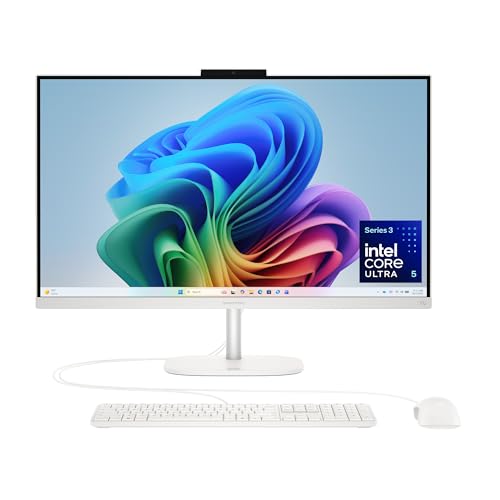
HP OmniStudio 27-inch All-in-One Desktop, Core Ultra 5 325, 16GB RAM

HP OmniStudio 27-inch All-in-One Desktop, Ryzen 5 220, 16GB RAM, 512GB SSD

HP OmniDesk Slim Desktop, Core i5-14400, 8GB RAM, 512GB SSD

HP OmniStudio 27-inch All-in-One Desktop, Ryzen AI 7 445, 16GB RAM, 512GB SSD

HP OmniStudio 23.8-inch All-in-One Desktop, Ryzen 5 40, 8GB RAM, 512GB SSD
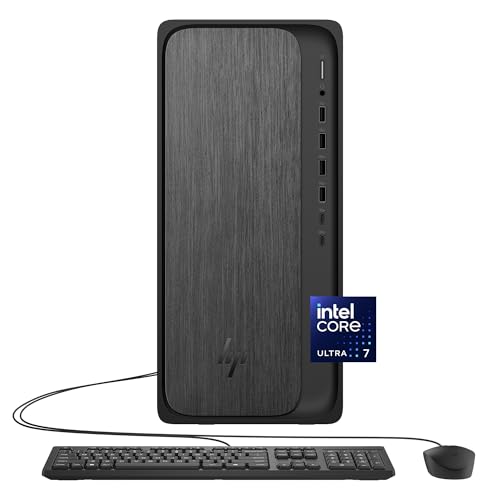
HP OmniDesk Desktop AI PC, Core Ultra 7 265, 16GB RAM, 1TB SSD
The Picks, Examined More Closely
The 27-inch all-in-one format appeals to me because it keeps the display, computer, and several communication tools in one unit. I can see it serving a home studio, a busy kitchen office, or a video-heavy workspace where keeping desk clutter under control matters. The adjustable stand adds practical positioning freedom, while the FHD panel provides a generous canvas for documents and media.
Compared with the simpler OmniDesk Slim below, this model carries more visible communication and entertainment features. The 16GB of RAM, meaning working memory for active apps and data, gives it more room for multitasking, although a separate graphics card is not listed.
Where It Excels
- The adjustable stand supports different viewing positions during long work sessions.
- The FHD infrared camera includes Windows Hello facial login and HDR automatic switching for backlit calls.
- AI noise reduction filters background sound during virtual conversations.
- DTS 3D audio adds spatial positioning to movies, music, and games.
- 16GB DDR5 RAM and a 512GB PCIe NVMe SSD balance active work and storage.
Trade Offs
- The listed Intel Graphics configuration is less convincing for graphics-intensive games than a system with a dedicated GPU.
- A 27-inch display needs adequate desk depth, so I would check the available workspace first.
Feature Snapshot
Built With In Mind
Creators, remote workers, and households wanting one large screen for communication, entertainment, and general productivity will get the most from this configuration.
Where A Sibling Pick Shines
HP OmniDesk Desktop AI PC, Core Ultra 7 265, 16GB RAM, 1TB SSD suits someone who prefers a separate desktop and needs twice the listed storage capacity.
The Cotton White finish gives this large-screen all-in-one a lighter visual presence than the Jet Black models. I would consider it for a home office, study area, or shared living space where a large FHD display matters more than having a discrete desktop tower. The Ryzen 5 220, 16GB RAM, and Radeon 740M graphics form the core platform.
It shares the 27-inch size, 16GB memory, and 512GB storage of the Intel model above, but follows an AMD platform instead. The included protection plan adds another ownership consideration, covering accidental drops, spills, broken parts, and power surges while providing round-the-clock assistance for setup and troubleshooting.
The Case For It
- The 27-inch FHD display gives documents, streaming, and remote calls more room.
- 16GB RAM provides useful capacity for everyday multitasking.
- Radeon 740M graphics cover general visual and media workloads without a separate desktop.
- The included plan covers accidental damage and power surges from the purchase date.
Points To Note
- Its large panel may feel crowded on a compact desk, despite the clean all-in-one construction.
- The plan begins on the purchase date, while malfunction coverage starts after the initial manufacturer coverage, so those dates deserve attention.
Who It Suits Best
AMD-oriented households, students, and casual creators wanting a spacious Windows all-in-one will find the core configuration easy to appreciate.
Another Choice May Suit
HP OmniStudio 23.8-inch All-in-One Desktop, Ryzen 5 40, 8GB RAM, 512GB SSD suits a smaller desk where screen footprint matters more than having 16GB of memory.
A slim separate desktop makes sense when a larger all-in-one would crowd the available space. I can see this model handling browsing, office documents, video calls, and streaming once a monitor and peripherals are arranged around it. The Meteor Silver enclosure and easy-access ports give it a restrained, practical character.
The Core i5-14400 and Intel UHD Graphics 730 cover mainstream desktop duties, while 512GB of SSD storage matches the storage listed on several all-in-one models. The main distinction is memory: this desktop has 8GB rather than the 16GB found in the HP OmniStudio 27-inch All-in-One Desktop, Ryzen 5 220, 16GB RAM, 512GB SSD.
Benefits That Matter
- The slim enclosure leaves more freedom when desk space is limited.
- Easy-access ports simplify connecting everyday accessories.
- A dedicated Copilot key provides quick access to the included assistant.
- 512GB SSD storage supports a practical mix of applications and local files.
Practical Considerations
- 8GB RAM is a modest amount for heavy browser use, large creative files, and many simultaneous applications.
- A separate display and peripherals must be accounted for when building the complete desk setup.
Quick Facts
The Right Fit
Students, home users, and light office workers with an existing monitor and modest multitasking needs will find this a straightforward desktop.
Look Elsewhere When
HP OmniStudio 27-inch All-in-One Desktop, Core Ultra 5 325, 16GB RAM suits someone who prefers more memory and a bundled display in one unit.
This Ryzen AI model is the one I would shortlist for a creator experimenting with local AI tools alongside demanding desktop software. Its Ryzen AI 7 445 processor brings AI processing into the platform, while 16GB of RAM gives active applications and files room to coexist. The 27-inch FHD display keeps that hardware in a streamlined Jet Black all-in-one.
Compared with HP OmniStudio 27-inch All-in-One Desktop, Ryzen 5 220, 16GB RAM, 512GB SSD, it keeps the same memory and storage but moves to Ryzen AI 7 445 and Radeon 840M graphics. That makes it the more specialized AMD option, particularly for software built around on-device AI features.
Good Reasons To Consider
- The Ryzen AI 7 445 platform supports workflows that use hardware-accelerated AI features.
- Radeon 840M graphics make this a more focused option for creators than the entry-level Radeon 5 model.
- 16GB RAM supports heavier multitasking than the 8GB configurations.
- The 27-inch FHD display and all-in-one design reduce separate equipment needs.
Honest Caveats
- 512GB storage is adequate for the basics, but large media libraries may eventually need more room.
- The listed Radeon 840M graphics still makes a dedicated graphics card worth considering for specialized 3D work.
Technical Highlights
Who Will Love This
AI-focused creators, developers, and experienced multitaskers will appreciate the specialized processor and generous memory within an all-in-one design.
Another Choice May Suit
HP OmniStudio 27-inch All-in-One Desktop, Ryzen 5 220, 16GB RAM, 512GB SSD fits a shopper who values the same large-screen format and memory without prioritizing the AI-focused platform.
A 23.8-inch FHD display makes more sense than a 27-inch panel for a compact bedroom office, reception area, or kitchen workspace. The Cotton White finish also blends more naturally with light furniture. I can see this model serving everyday browsing, schoolwork, video calls, and entertainment without occupying the visual space of a larger all-in-one.
Its Ryzen 5 40 processor, Radeon graphics, and 512GB SSD cover the same broad categories as larger models, but 8GB of RAM is the key limitation. Compared with HP OmniStudio 27-inch All-in-One Desktop, Core Ultra 5 325, 16GB RAM, the trade-off is a smaller display and half the listed memory.
Positive Takeaways
- The 23.8-inch FHD panel suits tighter workspaces and shared rooms.
- The all-in-one design consolidates the computer and display.
- 512GB SSD storage provides useful local capacity for everyday files and applications.
- The Cotton White finish gives a compact office setup a cleaner look.
Small Caveats
- 8GB RAM may become restrictive with many browser tabs, demanding applications, or large creative files open at once.
- The 23.8-inch screen is less expansive for side-by-side work than the 27-inch alternatives.
Made For
Students, casual home users, and anyone setting up a compact Windows workstation for everyday tasks will find the proportions especially approachable.
Not Your Match When
HP OmniDesk Desktop AI PC, Core Ultra 7 265, 16GB RAM, 1TB SSD suits someone who prioritizes storage capacity and more memory over an integrated display.
The separate OmniDesk format is the practical choice for a workstation that already has a suitable monitor. I would pair it with an existing display for a media-heavy home office, a dedicated project computer, or a setup carrying large application libraries. Its Core Ultra 7 265 processor includes AI capabilities, and the Gray Wood finish gives the enclosure a residential look.
The decisive advantage is storage: 1TB doubles the capacity listed for the other five models. Memory remains at 16GB, though, so this desktop prioritizes file capacity rather than a larger display. Compared with HP OmniStudio 27-inch All-in-One Desktop, Ryzen AI 7 445, 16GB RAM, 512GB SSD, the setup trades the bundled 27-inch screen for twice the listed SSD capacity.
Real-World Strengths
- The 1TB SSD gives large media collections and extensive application libraries room to grow.
- 16GB RAM supports substantial everyday multitasking.
- The Core Ultra 7 265 processor provides an AI-focused platform for compatible software.
- Microsoft Copilot is included with Windows 11 Home.
- The separate chassis allows an existing monitor and preferred accessories to complete the workspace.
Factors To Consider
- Intel Graphics is less suited to specialized 3D work than a system with a separately listed discrete graphics card.
- A separate display, keyboard, and mouse add to the complete setup.
Key Product Details
Whose Shelf It Belongs On
Media collectors, developers, and dedicated home-office users will appreciate the extra storage and flexible use of an existing display.
Swap It Out When
HP OmniStudio 23.8-inch All-in-One Desktop, Ryzen 5 40, 8GB RAM, 512GB SSD suits someone who wants a complete compact setup without adding separate peripherals.
What Matters Most In A Windows Desktop
All-In-One Or Separate Desktop
I start with the physical setup. An all-in-one combines the computer and display, which keeps the desk visually cleaner and reduces the number of separate components. A separate desktop offers more freedom over monitor size and placement, but it requires a display and peripherals, making HP OmniDesk models more suitable for an established workstation.
Memory, Storage, And Graphics
I treat 16GB RAM as a more comfortable starting point for heavy multitasking than 8GB. Storage needs vary more: 512GB works for a moderate library, while the 1TB HP OmniDesk Desktop AI PC gives large collections more breathing room. Graphics selection depends on the workload, since everyday office tasks need far less than specialized 3D editing.
Screen Size And Work Pattern
A 27-inch FHD display suits wide documents, media viewing, and side-by-side application work. The 23.8-inch option takes less visual room and works well in compact rooms. I also consider screen placement, since an all-in-one needs enough desk depth for comfortable viewing and adjustable positioning.
Matching The Computer To The Workload
Mistakes Worth Dodging
I would avoid selecting only by processor tier while ignoring memory, storage, and graphics. A large display cannot compensate for insufficient capacity during heavy multitasking, and a powerful processor offers limited value when required accessories or software are incompatible. Checking desk space, ports, graphics requirements, and peripheral needs prevents an expensive mismatch.
What The Extra Money Goes Into
Higher-tier configurations commonly add processing capability, memory, storage, display size, or specialized graphics. Those additions make sense for large creative files, AI-focused software, extensive media libraries, or demanding multitasking. For basic browsing, office work, and streaming, the less expensive configuration may provide everything required without spending money on unused capacity.
Frequently Asked Questions
Are HP OmniStudio desktops easier to organize than box desktops?
An HP OmniStudio combines the computer and display, which can reduce desk clutter. A box desktop requires a separate monitor and peripherals, but it allows more control over screen size and placement.
Which models provide the most listed memory?
Four models provide 16GB of RAM: two Intel OmniStudio configurations, the Ryzen 5 220 OmniStudio, and the Core Ultra 7 265 OmniDesk. The 8GB models are better suited to lighter workloads and fewer simultaneous applications.
Is 512GB of storage enough for a home computer?
A 512GB SSD handles a moderate collection of applications, documents, and media. The 1TB HP OmniDesk Desktop AI PC provides more capacity for extensive file libraries or large creative projects.
How should I choose between AMD and Intel models?
I begin with the software, driver support, and graphics requirements of the intended work. The AMD models emphasize Radeon graphics and an AI-focused Ryzen option, while the Intel configurations range from a slim everyday desktop to Core Ultra processors with built-in AI features.
Do all six desktops include a display?
The four HP OmniStudio models include their displays, while the two OmniDesk desktops are separate computer systems. The OmniDesk setups need a compatible monitor and appropriate peripherals.
Final Verdict
I find the HP OmniStudio 27-inch All-in-One Desktop, Core Ultra 5 325, 16GB RAM the most complete general-purpose option, with the Ryzen AI 7 445 model serving creators who want a more specialized platform. The OmniDesk Slim Desktop serves compact, budget-conscious workspaces, while the Core Ultra 7 265 model stands apart for 1TB storage. Matching the form factor and specifications to the actual desk is the most important first step.
