
A DMA development card can streamline a custom input project, while SET card games suit family game nights, travel, and visual pattern practice. I found the two categories serve very different needs, with only the MAKCU MAKCM V3 functioning as an electronic DMA board.
The SET options also differ in handling, portability, and card size, so I organized this roundup around the actual setting rather than treating every game as interchangeable. I focused on the hardware details that affect development work and the physical features that matter once a card game leaves the shelf.
A Side-By-Side Look

PlayMonster SET Collectors Tin Card Game
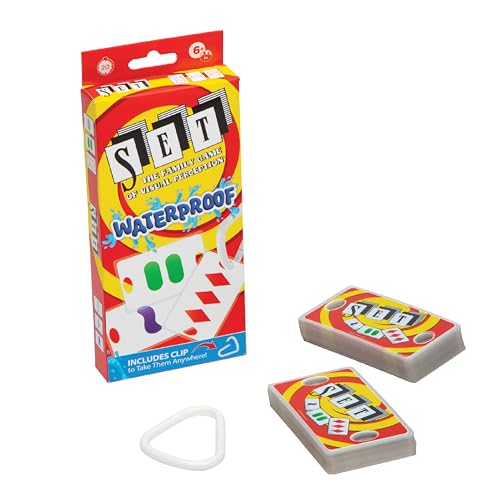
PlayMonster SET Waterproof Cards
MAKCU MAKCM V3 ESP32 Dev Board with DMA Mouse Simulation and Button Shell

PlayMonster SET Giant Jumbo Card Game for Family, Travel, and Visual Perception

PlayMonster SET Travel Case Game

PlayMonster SET Family Card Game, 81 Cards, Ages 8+
More On The Choices That Made The List
The collectible tin gives this SET edition a place on a shelf as well as on the game table. I find that appealing for a family that wants a familiar pattern game without giving the cards an entirely ordinary package.
A set consists of three cards whose color, shape, number, or shading characteristics are either all the same or all different. The format supports any number of players, so it can handle a two-person challenge or a lively family session, depending on the group and available space.
Useful Highlights
- The collectible tin adds shelf presence and gives the set a more gift-friendly presentation.
- Variable player participation makes it practical for children and adults together.
- Pattern recognition adds a useful mental challenge to each round.
- Fast group play suits parties, dinner gatherings, and family game nights.
Things To Consider
- The metal-style presentation may occupy more shelf space than a simple card box.
- The speed-based format can feel intense for younger children who prefer slower turns.
Key Specs
Made For
Families that want a collectible SET edition for display, gifting, and regular group play at home.
A Better Fit Elsewhere
PlayMonster SET Waterproof Cards serve outdoor sessions better, while the tin version suits protected indoor storage.
Waterproof cards change the setting rather than the rules. I see this version making more sense at a picnic table, beside a pool, or on a beach where a paper-card game would have a harder time surviving a spill.
The travel clip keeps the deck together during transit, while the familiar SET structure preserves the same race to identify valid three-card combinations. Compared with PlayMonster SET Collectors Tin Card Game, the emphasis shifts from display toward outdoor resilience.
Well-Handled Touches
- Water-resistant cards suit beaches, pools, picnics, and other variable settings.
- The attached travel clip reduces the chance of cards scattering inside a bag.
- Variable player count supports both quiet pairs and larger gatherings.
- Pattern matching gives young players and adults the same shared challenge.
Small Caveats
- Waterproof construction does not make the game suitable for every rough or wet environment.
- The clip is useful for carrying the deck, but the game still needs a clear surface for play.
Built With In Mind
Outdoor-oriented families, travelers, and picnic hosts who need cards that can handle occasional dampness.
Another Choice May Suit
PlayMonster SET Travel Case Game offers a soft zippered enclosure, making it the stronger fit for trips where complete card protection matters more than water resistance.
This is the actual DMA development hardware in the group, and its purpose is entirely different from the SET games. I would approach it as a platform for mouse-emulation experiments rather than a general-purpose card game or plug-and-play input device.
DMA, or direct memory access, lets software interact with compatible hardware through low-level memory operations. The MAKCM V3 uses two ESP32-S3 processors, and its preloaded v3 firmware handles mouse emulation at polling rates up to 1000Hz, where polling rate describes how often the board reports input.
What Stands Out
- Dual ESP32-S3 chips provide substantial processing capability for an embedded development board.
- The preloaded v3 firmware removes the need to begin with a blank software setup.
- Mouse emulation supports a 1000Hz polling rate for responsive custom input projects.
- The button-enabled shell adds physical control while shielding the exposed circuit board.
- Two double-ended USB-C cables simplify connections to different equipment.
Practical Considerations
- Compatibility with the intended computer, software, and supported mouse protocol needs confirmation before committing to a project.
- The exposed development-board format requires more technical understanding than an ordinary game accessory.
Technical Highlights
The Right Fit
Developers comfortable with embedded electronics who are building a custom mouse-emulation or input-testing project.
Swap It Out When
PlayMonster SET Family Card Game, 81 Cards, Ages 8+ is the better fit for family entertainment rather than hardware development.
Large cards make SET easier to see across a table or hold in the hands of a young child. I find that especially useful in mixed-age settings, where small symbols can become difficult for younger players to inspect quickly.
The underlying challenge remains unchanged: each valid three-card group carries matching characteristics, either all alike or all different. Unlike PlayMonster SET Waterproof Cards, this oversized edition emphasizes visibility and tabletop presence rather than outdoor handling.
A Favorable Mix
- Jumbo cards improve visibility for children and less-confident readers.
- The large format creates a noticeable centerpiece for parties and family gatherings.
- Variable player numbers make the game suitable for several group sizes.
- Travel suitability comes from the compact game design despite the oversized cards.
Worth Noting
- Jumbo cards may require more table area than standard SET editions.
- Older children may find the visual pace easier than younger players do.
Who Will Love This
Families, party hosts, and classroom groups that benefit from large symbols and a shared visual challenge.
Where Another Pick Suits Better
PlayMonster SET Waterproof Cards fit damp outdoor settings more closely, while the giant edition favors easy viewing on a clear table.
The soft zippered case is a modest feature with a clear purpose: keeping the deck together and giving it somewhere to live during a trip. Its clip can attach the case to a bag, which makes it easier to move between a hotel room, picnic site, and waiting area.
Inside, the familiar visual-matching game remains flexible enough for children and adults. Compared with PlayMonster SET Waterproof Cards, this case offers greater protection from crushing and loss, though the source does not describe the cards themselves as waterproof.
Why It Works Well
- The zippered case gathers the cards into one compact package.
- An external clip simplifies attachment to a backpack or similar bag.
- Soft construction keeps the set practical for travel and compact storage.
- Variable participation accommodates both pairs and larger family groups.
Room For Improvement
- The bag clip adds bulk to a pocket or a minimal travel setup.
- Outdoor moisture resistance is not a stated feature of the cards or case.
Feature Snapshot
Best Suited To
Travelers and families who want a portable card game with a dedicated case rather than loose cards in a larger box.
Not Your Match When
PlayMonster SET Waterproof Cards suit beach trips and damp locations better because protection from water is their stated advantage.
The standard-card version feels like the straightforward option for regular family play. Its age guidance starts at eight, so it fits slightly older children than the editions labeled for ages six and up.
I like that the core activity remains easy to explain without losing its visual complexity. Players race to find three cards that agree across color, shape, shading, or number, and the 81-card deck provides more material for a sustained group session.
What It Does Well
- The 81-card deck gives a group plenty of combinations to examine.
- Included rules help the family start without assembling another reference.
- The familiar format supports both children and adults around one table.
- Standard card proportions store more easily than the giant edition.
Possible Compromises
- The age guidance targets children aged eight and up rather than younger players.
- It lacks the tin, travel case, giant cards, and waterproof treatment offered by specialized editions.
Core Details
Whose Shelf It Belongs On
Families with children around eight years and older who want a conventional, compact SET deck for home game nights.
Reach For A Different Pick When
PlayMonster SET Collectors Tin Card Game suits gift display, while the giant edition better serves young children who need larger symbols.
What Matters Most In A DMA Card Or Card Game
Match The Hardware To The Actual Project
A DMA card is an embedded development tool, not a conventional expansion card. I would check protocol compatibility, firmware status, connectivity, and the enclosure before choosing hardware. The MAKCU MAKCM V3 makes sense for mouse-emulation work because it already includes dual ESP32-S3 chips, a UART controller, and preloaded v3 firmware.
Decide How The Cards Will Be Used
The SET editions serve noticeably different situations. I favor the tin for display, waterproof cards for damp outdoor settings, giant cards for visibility, and the zippered travel case for compact outings. Standard-card play remains the straightforward option for frequent family use.
Consider Group Size And Play Pace
SET can accommodate different numbers of players, although the rapid recognition pace may feel different for each age group. I think the giant version reduces the need to examine tiny symbols, while the standard deck presents a more familiar challenge. Families should consider the ages and attention styles around the table before settling on a format.
Questions To Resolve Before Buying
Common Shopping Slip Ups
Mixing a development board with physical card games can lead to a confusing comparison. I separate the two clearly: the MAKCU product is the DMA hardware, while the other five choices are SET games. A shopper expecting computer connectivity from a tin of cards will find the wrong product type.
What The Higher Tier Buys
The upgraded SET editions spend their differences on presentation, portability, visibility, or weather handling. I consider the extra value strongest when the tin will be displayed, the waterproof cards will face damp conditions, or larger symbols will genuinely help a child. For standard family play, the basic deck remains sensible.
Frequently Asked Questions
What Is A DMA Card?
A DMA card is hardware that uses direct memory access for low-level data operations. The MAKCU MAKCM V3 in this roundup functions as an ESP32-based development board for mouse-emulation projects.
Which Option Is A DMA Development Board?
The MAKCU MAKCM V3 ESP32 Dev Board with DMA Mouse Simulation and Button Shell is the DMA development board here. The remaining five products are physical SET card games.
Which SET Edition Is Best for Outdoor Play?
The PlayMonster SET Waterproof Cards have the clearest advantage for beaches, pools, and picnics. Their cards are designed to tolerate damp conditions better than the standard or travel-case editions.
Which SET Game Has Larger Cards?
The PlayMonster SET Giant Jumbo Card Game for Family, Travel, and Visual Perception uses oversized cards. That format helps young players see the symbols more easily across a table.
Which SET Option Is Easiest to Carry?
The PlayMonster SET Travel Case Game includes a soft zippered case and an external clip. The waterproof edition also travels well, though it prioritizes moisture resistance rather than a full protective enclosure.
Final Verdict
I would choose the MAKCU MAKCM V3 for an electronics project and one of the SET editions for family play. The tin rewards display, the waterproof cards handle outdoor settings, the giant cards improve visibility, and the travel case keeps a compact deck together. The standard 81-card version remains the least elaborate and most familiar choice for recurring game nights.
