
Building out a small server closet or a home network lab usually means confronting the same bottleneck: floor space. You need a framework that holds switches, patch panels, and AV gear vertically, keeps cables off the ground, and still lets you reach ports without contorting your hands. Open frame racks solve this by giving you structural support and multi-sided access simultaneously, unlike enclosed cabinets that box you in. Your specific setup, whether it is a single wall-mounted switch in a garage or a full 12U stack in a utility room, dictates which frame, shelf, or rail kit makes sense.
The Shortlist At A Glance

VEVOR 12U Open Frame Server Rack 23-40 in Adjustable Depth

ECHOGEAR 10U Open Frame Rack 20.4″ Depth

Tecmojo 12U Open Frame Network Rack for IT & AV Gear

NavePoint Cantilever Server Shelf 19 Inch 1U 14″ Deep
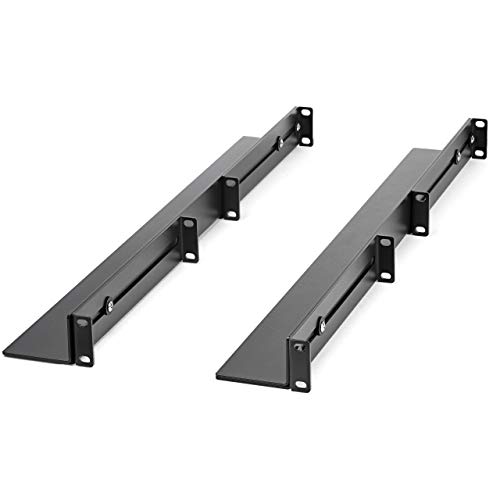
StarTech.com 1U Server Rack Rails Adjustable Depth
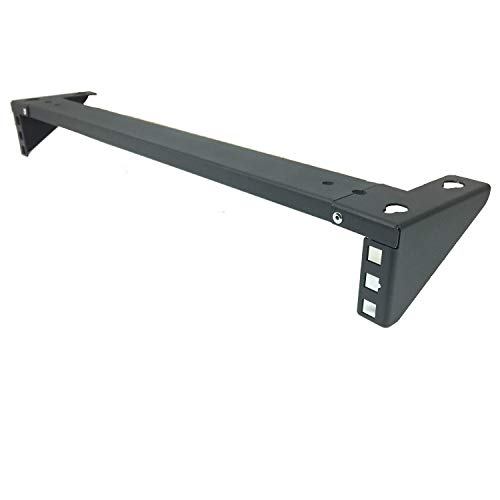
JINGCHENGMEI 1U Steel Vertical Wall Mount Rack 19″
More Details On Our Top Picks
Carbon steel construction gives this 12U frame the rigidity needed for dense AV and IT stacks. The depth slides between 23 and 40 inches, meaning you can accommodate deep servers or pull the rails in tight for shallow networking gear. That adjustability matters most in mixed-use environments where you are storing both a patch panel and a large amplifier in the same column. For a growing home lab, the flexibility prevents you from outgrowing the frame after a single equipment swap.
You can deploy it as a free-standing unit on its casters or bolt it to a wall. The 500-pound floor capacity handles heavy servers without flexing. On the wall, the 150-pound limit suits lighter networking loads. You may find the casters useful for pulling the whole assembly out to reach rear ports in a tight closet.
Strong Points
- Carbon steel build absorbs vibration and resists flexing under heavy loads
- Adjustable depth accommodates both shallow switches and deep servers
- 500-pound floor capacity supports dense server stacks
- Casters allow rolling the assembly for rear cable access
- Four-post design keeps gear stable during cable pulling
Worth Noting
- Wall-mount installation requires solid masonry or reinforced studs for the 150-pound capacity
- The adjustable rails add weight and complexity compared to fixed-depth frames
- Owners commonly report the included hardware is basic, so you may want higher-grade cage nuts for dense installs
Key Specs
Who It Suits Best
Shoppers building a mixed AV and IT rack in a home closet or small office benefit from the adjustable depth and high floor capacity.
Where A Sibling Pick Shines
Those mounting only a single switch to a wall should consider the JINGCHENGMEI 1U Steel Vertical Wall Mount Rack for a simpler, zero-assembly solution.
Unlike the VEVOR’s sliding depth, this 10U frame locks in at 20.4 inches. That fixed depth suits networking and AV components up to 19 inches deep, covering most standard switches and routers without wasted rear clearance. The open frame design promotes airflow, keeping passively cooled gear from overheating in a closet. You also get two vented shelves and 25 mounting screws in the box, saving a hardware store run.
The 150-pound wall-mount capacity matches lighter network loads. DIY assembly means you bolt the frame together yourself, but the process is straightforward for anyone with basic tools. The open sides make cable fishing considerably easier than working inside an enclosed cabinet.
Highlights
- Includes two 1U vented shelves for non-rackable gear like modems
- 25 mounting screws come included, covering a full rack of standard devices
- Open frame promotes natural airflow for passively cooled equipment
- Fixed 20.4-inch depth simplifies assembly and reduces wobble
Trade Offs
- Fixed depth will not accommodate deeper enterprise servers that exceed 19 inches
- 150-pound wall capacity is lower than the VEVOR, limiting it to lighter gear
- DIY assembly requires a level and a Phillips head to keep the frame square
Right Fit For
DIY home network builders who need a straightforward wall-mount frame for standard-depth networking and AV gear.
Reach For A Different Pick When
Shoppers needing to mount deep enterprise servers should look at the VEVOR 12U Open Frame Server Rack for its 40-inch adjustable depth.
Cold rolled steel gives this 12U frame its structural backbone. The material choice balances cost and rigidity, making it a practical middle ground between the ECHOGEAR’s lighter build and the VEVOR’s heavy carbon steel. You get 260 pounds of floor capacity and 130 pounds on the wall, which covers most home and small office networking loads. Two 1U shelves and mounting hardware ship in the box, so you can rack non-standard gear immediately.
Anti-slip shelf stops keep devices from sliding off the back during cable work. The top panel adds a small storage surface for tools or cable testers. A stackable design lets you expand vertically later.
Plus Points
- Two included 1U shelves hold non-rackable modems and small devices
- Anti-slip stops prevent gear from sliding during cable maintenance
- Cold rolled steel keeps the frame rigid without a premium price
- Stackable design allows future vertical expansion
Small Caveats
- 260-pound floor capacity is half the VEVOR’s rating, limiting very dense server loads
- Wall capacity of 130 pounds demands secure anchoring for safety
At A Glance
Built With In Mind
Budget-conscious network builders who want included shelves and a stackable frame for a growing home lab.
Swap It Out When
Those storing heavy AV amplifiers or dense server stacks should step up to the VEVOR 12U Open Frame Server Rack for its 500-pound floor capacity.
This is an add-on shelf, not a standalone rack. It mounts into an existing 19-inch frame to hold devices that lack rack ears, like small modems or audio receivers. The 14-inch depth works for compact components. A front-mount cantilever design supports up to 44 pounds, and slotted venting helps passive cooling. The lip along the front edge stops gear from sliding forward. You will need a frame like the VEVOR or Tecmojo to install this shelf.
Bright Spots
- Cantilever design saves rear space compared to full-depth shelves
- Slotted venting allows heat to escape from passive devices
- Front lip prevents equipment from sliding off during vibration
Points To Note
- 44-pound capacity limits it to lightweight gear, not heavy amplifiers
- 14-inch depth may not fit larger desktop-format devices
- Requires an existing compatible 19-inch rack frame for installation
Who Will Love This
Shoppers who already own a 19-inch frame and need to store non-rackable small devices inside it.
Another Choice May Suit
Those starting from scratch without a frame should grab the Tecmojo 12U Open Frame Network Rack, which includes its own shelves.
Sometimes a server arrives without rails. These 1U rails solve that by fitting into standard 19-inch four-post racks following the EIA-310 specification. The universal design accommodates OEM servers from Dell, HP, IBM, and Apple. Adjustable depth lets you match the specific chassis length. You need a four-post frame like the VEVOR to mount these rails, as they are not a standalone product.
Reasons To Buy
- Universal fit covers major OEM server brands without proprietary rails
- EIA-310 compliance guarantees fit in standard 19-inch four-post racks
- Adjustable depth matches varying server chassis lengths
Softer Spots
- Requires a compatible four-post rack, so it is not a standalone solution
- Mounting bare servers is a two-person job given the weight of typical chassis
Quick Facts
Who Should Grab It
IT professionals mounting bare OEM servers into an existing four-post rack will find these universal rails essential.
Look Elsewhere When
Shoppers who need a complete frame rather than rail accessories should start with the VEVOR 12U Open Frame Server Rack.
Not every setup needs a 12U tower. This 1U bracket mounts a single piece of 19-inch gear vertically to a wall. Measuring 19.29 inches wide and 2.3 inches deep, it fits standard network switches, firewalls, and patch panels. The steel construction arrives fully assembled with cage screws and nuts, so you can mount a device in minutes. It is the simplest item on this list, serving a specific single-device role.
Best Bits
- Zero assembly required, saving installation time
- Included cage screws and nuts mean no extra hardware runs
- Compact 2.3-inch depth fits flush against narrow walls
Room For Improvement
- Limited to a single 1U device, so no room for expansion
- Vertical mounting may not suit all device airflow orientations
Whose Shelf It Belongs On
Home networkers mounting a single switch or firewall to a garage or closet wall.
Skip It When
Those planning to rack multiple devices should pick the Tecmojo 12U Open Frame Network Rack for its greater capacity.
What Matters Most Before Choosing 1u Rack Servers
Frame Capacity And Depth
The U count determines how many devices you can mount. A 12U frame holds twelve 1U devices, while a 1U bracket fits exactly one. Depth is equally critical. Fixed-depth frames like the ECHOGEAR at 20.4 inches suit standard networking gear. Adjustable frames like the VEVOR accommodate deeper enterprise servers. Measure your deepest device before choosing, as exceeding the depth rating leaves gear hanging off the back.
Weight Ratings And Mounting Style
Floor-standing frames carry far more weight than wall-mounted ones. The VEVOR handles 500 pounds on the floor but only 150 on a wall. Wall mounting requires solid anchoring into studs or masonry. Drywall alone will not hold a loaded rack. Consider whether you need casters for mobility or a fixed bolt-down installation.
Open Versus Enclosed Designs
Open frame racks prioritize airflow and cable access. Enclosed cabinets offer physical security and dust protection. For home and small office use, open frames are generally sufficient and far easier to work with. The open sides let you route cables from any angle without removing panels.
Included Accessories
Some frames ship with shelves and screws, while others are bare bones. The ECHOGEAR includes two vented shelves and 25 screws. The Tecmojo includes two shelves and mounting hardware. Factoring these accessories into your total cost matters, as buying shelves separately adds up quickly.
Before You Click Buy
Wrong Turns To Avoid
A common mistake is underestimating depth requirements. Shallow networking switches fit standard 20-inch frames, but enterprise servers often need 30 inches or more. Another pitfall is ignoring wall construction. Mounting a 150-pound loaded rack into drywall without hitting studs risks a collapse. Always verify your wall can support the loaded weight before drilling.
The Case For Spending Up
Higher-tier frames use carbon steel instead of cold rolled steel, boosting weight capacity significantly. The VEVOR’s 500-pound floor capacity doubles the Tecmojo’s rating. Premium frames also offer adjustable depth, letting you swap shallow switches for deep servers without replacing the rack. Spending up makes sense for mixed-use environments where your gear will evolve over time.
Frequently Asked Questions
What does 1U mean in rack mounting?
The term 1U refers to a standard unit of vertical space in a 19-inch rack, equal to 1.75 inches. A 12U frame can hold twelve devices that are each 1U tall.
Can you wall mount a fully loaded 12U rack?
Wall mounting a 12U rack is possible but limited by the frame’s weight rating and your wall construction. You must anchor into studs or masonry, as drywall alone cannot support the load.
What is the difference between open frame and enclosed server racks?
Open frame racks have no sides or doors, providing easy access and natural airflow. Enclosed racks have doors and side panels for security and dust control but restrict access and airflow.
Do all servers come with mounting rails?
Not all servers include rails. Many OEM servers ship without them, requiring a universal rail kit like the StarTech.com 1U rails to mount into a standard four-post rack.
What is a cantilever shelf used for in a server rack?
A cantilever shelf mounts into a rack to hold non-rackable devices like modems or small audio receivers. It supports the device from the front without extending fully to the back of the rack.
Final Verdict
Choosing the right rack gear comes down to matching capacity, depth, and mounting style to your specific space. The VEVOR handles dense and deep stacks, while the ECHOGEAR covers standard home builds. Accessories like shelves and rails round out a complete installation. Measure your devices, verify your wall strength, and pick the frame that fits both your current gear and your future expansion plans.
