
You want a desk setup that keeps the footprint small without making you live with a cramped screen or a sluggish feel. That’s the real promise of a budget all-in-one, especially for home offices, dorm rooms, kitchen counters, and family spaces where a separate tower would just add clutter.
Below, you’ll find eight compact desktops that fit different routines, from light web work to a more capable everyday setup. The trade-off shows up in storage, screen size, and processor strength, so the right match depends on how much you multitask and how much desk space you can spare.
Quick Look At The Shortlist
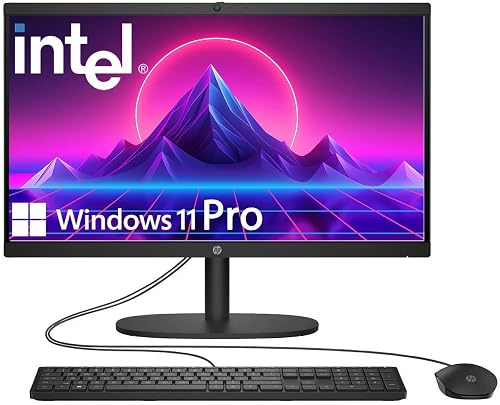
HP 2025 22″ FHD All-in-One Desktop Computer

24″ All-in-One Desktop PC with Windows 11

Dell 27″ All-in-One Desktop, FHD, Intel Core 5 120U
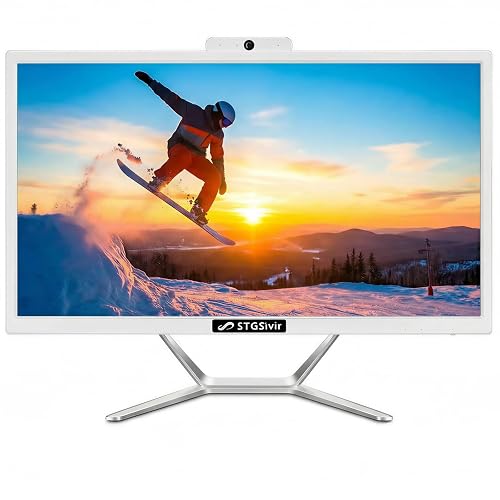
STGSivir All in One Computer PC, 22″ Display, Core i5
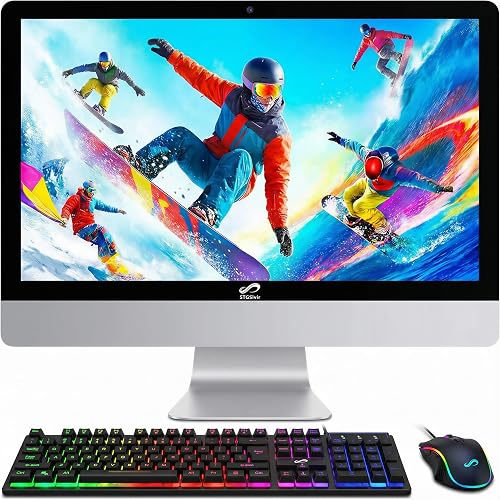
STGSivir All in One Computer PC, 24″ FHD Display, Core i7

Lenovo IdeaCentre Everyday Tasks 24″ Full HD All-in-One Desktop Computer
Lenovo IdeaCentre 24″ FHD All-in-One Desktop
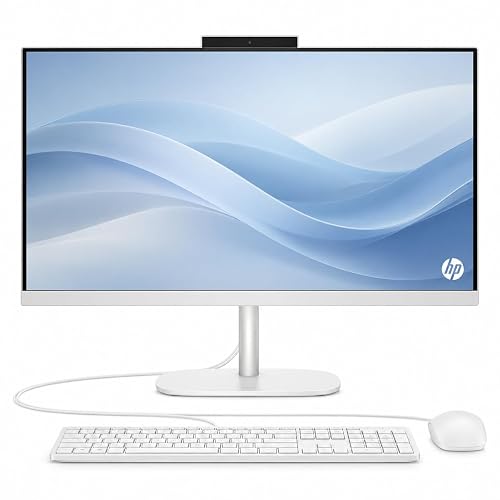
HP OmniStudio 24″ Full HD All-in-One Desktop Computer
This HP keeps the footprint small with a 22-inch Full HD screen, so it makes sense on a tight desk, in a kitchen nook, or in a room where a full tower would crowd the setup. The 13th Gen Intel quad-core chip, 8GB of DDR5 memory, and 128GB of storage point to light daily work rather than heavy creative loads.
You also get HDMI, USB Type-C, Wi-Fi, an HD webcam, and Windows 11 Pro, which makes it feel ready for video calls and straightforward office tasks. The honest read is that the storage is modest, so cloud storage or external drives will matter more here than they do on some of the larger Lenovo and Dell options.
Strong Points
- 22-inch panel fits compact desks without feeling cramped.
- DDR5 memory gives it a more current base than many entry-level systems.
- HDMI and Type-C support simple monitor or accessory setups.
- Windows 11 Pro suits home offices that need a business-friendly environment.
Things To Consider
- 128GB of storage fills faster than larger SSD-based picks in this roundup.
- The smaller display suits everyday use better than split-screen heavy work.
- Light multitasking fits best, since this is not the broadest spec sheet here.
Feature Snapshot
Who Should Grab It
Space-conscious home users and remote workers who need a tidy daily computer rather than a big performance machine will get the most from it.
Where A Sibling Pick Shines
Dell 27″ All-in-One Desktop, FHD, Intel Core 5 120U is a better fit for you if a larger screen and more storage matter more than compactness.
Core Innovations keeps this one simple, and that simplicity has a place in a budget all-in-one lineup. A 24-inch screen usually feels easier to live with than a smaller panel, especially for spreadsheets, email, and casual streaming at a home desk.
Because the spec sheet here is lean, this pick makes the most sense for straightforward computer chores rather than a heavy multitasker’s routine. Compared with the HP 22-inch model, you get a bit more screen breathing room, but the trade-off is that the listing leaves less room for performance detail.
What We Like
- 24-inch display size offers a more relaxed view for daily work.
- Windows 11 gives you a familiar setup right away.
- The minimal approach suits a spare room, den, or small office.
Worth Noting
- The listing keeps hardware details light, so long-term performance expectations stay modest.
- More ambitious multitasking setups will likely want a stronger spec sheet.
- Storage and memory are not spelled out here, so planning is harder than with the Dell and Lenovo picks.
Core Details
Made For
Simple home setups, student corners, and family spaces benefit most from this easygoing layout.
Swap It Out When
Lenovo IdeaCentre 24″ FHD All-in-One Desktop fits better for you if you want clearer hardware detail and a more memory-rich spec sheet.
The Dell stands out for people who spend long stretches at a desk, because the 27-inch Full HD screen gives you more working room than the 22-inch and 24-inch picks above. Pair that with a Core 5 120U processor, 16GB of DDR5 memory, and a 512GB SSD, and you get a more comfortable everyday machine.
Intel Graphics, Wi-Fi 6E, Bluetooth, keyboard, and mouse round out the package, so there’s less extra shopping to think about on day one. The honest trade-off is size, since a 27-inch all-in-one asks for a deeper desk and a bit more visual attention than the smaller HP or Core Innovations options.
Bright Spots
- Larger 27-inch panel makes side-by-side work easier.
- 16GB of DDR5 memory suits heavier browser use and office multitasking.
- 512GB SSD gives you more breathing room for files and apps.
- Keyboard and mouse are included, which helps with setup simplicity.
- Wi-Fi 6E and Bluetooth support a more modern wireless setup.
Small Caveats
- The bigger footprint is not the best match for very tight desks.
- Large-screen all-in-ones can be harder to reposition than smaller models.
- The included accessories are handy, but you may still prefer your own keyboard feel.
Details At A Glance
Whose Shelf It Belongs On
Remote workers and home office users who want more screen space without adding a separate tower will appreciate this layout.
Look Elsewhere When
HP 2025 22″ FHD All-in-One Desktop Computer suits you better if you need a smaller footprint and lighter hardware demands.
STGSivir leans into a more dressed-up desktop look, with an RGB keyboard and mouse included in the box. For a dorm, a starter office, or a shared family desk, that means less piecing things together and a setup that feels complete right away.
The 22-inch display, Core i5 processor, 16GB of RAM, and 512GB SSD create a solid middle ground for schoolwork and general productivity. The catch is Wi-Fi 5 instead of a newer wireless standard, so people building a longer-term desk setup may prefer the Dell or Lenovo alternatives.
Upsides
- Included keyboard, mouse, and webcam make the setup feel ready.
- 16GB memory and 512GB SSD give it more room than entry-only machines.
- 22-inch size stays manageable on smaller desks.
- RGB accents add a bit of personality without changing the core layout.
Areas To Watch
- Wi-Fi 5 trails the newer wireless options in the Dell and Lenovo picks.
- Accessory-heavy bundles can add cable clutter around a compact desk.
- The 22-inch panel works best for simple multitasking, not broad side-by-side work.
Quick Facts
The Right Fit
Students, casual office users, and anyone who wants a tidy all-in-one with a little visual flair will get the most from it.
Another Choice May Suit
Lenovo IdeaCentre 24″ FHD All-in-One Desktop is the better route for you if newer wireless support matters more than bundle extras.
This STGSivir version steps up to a Core i7 and a 24-inch FHD screen, so it feels better suited to busier days at the desk. Compared with the 22-inch STGSivir model, you gain a larger view and more processor headroom, which matters for users who keep a lot open at once.
It still keeps the same 16GB of RAM, 512GB SSD, RGB keyboard, mouse, webcam, HDMI, and Windows 11 Home setup, so the value comes from the stronger chip and the bigger panel. One thing worth considering is that Wi-Fi 5 remains in place, so the upgrade story is about local performance rather than wireless freshness.
Reasons To Buy
- Core i7 gives it more breathing room for heavier everyday multitasking.
- 24-inch Full HD screen offers a better balance of space and size.
- 512GB SSD and 16GB RAM support a more comfortable work rhythm.
- Included webcam and accessories simplify a home-office starter setup.
Points To Note
- Wi-Fi 5 is older than the newer wireless features on some rivals.
- The bundle includes several extras, so desk management matters a bit more.
- Its stronger hardware makes sense for productivity, not for high-end creative work.
Feature Rundown
Best Suited To
You get the most from this one in a home office, student workspace, or shared desk that sees regular multitasking.
Where A Sibling Pick Shines
Dell 27″ All-in-One Desktop, FHD, Intel Core 5 120U is the better fit for you if you want newer wireless support and a larger premium-style screen.
Lenovo aims this one at ordinary daily work, and the name tells the story plainly. The 24-inch Full HD display, Intel 4-core processor, 8GB of RAM, and 256GB SSD fit email, documents, schoolwork, and web apps without making the setup feel overbuilt.
KB and mouse are included, which is helpful for anyone setting up a desk from scratch. The Web version of Office 365 also points this model toward productivity-first use, though the smaller storage pool means you’ll want to stay organized and avoid piling on large local files.
Best Bits
- 24-inch Full HD screen gives you a sensible amount of workspace.
- Included keyboard and mouse reduce the extra pieces you need to gather.
- 256GB SSD is a practical middle point for documents and apps.
- Its everyday focus suits school, email, and casual office duties.
Room For Improvement
- 8GB RAM and an Intel 4-core chip suit routine work more than heavy multitasking.
- 256GB storage is enough for basics, but not generous for large media libraries.
- The Office 365 Web reference is useful, though browser-based work is still the main story.
Feature Card
Right Fit For
Students, home office starters, and anyone who mainly needs a tidy screen for daily web-based work will feel right at home here.
Reach For A Different Pick When
HP OmniStudio 24″ Full HD All-in-One Desktop Computer makes more sense if you want newer DDR5 memory and a leaner, more current hardware mix.
This Lenovo looks like the balanced middle ground in the group, especially for households that want one machine to handle schoolwork, web use, and shared daily tasks. The 24-inch FHD screen, 16GB RAM, 512GB SSD, Intel 4-core processor, Wi-Fi 6, and Bluetooth 5.2 make it feel more complete than the leaner Lenovo IdeaCentre Everyday Tasks model.
That extra memory and storage help when multiple people use the same desktop or when you tend to leave apps and tabs open. Compared with the Dell, the processor is less ambitious, but the overall mix is tidy and practical, which is often enough for a family room or multipurpose office.
Positives
- 16GB RAM gives you more headroom than basic budget setups.
- 512GB SSD offers better space for files, apps, and photos.
- Wi-Fi 6 and Bluetooth 5.2 support a more current wireless routine.
- 24-inch screen works well for shared use and casual productivity.
Honest Caveats
- The Intel 4-core processor keeps it in everyday territory rather than higher-performance use.
- The blue finish may not suit every room’s style.
- Shared-use homes may still want to manage storage habits to keep the SSD tidy.
Core Details
Built With In Mind
Families, shared home offices, and anyone who wants a calmer balance between size and capability will appreciate this one.
Another Choice May Suit
Dell 27″ All-in-One Desktop, FHD, Intel Core 5 120U suits you better if you want a larger screen and a stronger overall hardware step up.
The OmniStudio lands as a tidy modern option for people who want a current-feeling all-in-one without moving up to a large premium chassis. Its 24-inch Full HD screen, 16GB of DDR5 memory, Intel quad-core processor, and WiFi 6 support make it look well suited to a clean desk and a steady daily routine.
Keyboard and mouse are included, which helps with a simple setup, and the smaller 128GB SSD keeps the machine lean rather than roomy. Compared with the Lenovo 24-inch model above, you get newer DDR5 memory but less storage, so this one works best for lighter file habits and a more streamlined desktop life.
Standout Traits
- 16GB DDR5 gives it a current-feeling base for everyday use.
- 24-inch Full HD screen lands in a comfortable middle size.
- Keyboard and mouse make the first-day setup easier.
- WiFi 6 supports newer home networking gear.
Minor Gripes
- 128GB SSD is the tightest storage figure in this higher-memory group.
- Quad-core processing fits daily tasks better than heavy workload days.
- Storage management matters more here than on the 256GB and 512GB options.
Feature Rundown
Who Will Love This
You’ll like this most in a tidy home office or bedroom desk where clean lines and everyday responsiveness matter more than big local storage.
Skip It When
Lenovo IdeaCentre 24″ FHD All-in-One Desktop is the better fit for you if 512GB of storage matters more than newer DDR5 memory.
How To Choose The Right Budget Alls In One Pc
Screen Size Sets The Daily Feel
Screen size changes the whole experience. A 22-inch all-in-one, like the HP 2025 model, keeps things compact for a narrow desk, while 24-inch options give you a little more room for browser tabs, spreadsheets, and side-by-side documents.
Go up to 27 inches, as Dell does, and the machine starts to feel more like a proper workstation. The trade-off is desk space, because a larger screen asks more from the surface in front of it.
Memory And Storage Shape Longevity
RAM, short for random access memory, affects how comfortably the system handles several open apps at once. 8GB works for everyday browsing and writing, while 16GB is the safer place for busier households, shared use, or a desk where tabs tend to pile up.
Storage matters just as much. A 128GB SSD is lean, 256GB is manageable, and 512GB leaves more breathing room for downloads, photos, and software without constant cleanup.
Ports, Wireless, And Accessories Matter More Than They Look
HDMI and Type-C help you connect monitors or accessories without extra fuss, and Wi-Fi 6 or Wi-Fi 6E can feel more at home with newer routers. Bluetooth is handy for wireless peripherals, especially when you want a cleaner desk.
Included keyboards and mice save you a separate purchase, but they also shape the feel of the whole setup. That’s useful for a first desk or a guest room computer, though some people will still prefer their own input devices.
What To Weigh Before You Choose
Mistakes Worth Dodging
Many shoppers focus on screen size and ignore memory or storage. That usually backfires later, because a large display with only modest internals still feels limited once the tabs, files, and apps start stacking up.
Another common miss is treating a bundled keyboard and mouse as a full quality signal. Those extras are handy, but the real long-term comfort comes from the processor, RAM, SSD size, and wireless standard.
What The Higher Tier Buys
Spending more in this category usually gets you a larger screen, more memory, a roomier SSD, and newer connectivity. That combination matters most for home offices, family computers, or any desk that sees daily use from more than one person.
The upgrade is easier to justify when you keep lots of browser tabs open, store files locally, or want a machine that feels less cramped after a year or two. For simple email and web use, a smaller model can still be the smarter fit.
Frequently Asked Questions
What size all-in-one works best for a small desk?
A 22-inch model usually fits best in tight corners, dorm rooms, and kitchen nooks. A 24-inch option gives you a little more breathing room without taking over the whole surface.
Is 8GB of RAM enough for everyday use?
Yes, 8GB handles basic browsing, documents, and light streaming well enough for many households. 16GB is the more relaxed choice for heavier multitasking.
How much storage should you look for?
256GB is a practical starting point for schoolwork and ordinary home use. 512GB feels better when you keep more apps, photos, or downloads on the machine.
Should you choose Wi-Fi 6 over Wi-Fi 5?
Wi-Fi 6 generally fits newer home networks better and can feel more dependable in busy households. Wi-Fi 5 still works for everyday use, especially in simpler setups.
Do included keyboard and mouse bundles matter?
They matter most when you want a ready-to-go desk without extra shopping. They also help keep the setup neat for guest rooms, students, and first-time desktop owners.
Closing Thoughts
The right budget all-in-one depends on how you actually use your desk. For light daily work, the HP 2025 and Core Innovations picks keep things simple, while the Dell and Lenovo models give you more room and a better long-term feel. STGSivir leans into stronger bundled value, and the HP OmniStudio brings a more current hardware mix. Choose the screen size and storage level that match your routine, and the rest tends to fall into place.