
A slow computer often creates a familiar loop: applications pile up, routine tasks repeat, and small inefficiencies begin consuming the workday. The right learning resource depends on the problem, from writing C++ code to organizing AI-assisted workflows or understanding the algorithms behind data-heavy systems.
I’ve gathered six practical options for people who want to improve their digital routines rather than rely on a vague “make it faster” promise. The beginner-oriented guides focus on approachable instruction, while the technical books cover programming, heuristics, and mathematical foundations for more structured learning. Each review explains who benefits most, what the material covers, and where another choice may make more sense.
The Picks In Brief

Beginning C++ For Dummies
Claude Code for Beginners Made Easy

How to Solve It

Claude Cowork for Beginners Made Easy
Foundations of Data Science

Complete Claude AI Handbook
Taking A Closer Look At The Options
Beginning C++ For Dummies takes the intimidating parts of programming and gives them a softer entry point. The book is built around C++, a general-purpose language used for software, systems work, games, and many desktop applications. That makes it a practical foundation for someone who wants to understand how computer instructions become working programs.
The plain-English explanations are especially helpful during a first pass through variables, logic, and program structure. I would start here for a self-directed beginner who prefers guided reading over scattered online tutorials, while experienced programmers may find the pacing less demanding.
Reasons It Performs
- Plain-language explanations reduce the early friction of learning syntax.
- Focus on C++ fundamentals supports a transferable programming base.
- A structured book format makes it easier to revisit concepts systematically.
- The format suits self-paced study alongside a home computer.
Trade Offs
- The beginner-oriented pace may feel slow after substantial programming experience.
- It focuses on C++ rather than broad desktop optimization or workflow automation.
Key Specs
Who It Suits Best
This book fits new programmers who want a calm, guided introduction to C++ and a structured way to build technical confidence.
Where Another Pick Suits Better
Claude Code for Beginners Made Easy is a better fit for people who want to create application projects through an AI coding workflow rather than study C++ from the ground up.
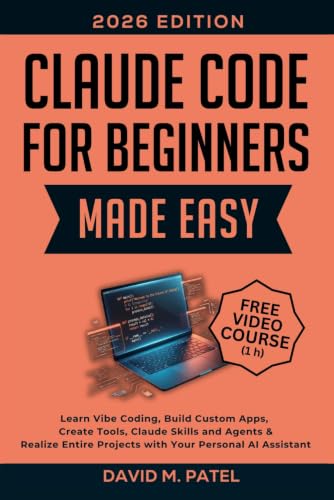
Claude Code for Beginners Made Easy treats coding as a project-building activity rather than a purely theoretical exercise. It covers custom applications, reusable tools, Claude Skills, and agents, with additional attention to MCP and connectors. For a beginner, that combination offers a clear route from an idea toward a working digital utility.
Subagents, agent teams, and example workflows make the material more useful for people who already understand the basic idea of prompting an AI system. I would pair this guide with a specific goal, such as building a small internal tool, because the broad coverage becomes easier to absorb through practice.
A Favorable Mix
- Project examples help turn abstract AI concepts into concrete tasks.
- Coverage of Skills and agents supports more structured reuse.
- MCP and connector material addresses how tools can connect to outside resources.
- Example workflows provide a practical starting point for experimentation.
- The beginner framing suits people without a traditional coding background.
Worth Noting
- Several advanced features may overwhelm someone starting with a single prompt.
- AI-assisted development still requires clear project requirements and careful testing.
Feature Snapshot
Made For
This guide fits aspiring app creators who want to learn AI-assisted project building without first completing a full computer science degree.
Not Your Match When
How to Solve It is a better fit for people who want general problem-solving methods rather than a tool-specific AI development curriculum.
How to Solve It focuses on heuristics, which are practical rules or shortcuts used to find useful solutions when a perfect method is unavailable. That makes the book relevant to anyone trying to improve a process, organize a complicated task, or make better decisions with incomplete information.
The subject is less tied to a particular application than the other picks, which gives it unusual flexibility. In my view, it works best for people who enjoy analytical reasoning and want principles they can apply across software, planning, and everyday technical problems.
What It Does Well
- Builds a general framework for approaching difficult, open-ended problems.
- Useful for software design, scheduling, search, and everyday decision-making.
- The subject matter transfers across many tools and professional contexts.
Points To Note
- The book offers less hands-on setup guidance than the beginner AI workbooks.
- A learner seeking step-by-step computer configuration steps may find it too theoretical.
- The abstract material benefits from application alongside a real task.
Right Fit For
This title suits analytical learners who want a durable problem-solving framework rather than a narrow software tutorial.
Consider Something Else When
Beginning C++ For Dummies is the better option for a complete newcomer who wants direct language instruction instead of broad heuristic reasoning.
Claude Cowork for Beginners Made Easy centers on turning a desktop into a place where repeatable work can be delegated to AI. Its emphasis on entire workflows, plugins, and task automation makes it more relevant to administrative routines than the programming-focused title that came before it.
The practical audience is a professional handling reports, documents, research, or communication across a desktop. The honest read is that the guide can reduce repetitive copying and organizing, though a real workflow still needs boundaries so the system receives useful context and reviewable instructions.
Positive Takeaways
- Workflow focus addresses multi-step office tasks rather than isolated questions.
- Plugin coverage helps users organize repeatable capabilities.
- Beginner framing lowers the barrier to desktop-based AI delegation.
- The approach suits professionals who already know their recurring tasks.
Things To Consider
- Desktop access and compatible software are necessary for the intended setup.
- Broad workflow examples need adaptation to a specific job before they save time.
Details At A Glance
Built With In Mind
This guide fits office professionals who want to automate recurring desktop work without learning a full programming language first.
Another Choice May Suit
The Complete Claude AI Handbook suits someone who needs a wider introduction to Claude before narrowing the focus to desktop workflows.
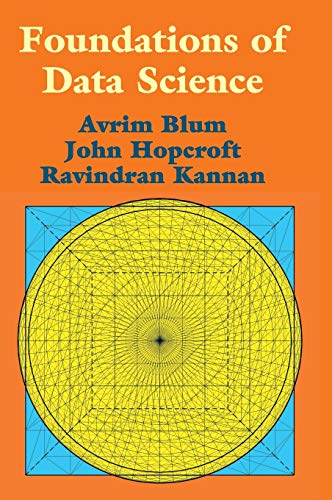
Foundations of Data Science is the most mathematically demanding selection. It introduces the ideas behind machine learning, high-dimensional geometry, large networks, linear algebra, random walks, and Markov chains. Markov chains are mathematical models that describe movement between states, a concept useful for systems that evolve from one condition to another.
I would choose this title for someone already comfortable with technical study who wants to understand why data-analysis methods work. Compared with the AI workbooks in this list, it offers less immediate workflow instruction but much deeper conceptual grounding for optimization decisions involving models, networks, and large datasets.
The Practical Payoff
- Connects machine learning to the mathematical ideas beneath it.
- Explains linear algebra tools such as singular value decomposition.
- Covers large networks and Markov chains for systems-oriented thinking.
- High-dimensional data discussion prepares learners for modern analytical challenges.
- Provides stronger theory than the task-focused beginner guides.
Less-Strong Areas
- The mathematical depth creates a steep entry point for complete beginners.
- It does not focus directly on everyday desktop speed or office automation.
Whose Shelf It Belongs On
This book belongs on the shelf of an engineer, analyst, or advanced student who wants rigorous foundations beneath data-science practice.
Look Elsewhere When
Claude Cowork for Beginners Made Easy is a better fit for a professional seeking immediate desktop workflow guidance without advanced mathematics.
The Complete Claude AI Handbook is designed as a broad entry point into Claude, with seven instructional sections spanning chat, projects, task handling, and automation. Its beginner-to-pro progression makes it a reasonable first stop for someone who has used a chatbot only for isolated questions and now wants more complete daily workflows.
A companion video course adds another learning format, which can help when reading alone feels slow. The trade-off is breadth: Claude Code for Beginners Made Easy goes deeper into app creation, while this handbook remains the clearer general introduction to Claude’s larger working environment.
A Strong Showing
- Seven-part structure creates a clear route from basics to broader use.
- Chat and project guidance supports several everyday learning needs.
- Automation material extends beyond one-off question answering.
- Video lessons offer a useful alternative to long reading sessions.
Potential Compromises
- Wide coverage can move faster than a focused specialist guide.
- Desktop setup details remain less prominent than in the Cowork-focused title.
Feature Card
Who Should Grab It
This handbook suits general learners who want a broad Claude introduction before choosing a specialized workflow or development path.
Swap It Out When
Foundations of Data Science is the better fit for technically advanced readers who want mathematical principles rather than a general-purpose Claude course.
Matching the Method to the Real Task
A useful computer optimization program starts with the outcome, not the tool. Someone struggling with repetitive document handling needs workflow automation guidance, while a beginner interested in making software needs a programming foundation. The right resource depends on whether the goal is faster execution, better analysis, stronger code, or a repeatable decision process.
Define the bottleneck first
I start by naming the time-consuming step. Slow application launches require a different solution from disorganized files, unclear reports, or repeated data analysis. Beginning C++ For Dummies addresses the skills needed to create custom tools, while Claude Cowork for Beginners Made Easy focuses on delegating recurring desktop work.
Match the learning depth
A broad handbook is useful for orientation, but it can spend more time mapping the landscape than teaching one difficult concept. How to Solve It moves toward general reasoning, while Foundations of Data Science assumes a willingness to study mathematics. Depth is worth the extra effort when the underlying method will be used repeatedly.
Look for an actionable first project
The fastest way to learn is often to attach a lesson to a real task. Claude Code for Beginners Made Easy can be paired with a small application, and the Claude Cowork guide can be tested against one recurring office routine. The more specific the project, the easier it becomes to identify which parts of the instruction actually matter.
Consider how the result will be maintained
A program is only useful when its instructions fit the tools and routines already in use. Beginner guides tend to reduce the initial barrier, while technical books can support deeper customization. The practical check is simple: the material should match both the present skill level and the amount of maintenance the task will require.
Common Mistakes in Learning Workflows
Mistake: Choosing breadth before a clear goal
A broad handbook feels reassuring, but it can delay the first useful result. Start with the bottleneck that appears most often, then select a guide built around that specific task.
Mistake: Confusing an assistant with a finished system
Automation still needs instructions, review, and occasional correction. Treat each guide as a way to design a repeatable process, not as a substitute for understanding the result.
What the Higher Tier Buys
Broader titles usually add more formats, examples, and progression rather than a magical capability. The Complete Claude AI Handbook is a reasonable choice when a general survey is the goal, while a specialist title becomes more valuable once the workflow is already defined.
Frequently Asked Questions
What is a computer optimization program?
A computer optimization program is a structured way to improve a digital workflow, from automating repetitive tasks to strengthening programming or analytical skills. The best option depends on the bottleneck and the learner’s comfort with technical material.
Which option is best for a complete beginner?
Claude Cowork for Beginners Made Easy is approachable for people focused on desktop workflows, while Beginning C++ For Dummies offers a gentler start in programming. A complete beginner should choose based on whether the goal involves office routines or code.
Can these books improve computer speed directly?
They can improve the way a person designs, analyzes, or automates work, but they are not direct system-tuning utilities. More specialized instructions may be needed for startup delays, storage management, or hardware configuration.
Which title is best for learning AI-assisted app creation?
Claude Code for Beginners Made Easy focuses most directly on custom apps, tools, skills, and agents. It is the more relevant choice when the intended result is a working software project.
Is Foundations of Data Science suitable for beginners?
It is better suited to people with a strong technical interest and tolerance for mathematics. A beginner seeking easier software lessons will probably get more from Beginning C++ For Dummies.
Final Verdict
The best fit depends on the problem being solved. Beginning C++ For Dummies offers the gentest programming start, while Claude Code for Beginners Made Easy leans toward practical app creation. Claude Cowork for Beginners Made Easy targets recurring desktop work, and The Complete Claude AI Handbook provides the broadest orientation. For deeper reasoning, How to Solve It and Foundations of Data Science add stronger methods, though each demands more specialized attention. Pick the resource that matches the next task, not the most impressive title on the list.
