
A shared family computer must handle schoolwork, video calls, streaming, and household admin without becoming a desk-sized distraction. I focus on 16 GB of memory (RAM), a fast solid-state drive (SSD), integrated graphics, and displays that suit the available space. An AI-capable processor can also handle everyday AI tools, although the software experience depends on the application. The six HP options below cover separate desktops, compact all-in-ones, and larger screens for different routines.
The Leading Options At A Glance
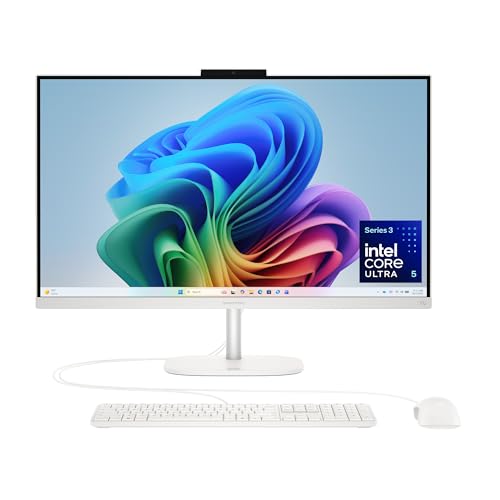
HP OmniStudio 27 inch All-in-One AI PC, Core Ultra 5 325, 27-cy0002

HP OmniStudio 27 inch All-in-One PC, Ryzen 5 220, 27-cv0002

HP OmniDesk Slim PC, Core i5-14400, 8GB, 512GB, S03-0012

HP OmniStudio 27 inch All-in-One AI PC, Ryzen AI 7 445, 27-cw0102

HP OmniStudio 23.8 inch All-in-One PC, Ryzen 5 40, 24-cv0002
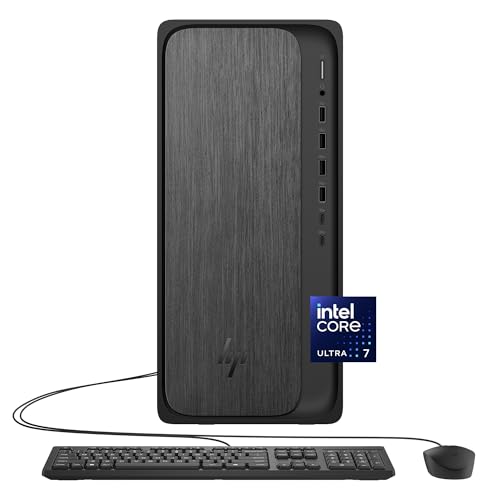
HP OmniDesk AI PC, Core Ultra 7 265, 16GB, 1TB SSD, M03-0102
Meet The Standout Selections
An all-in-one combines the computer and display in one unit, reducing the number of separate desk objects. The 27-inch full HD (FHD) panel offers enough room for split-screen documents, browser tabs, or a lesson beside a video call, while the adjustable stand helps position the screen comfortably.
For someone moving between morning calls and evening entertainment, the camera, microphone, and speakers are particularly useful. The infrared camera supports facial recognition through Windows Hello, while an FHD sensor and HDR auto-switch adjust to uneven backlighting. In my view, the communication hardware gives this model a clearer purpose than a basic home desktop.
A Few Strong Suits
- The 27-inch display reduces the need to switch between overlapping windows.
- 16 GB of DDR5 memory supports multitasking and higher bandwidth than many basic configurations.
- The NVMe SSD uses the fast PCIe interface, making it suited to quick access to documents and applications.
- AI noise reduction makes remote conversations more useful in a busy household.
- DTS spatial sound and HP Eye Ease add media comfort and more balanced viewing.
Trade Offs
- The 27-inch footprint needs a broad desk, and the built-in PC cannot be positioned independently from the display.
- Intel Graphics and 512 GB of storage favor general computing rather than demanding 3D work or large media libraries.
Key Specs
Built With In Mind
This model suits remote workers, students, and shared households that value a large screen and integrated video-call hardware.
Where Another Pick Suits Better
The HP OmniStudio 23.8 inch All-in-One PC, Ryzen 5 40, 24-cv0002 offers a smaller footprint for desks with limited room.
The AMD Ryzen 5 220 gives this all-in-one a different platform option from the Intel configuration in the HP OmniStudio 27 inch All-in-One AI PC, Core Ultra 5 325, 27-cy0002. Both provide 16 GB of memory, 512 GB of storage, and a 27-inch FHD display, so the processor and Radeon 740M graphics are the main points of comparison.
In a family room, this configuration appears suited to browsing, school assignments, streaming, and routine video calls. The 16 GB of RAM is the more useful trait for keeping several browser tabs and communication applications open. A household that prefers a light-colored fixture may also appreciate the Cotton White finish, although appearance remains a personal decision.
Everyday Wins
- Sixteen gigabytes of memory gives mixed household routines more room to operate.
- The Radeon 740M provides integrated graphics without a separate desktop tower.
- The large display makes the all-in-one practical for browsing and media at the same time.
Things To Consider
- A 27-inch all-in-one needs more desk depth than a compact model, and its internal computer is less flexible than a separate desktop.
- The 512 GB drive may become limiting for extensive photo, video, or game storage, so existing file needs deserve a close look.
The Right Fit
This model fits families and home offices that need a large, approachable all-in-one for routine computing and communication.
Consider Something Else When
The HP OmniStudio 27 inch All-in-One AI PC, Core Ultra 5 325, 27-cy0002 better serves remote workers who prioritize an infrared camera and built-in noise reduction.
Where the earlier OmniStudio models put the computer behind a large display, the slim OmniDesk keeps the desktop separate. That arrangement frees the screen position for a second monitor, a laptop, or a compact study setup, although the actual desk savings depend on the dimensions of the chosen monitor.
The Core i5-14400 handles general office work, browsing, classes, and communication, while easy-access ports suit a frequently rearranged workspace. For a student room or compact home office, this may be a more sensible layout than an all-in-one. The 8 GB of memory works for lighter routines, though heavy multitasking deserves closer attention.
Standout Benefits
- The separate slim chassis allows flexible monitor placement.
- The Core i5-14400 provides a capable platform for standard productivity tasks.
- A 512 GB SSD gives applications and documents quick solid-state access.
Points To Note
- Eight gigabytes of RAM is the main fit check for numerous browser tabs, heavy applications, or memory-intensive work.
Quick Facts
Made For
Students and home-office users with a small desk benefit from the separate slim desktop and flexible monitor arrangement.
A Better Fit Elsewhere
The HP OmniDesk AI PC, Core Ultra 7 265, 16GB, 1TB SSD, M03-0102 offers more memory and storage for heavier multitasking and larger file collections.
Compared with the Ryzen 5 220 configuration, this model moves to a Ryzen AI 7 445 processor and Radeon 840M graphics while retaining 16 GB of memory, 512 GB of storage, and a 27-inch FHD display. That positioning makes it a logical step upward within the same general all-in-one format for people who regularly move between creative applications and communication tools.
The built-in AI hardware can support compatible software features, though individual results depend on the application and its requirements. I would consider this configuration for photo editing, light content creation, and a busy professional desk. The large display gives detailed work more room, while the integrated design keeps the setup visually contained.
What Helps Most
- The Ryzen AI 7 445 platform targets more demanding everyday workflows.
- Radeon 840M graphics offer a more capable integrated option for visual applications.
- Sixteen gigabytes of memory supports multitasking between demanding programs.
- The 27-inch display gives creative work and communication a generous canvas.
Possible Compromises
- The all-in-one format limits freedom to position the computer and display separately.
- Its large screen requires a desk broad enough for comfortable viewing distance.
- The 512 GB drive may need careful management for extensive creative files.
Feature Snapshot
Who Will Love This
Creative professionals, developers, and advanced home-office users gain a capable large-screen system without assembling separate components.
Another Choice May Suit
The HP OmniStudio 27 inch All-in-One AI PC, Core Ultra 5 325, 27-cy0002 fits remote workers who place greater value on the infrared camera and noise reduction.
The smaller 23.8-inch panel distinguishes this model from the three larger OmniStudio all-in-ones in the list. That reduction can matter in an apartment, dorm, or reception area where a 27-inch screen leaves little room for documents or other objects on the desk.
For browsing, streaming, coursework, and communication, the Ryzen 5 40 processor with Radeon graphics offers a straightforward foundation. The 512 GB SSD keeps files and applications on fast storage. This is not the configuration I would emphasize for intensive editing, but it appears sensible for a room where screen dimensions matter more than maximum performance.
Notable Gains
- The 23.8-inch display occupies less desk space than the 27-inch alternatives.
- A 512 GB SSD provides fast storage for everyday applications and documents.
Small Caveats
- The 8 GB of memory leaves less room for intensive multitasking than the 16 GB models.
- Integrated Radeon graphics and a smaller FHD panel are less accommodating for demanding visual work and fine-detail editing.
Best Suited To
Apartment residents, students, and small-office users benefit from the compact screen and straightforward everyday configuration.
Look Elsewhere When
The HP OmniDesk Slim PC, Core i5-14400, 8GB, 512GB, S03-0012 serves users who want a separate display arrangement and the freedom to choose their own monitor.
The strongest distinction in this desktop is its combination of 16 GB of memory and a 1 TB SSD. That doubles the listed storage of the HP OmniDesk Slim PC, Core i5-14400, 8GB, 512GB, S03-0012 while also providing more memory, making this option more accommodating for large project folders and several active applications.
The Core Ultra 7 265 adds AI hardware to an already capable general-computing platform, and the Gray Wood finish gives the separate chassis a more decorative look than a conventional office tower. For a professional desk, this appears like a strong foundation for development, content work, and demanding multitasking. Intel Graphics still points toward general use rather than serious 3D rendering.
Useful Touches
- Sixteen gigabytes of RAM supports demanding multitasking and heavier applications.
- The 1 TB SSD provides abundant room for project files, media, and installed programs.
- The Core Ultra 7 265 includes AI hardware for compatible workflows.
- The separate chassis permits flexible monitor placement in a professional workspace.
Details To Watch
- A 1 TB drive can still fill with large media or project archives, so file organization remains relevant.
- Intel Graphics makes this a general-purpose choice rather than a dedicated high-end gaming system.
Core Details
Who Should Grab It
Professionals, creators, and developers benefit from the combination of substantial memory, generous storage, and flexible monitor placement.
Reach For A Different Pick When
The HP OmniStudio 27 inch All-in-One AI PC, Ryzen AI 7 445, 27-cw0102 better serves users who prefer an integrated 27-inch display and Radeon 840M graphics.
Match The PC To The Work
A useful computer under 1000 should fit the workload before the specification sheet. Memory keeps active applications available, storage determines how many files remain on the computer, and graphics capability affects video editing, 3D work, and some games.
Processor And AI Features
The Core Ultra, Core i5, Ryzen AI, and Ryzen 5 processors cover different levels of general computing. AI hardware can accelerate supported features, but the processor alone does not determine software performance. Application requirements and system configuration still matter.
Memory And Storage
16 GB of RAM gives a more comfortable margin for browser-heavy routines and multiple applications. The 8 GB models suit lighter use, while 512 GB suits a moderate local file library. A 1 TB drive helps when project folders, photos, and software quickly consume smaller capacities.
Display Or Separate Desktop
A 27-inch all-in-one offers a large integrated workspace and fewer desk objects. The 23.8-inch model favors smaller rooms, while the slim desktop supports a separate monitor. Display resolution, processor, and graphics should be matched to the screen and tasks.
Where The Budget Really Goes
Mistakes Worth Dodging
A large screen does not automatically mean a better computer, and extra storage has limited value for a light routine. Compare memory, graphics, and processor against the actual workload rather than choosing by display size alone.
When Paying More Pays Off
Extra spending becomes worthwhile when a higher-tier processor, additional memory, or larger SSD removes a real constraint. A creator managing large files gains more from storage than from a bigger display, while a shared household may benefit from a compact layout and dependable everyday performance.
Frequently Asked Questions
Is a 27-inch all-in-one better than a separate desktop?
A 27-inch all-in-one suits anyone wanting a large display and fewer desk components. A separate desktop is more flexible for monitor positioning, external upgrades, and compact workspaces.
How much RAM does an everyday computer need?
Eight gigabytes suits lighter browsing, office work, and study, though 16 GB provides more room for heavy browser use and multitasking. Upgrading later may also depend on the desktop’s internal design.
Is a 1 TB SSD worth the extra storage?
A 1 TB SSD is useful for large project folders, media collections, and installed software. A lighter routine with mostly cloud-based files may not need that much local storage.
Are these computers suitable for gaming?
Intel Graphics, Radeon 840M, Radeon 740M, and basic Radeon graphics are intended for integrated and general computing. Newer demanding games may require stronger dedicated graphics, which these configurations do not list.
Should I choose Intel or AMD?
Intel and AMD models cover similar everyday uses, so platform preference comes second to processor class, memory, graphics, and screen needs. The Ryzen AI 7 445 is the higher-tier AMD option here, while the Core Ultra 7 265 leads the Intel selections.
Final Thoughts
I would start with the HP OmniDesk AI PC, Core Ultra 7 265, 16GB, 1TB SSD, M03-0102 for heavy multitasking, then consider the Core Ultra 5 OmniStudio for its communication hardware. A smaller desk favors the 23.8-inch all-in-one, while a separate-monitor arrangement points toward the slim OmniDesk. The right choice is the one that comfortably handles the daily routine without paying for capabilities that never get used.
