
Shopping for a workstation or gaming build around LGA 2011 can feel confusing because the socket supports both older Xeon platforms and enthusiast desktop processors. You need to match the CPU, cooler mounting hardware, case clearance, and workload rather than relying on socket wording alone. This shortlist covers the Intel Core i7-6850K processor plus several air coolers that list LGA 2011 compatibility, including compact options for rack-style systems and larger dual-tower designs for sustained desktop workloads.
The Shortlist At A Glance
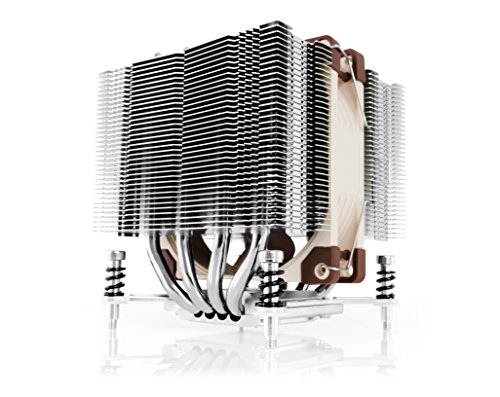
Noctua NH-D9DX i4 3U Premium CPU Cooler

Intel Boxed Core i7-6850K Processor

Thermalright Peerless Assassin 120 Black CPU Air Cooler

upHere Dual Tower CPU Cooler 120mm PWM Fan Black

upHere CPU Air Cooler 6 Heat Pipes Dual 120mm Fan

Thermaltake Gravity i3 Intel LGA 1700 CPU Cooler Black

upHere CPU Air Cooler 4X6mm Heat Pipes 120mm Fan Black
More Details On Our Top Picks
Rack-mounted Xeon systems need cooling that respects tight vertical space, and the NH-D9DX i4 3U is built around that constraint. Its 92mm cooler format suits compact server and workstation cases, while support for LGA 2011 Square ILM and Narrow ILM covers two mounting layouts that can otherwise complicate installation.
You may find this design easier to place around memory slots than a large tower cooler, particularly in a dense workstation chassis. The trade-off is straightforward: its smaller heatsink has less surface area than the Peerless Assassin 120, so sustained high-load desktop work benefits from the larger model when case height allows it.
Strong Points
- Supports both common LGA 2011 mounting layouts, helping you avoid a compatibility mismatch.
- The compact 92mm format suits 3U-style enclosures and crowded workstation interiors.
- Reduced height makes memory and chassis clearance easier to manage.
- Noctua’s DX-focused design gives you a purpose-built option for Intel Xeon platforms.
- The brown finish is distinctive, though it won’t suit every build theme.
Things To Consider
- Smaller cooling hardware may offer less thermal headroom than a dual-tower cooler during prolonged rendering.
- Dust removal in a compact case can take patience because access around the heatsink is restricted.
Key Specs
Built With In Mind
You benefit most from this cooler as a workstation administrator or home lab builder using an LGA 2011 Xeon system inside a compact enclosure.
Where Another Pick Suits Better
Thermalright Peerless Assassin 120 Black CPU Air Cooler suits you more for a roomy tower PC and sustained high-load desktop work.
For an LGA 2011-3 desktop, the Core i7-6850K remains an interesting fit because six cores and 12 threads let you keep video work, virtual machines, and heavy multitasking moving together. A thread is a stream of instructions handled by a core, so the extra threads matter more in rendering and content creation than in lightly used office systems.
Quad-channel DDR4 support and up to 40 PCIe 3.0 lanes give this processor a platform suited to multiple expansion cards and high-bandwidth storage. You may find its age more noticeable in newer software and platform features, so the honest read is that it makes sense mainly for an existing compatible board rather than a completely new build.
What We Like
- Six cores and 12 threads fit multi-tasking, encoding, and virtual machine workloads.
- Up to 40 PCIe 3.0 lanes support several expansion devices on a suitable motherboard.
- Quad-channel DDR4 memory support helps bandwidth-heavy workstation tasks.
- Up to 15MB of Smart Cache keeps frequently used data closer to the processing cores.
Worth Noting
- You need an LGA 2011-3 platform and compatible DDR4 memory, not just any LGA 2011 board.
- A capable aftermarket cooler is sensible for long rendering or virtualization sessions.
- Older platform features can limit upgrade flexibility compared with newer desktop hardware.
At A Glance
Right Fit For
You get the strongest match as an enthusiast or workstation user upgrading an existing LGA 2011-3 system for multi-threaded work.
Consider Something Else When
Noctua NH-D9DX i4 3U Premium CPU Cooler suits you more when your priority is cooling an LGA 2011 Xeon in a compact chassis.
Large desktop cases give the Peerless Assassin 120 room to show its main advantage: two heatsink towers paired with six heat pipes. Heat pipes move heat away from the processor into the fin stacks, where the 120mm PWM fan, meaning pulse-width modulation fan control, can adjust airflow with the motherboard.
The 125 by 135 by 157mm dimensions demand a careful case and memory check, but the offset layout is intended to preserve access around the first graphics slot. Compared with the compact Noctua NH-D9DX i4 3U, this Thermalright model is a better match for sustained workstation loads, though cleaning between two fin towers takes more effort.
Highlights
- Six heat pipes distribute processor heat across a substantial dual-tower fin area.
- The asymmetric layout can help preserve first-slot graphics card clearance.
- A 120mm PWM fan gives you adjustable airflow for changing workloads.
- Black-coated surfaces suit understated gaming and workstation interiors.
- LGA 2011 compatibility makes it relevant to several legacy enthusiast platforms.
Trade Offs
- The 157mm height may exceed the clearance of compact cases.
- Dual-tower cleaning and fan removal require more room than a compact cooler.
Technical Sheet
Who Will Love This
You get the best fit as a desktop enthusiast running sustained rendering, compiling, or gaming workloads in a spacious case.
Not Your Match When
Thermaltake Gravity i3 Intel LGA 1700 CPU Cooler Black suits you more for a short, low-power LGA 1700 system with modest cooling demands.
Socket variety is the main reason to consider this upHere dual-tower cooler. Its listed support spans LGA 2011, LGA 2066, LGA 1700, LGA 115x, and several AMD sockets, giving you a flexible path across reused parts and mixed build plans.
Six heat pipes and a 120mm PWM fan point toward solid mainstream cooling, while the dual-tower layout gives it more thermal mass than the four-pipe upHere model later in this list. Depending on your case and memory arrangement, installation space deserves attention because broad tower coolers can crowd tall modules.
Upsides
- Wide Intel and AMD socket coverage helps you reuse the cooler across several systems.
- Six heat pipes offer more heat-transfer paths than a basic stock-style cooler.
- The 120mm PWM fan can respond to load changes through motherboard control.
- Dual towers make it a sensible match for multi-core desktop workloads.
Minor Gripes
- Large dual-tower hardware can complicate RAM access and case installation.
- Fin channels and the fan frame need periodic dust cleaning in a busy room.
- Socket lists still require a check against the included mounting hardware.
Feature Snapshot
Made For
You get the right match as a hands-on builder who wants one air cooler for several Intel and AMD desktop platforms.
Look Elsewhere When
Noctua NH-D9DX i4 3U Premium CPU Cooler fits you more for a tight rack chassis where a dual tower cannot fit.
Two 120mm fans give this upHere cooler a clear airflow focus for a multi-core workstation or gaming PC. The six-pipe, dual-tower arrangement resembles the approach used by the Thermalright Peerless Assassin 120, so you get a substantial option without moving to liquid cooling.
The listed socket range includes LGA 2011, LGA 2066, LGA 1700, and AM5, which helps you plan across platforms. You may find the second fan increases memory-side crowding and cleaning work, making the single-fan upHere dual tower a calmer choice for compact layouts.
Reasons To Buy
- Six heat pipes and two towers suit sustained processor workloads.
- Dual 120mm fans move air through both fin stacks instead of relying on one fan.
- Broad Intel and AMD support gives you useful platform flexibility.
- The design fits users who prefer conventional air cooling and straightforward maintenance.
- Two fans can provide more airflow headroom for long work sessions.
Room For Improvement
- Two fans occupy more space around memory slots and motherboard components.
- Dust maintenance takes longer across two fan frames and two fin towers.
Feature Rundown
Who Should Grab It
You benefit most as a desktop builder running a multi-core chip under sustained gaming, rendering, or compilation loads.
A Better Fit Elsewhere
upHere Dual Tower CPU Cooler 120mm PWM Fan Black suits you more when you want similar tower cooling with a less crowded single-fan layout.
Compact office systems and modest home servers don’t need the physical bulk of a dual tower. The Gravity i3 uses a 92mm fan and a 65.4mm height, giving you a low-profile direction for Intel LGA 1700 and LGA 1851 builds.
The listed 95W cooler rating points toward low-power processor use rather than an LGA 2011 workstation. That’s the key distinction beside the other six entries: this model doesn’t list LGA 2011 support, so you need to reserve it for a compatible newer Intel socket.
Plus Points
- Compact 65.4mm height helps in small desktop cases.
- The 92mm fan keeps the cooler footprint modest around nearby components.
- Seven fan blades support airflow in a small cooling assembly.
- Its straightforward layout can make routine installation less involved.
Points To Note
- LGA 2011 isn’t listed, so this isn’t a direct match for the target socket.
- The 95W rating limits its suitability for sustained high-output processors.
- Small heatsinks collect dust quickly in restricted cases and need regular attention.
Quick Facts
Whose Shelf It Belongs On
You get the right fit as a small-form-factor builder using an LGA 1700 or LGA 1851 low-power processor.
Skip It When
Intel Boxed Core i7-6850K Processor suits you more when your actual system uses an LGA 2011-3 motherboard.
A 120mm fan and four 6mm heat pipes give this upHere cooler a middle path between a compact stock-style design and a larger six-pipe tower. Its listed 6.1-inch height is especially useful during case planning, though you still need to compare that measurement with your chassis clearance before installation.
Support for LGA 2011, LGA 2066, LGA 1700, LGA 1851, and several AMD sockets makes it adaptable for home builds. In most desktop cases, you may find this simpler layout easier to clean than the dual-fan upHere model, while heavier rendering workloads may favor its six-pipe sibling.
Best Bits
- Four 6mm heat pipes provide direct paths for moving processor heat.
- A 120mm fan covers more fin area than a very compact 92mm design.
- The 6.1-inch height helps you screen for case compatibility early.
- Broad socket support suits mixed Intel and AMD parts collections.
Small Caveats
- Four pipes provide less heat-transfer capacity than the six-pipe dual-tower options.
- The 120mm tower still needs a case-height and memory-clearance check.
- Dust buildup around the fin stack can reduce airflow and calls for periodic cleaning.
Core Details
The Right Fit
You get the best match as a value-minded home builder seeking straightforward LGA 2011 cooling for moderate desktop workloads.
Another Choice May Suit
upHere CPU Air Cooler 6 Heat Pipes Dual 120mm Fan suits you more for prolonged heavy rendering or other high-load multi-core work.
How To Choose The Right Cpus For Lga 2011
Start With The Exact Platform
LGA 2011 can refer to more than one platform generation, so socket shape alone doesn’t settle compatibility. The Core i7-6850K belongs with an LGA 2011-3 motherboard and quad-channel DDR4, while older Xeon boards may use a different processor generation and memory type. Check the motherboard model, chipset, BIOS support, and memory standard before choosing a CPU.
The same caution applies to coolers. LGA 2011 Square ILM and Narrow ILM describe different mounting layouts, and a cooler that lists one arrangement may not suit the other. Noctua NH-D9DX i4 3U Premium CPU Cooler earns attention here because its source information specifically covers both layouts.
Match Cooling To The Workload
A CPU used for office work, file serving, and light coding places different demands on a cooler than a chip handling rendering or several virtual machines. Heat pipes spread processor heat into fin stacks, while a PWM fan changes speed according to the motherboard’s control signal. Larger dual-tower designs such as Thermalright Peerless Assassin 120 Black CPU Air Cooler offer more physical cooling hardware, but they also occupy more space.
Compact cases deserve a separate check. Measure cooler height, graphics card position, memory-module height, and side-panel clearance. A 3U rack chassis points toward Noctua’s compact format, while a roomy tower can accommodate the larger upHere and Thermalright models.
Weigh Expansion And Longevity
The i7-6850K’s up to 40 PCIe 3.0 lanes can help you build around multiple graphics, storage, or capture devices, provided the motherboard exposes those lanes as needed. Six cores and 12 threads remain useful for parallel desktop tasks, though newer platforms generally offer a broader upgrade path and newer connectivity.
For an existing LGA 2011 system, a compatible replacement can make practical sense. For a ground-up build, compare the full platform cost, including motherboard, memory, and cooling, rather than focusing on the processor alone.
What To Weigh Before You Buy
Mistakes Worth Dodging
The biggest error is treating every LGA 2011 listing as interchangeable. Confirm whether your board uses an older LGA 2011 Xeon platform or LGA 2011-3, then verify the cooler’s mounting layout and included hardware.
A second mistake is choosing a tower before measuring the case. Dual-tower models can crowd memory slots, while compact coolers may leave less thermal headroom for long workloads.
Where The Extra Money Goes
Higher-tier cooling usually adds more heat pipes, a larger fin area, better mounting refinement, or extra fan capacity. You benefit from that added hardware during long renders and workstation sessions, but a small office PC may gain little from a large dual-tower assembly.
Spend more on cooling when sustained load, restricted airflow, or a high-output processor defines your setup. A simpler four-pipe model remains sensible for moderate use and a roomy case.
Closing Remarks
You can narrow this shortlist quickly by identifying the exact LGA 2011 platform, then matching cooling size to your case and workload. Intel Boxed Core i7-6850K Processor suits an existing LGA 2011-3 desktop, while Noctua NH-D9DX i4 3U Premium CPU Cooler addresses compact Xeon installations. Thermalright Peerless Assassin 120 Black CPU Air Cooler and the larger upHere models make more sense for spacious cases under sustained load. Measure first, verify mounting hardware, and choose the option that fits your system rather than chasing the largest cooler.
