
You need a processor that keeps pace with gaming, streaming, editing, compiling, or heavy multitasking without forcing you into a mismatched motherboard and memory platform. This shortlist covers 6-core, 8-core, 10-core, 16-core, and 24-core desktop choices, so you can match processing headroom to your workload. Intel’s P-cores handle demanding tasks while E-cores manage lighter background work, a layout called hybrid architecture. AMD’s Ryzen options range from accessible AM4 upgrades to high-end AM5 chips with expanded cache. You’ll find the practical trade-offs, cooling considerations, platform requirements, and ideal use cases below.
The Shortlist At A Glance

Intel Core Ultra 9 Processor 285K

Intel Core i5-14400 Desktop Processor

AMD Ryzen 5 5500 6-Core Desktop Processor
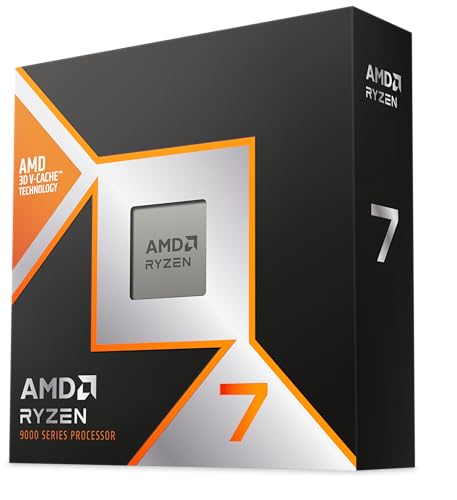
AMD Ryzen 7 9800X3D 8-Core Desktop Processor

AMD Ryzen 5 9600X 6-Core Desktop Processor

AMD Ryzen 9 9950X3D 16-Core Processor

Intel Core i9-12900KF Gaming Desktop Processor
More Details On Our Top Picks
Heavy multitasking is where this 24-core design makes sense. You get 8 P-cores for demanding foreground work and 16 E-cores for background loads, which suits a workstation handling video exports, large projects, streaming, and several open applications.
PCIe 5.0 and DDR5 support keep the platform current, while the unlocked design gives experienced builders room to tune performance. The catch is platform planning: you need an Intel 800 Series motherboard, capable cooling, and compatible DDR5 memory.
Strong Points
- Twenty-four cores provide substantial multitasking headroom for serious creation work.
- PCIe 5.0 support leaves room for newer storage and graphics hardware.
- Unlocked operation suits enthusiasts who understand manual tuning.
- DDR5 support gives a new build a modern memory foundation.
- The hybrid layout can keep background tasks from crowding demanding applications.
Things To Consider
- The 800 Series motherboard requirement raises the planning burden for an upgrade.
- You’ll need to choose cooling and memory carefully for a high-power desktop build.
Key Specs
Who It Suits Best
You’ll get the most from this choice as a workstation builder handling heavy creation, streaming, and multitasking.
Consider Something Else When
Choose AMD Ryzen 9 9950X3D instead for an AM5 system that combines 16 cores with gaming-focused cache.
For an everyday desktop, ten cores can be a sensible middle ground. The i5-14400 combines 6 P-cores with 4 E-cores, so you can handle gaming, office work, browser-heavy sessions, and moderate creation without stepping up to the 285K’s larger platform demands.
The included Laminar RM1 cooler simplifies a first build, and integrated UHD Graphics 730 gives you a display option without a separate graphics card. You may find the included cooler less appealing for sustained heavy workloads, so a larger aftermarket cooler can make sense for long rendering sessions.
What We Like
- Ten hybrid cores cover everyday productivity and gaming with useful multitasking capacity.
- Support for DDR4 or DDR5 gives you more flexibility during a platform upgrade.
- Integrated graphics help with basic display output and troubleshooting.
Worth Noting
- The supplied cooler is convenient, though sustained heavy workloads may call for stronger cooling.
- It has less core capacity than the Intel Core Ultra 9 Processor 285K for large creative projects.
- Motherboard selection still needs attention across Intel 600 and 700 Series chipsets.
At A Glance
Made For
You’ll find the best fit here as a mainstream desktop builder who wants gaming, work, and light content creation in one system.
Not Your Match When
Reach for AMD Ryzen 5 9600X for a newer AM5 build with six cores and DDR5-only planning.
Six cores and 12 threads give this AM4 processor a practical path into gaming and home productivity. The bundled Wraith Stealth cooler makes the parts list shorter, while the unlocked design gives hands-on enthusiasts an option for tuning.
A discrete graphics card is required, so your total build needs to account for that separate component. Compared with Intel Core i5-14400, this chip offers less platform flexibility and no integrated graphics, but its DDR4-3200 support can suit an existing AM4 system.
Highlights
- The included Wraith Stealth cooler helps simplify installation.
- Six cores and 12 threads suit popular games, schoolwork, and general desktop use.
- AM4 compatibility can make a sensible upgrade route for an existing compatible system.
- Unlocked operation gives experienced users room to adjust performance settings.
Trade Offs
- A separate graphics card is necessary, which adds installation and component-planning work.
- DDR4 support keeps the platform familiar but less current than AM5 options.
Technical Sheet
Right Fit For
You’ll suit this processor best as a beginner or AM4 owner building a dedicated-graphics gaming desktop.
A Better Fit Elsewhere
Pick Intel Core i5-14400 for integrated graphics, included cooling, and support for either DDR4 or DDR5.
Gaming-focused builds often benefit more from cache and strong per-core behavior than from simply adding more cores. This 8-core, 16-thread Ryzen 7 uses AMD’s 3D V-Cache approach, which adds a large cache pool close to the processing cores to keep frequently needed game data accessible.
That makes it a compelling fit for a dedicated gaming tower, especially beside a capable graphics card. The honest trade-off is workload balance: AMD Ryzen 9 9950X3D offers twice the core count for substantial creation work, while this model keeps its focus narrower.
Upsides
- Eight cores and 16 threads provide useful headroom for gaming with streaming.
- 3D V-Cache technology targets game workloads that benefit from expanded cache.
- Zen 5 architecture supports a current AM5 platform.
- Reported thermal improvements may make cooling planning more manageable than older high-output designs.
Minor Gripes
- You need an AM5 motherboard and DDR5 memory, so an older AM4 system cannot accept it directly.
- Eight cores may feel limiting for frequent high-volume rendering or complex workstation queues.
- Owners commonly report that cache-focused chips deserve careful cooler installation and airflow planning.
Feature Snapshot
Best Suited To
You’ll appreciate this choice as a gaming-first builder who also streams or creates occasionally.
Look Elsewhere When
Choose Intel Core Ultra 9 Processor 285K for a 24-core system aimed at heavier mixed workloads.
Six cores and 12 threads make the Ryzen 5 9600X an approachable entry into AMD’s Zen 5 generation. The 5.4 GHz maximum boost and unlocked design suit gaming, photo work, software development, and everyday use across a new AM5 desktop.
DDR5-5600 support gives you a current memory path, though the platform requires a compatible motherboard and a separate graphics card for demanding games. You may find this a better long-term starting point than Ryzen 5 5500, but an existing AM4 system would need a broader upgrade.
Bright Spots
- Zen 5 architecture gives a new build a current processing foundation.
- High boost frequency suits lightly threaded applications and responsive gaming.
- Unlocked operation gives experienced builders tuning flexibility.
- Thirty-eight megabytes of cache can help keep frequently used data close to the cores.
- AM5 and DDR5 support provide a clear route for future component upgrades.
Room For Improvement
- The AM5 platform requires new motherboard and DDR5 planning for an AM4 owner.
- A discrete graphics card is needed for a gaming system.
Quick Facts
Who Will Love This
You’ll get the strongest fit as a new-PC builder seeking modern gaming and general-purpose performance without moving to a 16-core chip.
Swap It Out When
Use AMD Ryzen 5 5500 for a lower-complexity AM4 upgrade that keeps existing DDR4 memory in play.
Sixteen cores give this Ryzen 9 the range to move from high-refresh gaming to editing, 3D work, and large multitasking sessions. Second-generation 3D V-Cache adds extra fast-access storage for game data, while the Zen 5 architecture keeps the design firmly aimed at demanding AM5 desktops.
Compared with the 8-core Ryzen 7 9800X3D, this option offers more parallel-work capacity without abandoning gaming-focused cache. In our view, the main planning issue is not capability but balance: your cooling, graphics card, memory, and motherboard all need to match a premium build.
Plus Points
- Sixteen cores and 32 processing threads provide strong capacity for creation and multitasking.
- Up to 5.7 GHz supports responsive performance in suitable lightly threaded tasks.
- Second-generation 3D V-Cache serves gaming workloads that benefit from expanded cache.
- Zen 5 architecture and AM5 compatibility suit a current enthusiast desktop.
Points To Note
- Premium hardware needs careful cooler and case-airflow planning during installation.
- AM5 and DDR5 requirements make this a platform project rather than a drop-in AM4 refresh.
- You may not use its full capacity during basic office work or casual gaming.
Core Details
Built With In Mind
You’ll benefit most as a creator, streamer, or enthusiast gamer who runs demanding applications side by side.
Reach For A Different Pick When
Choose AMD Ryzen 7 9800X3D for a gaming-first build that doesn’t need 16-core creation capacity.
Intel’s 16-core hybrid layout remains relevant for a gaming desktop that also handles streaming, multitasking, and demanding applications. You get 8 P-cores plus 8 E-cores, an unlocked multiplier for manual tuning, and LGA1700 compatibility across Intel 600 and 700 Series chipset boards.
The KF suffix means you need discrete graphics, so plan the rest of the system around a separate graphics card. Compared with Intel Core i5-14400, this model offers more cores and tuning room, but its older platform makes it less attractive for a brand-new build than AMD Ryzen 5 9600X.
Best Bits
- Sixteen hybrid cores provide useful capacity for gaming beside streaming or recording.
- Unlocked operation suits experienced enthusiasts who enjoy manual adjustments.
- LGA1700 compatibility includes Intel 600 and 700 Series chipset boards.
- Thirty megabytes of L3 cache helps keep frequently accessed data close to the processor.
Small Caveats
- Discrete graphics are required, adding another major component to the build.
- The 125W specification calls for thoughtful cooling and power planning.
- Older platform support may limit the appeal of a completely new system.
Feature Rundown
Whose Shelf It Belongs On
You’ll suit this processor as an enthusiast upgrading within an LGA1700 system with a discrete graphics card.
Where A Sibling Pick Shines
Choose AMD Ryzen 5 9600X for a new AM5 build with newer architecture and DDR5 memory support.
How To Choose The Right Cpus With The Most Cores
Match Core Count To Your Work
More cores help most with workloads that split into many simultaneous tasks, such as video encoding, 3D rendering, software compilation, and virtual machines. A 6-core processor can cover gaming, office work, and light creation, while 16 or 24 cores make more sense for frequent production queues.
Gaming alone doesn’t always scale with every additional core. Cache, per-core speed, graphics hardware, and game-engine behavior can matter just as much, which explains why the 8-core Ryzen 7 9800X3D deserves attention beside 16-core choices.
Understand Hybrid Designs
Intel’s P-cores, meaning performance cores, target demanding active tasks. E-cores, or efficiency cores, handle lighter background activity with a smaller share of the processor’s resources.
That split can help during a game stream, file transfer, browser session, or encode, but motherboard firmware and operating-system scheduling still affect how smoothly tasks are assigned. You’ll want a balanced platform rather than focusing on the core count alone.
Check The Platform Before Ordering
The socket determines whether a processor physically and electrically fits your motherboard. Intel Core Ultra 9 Processor 285K requires an Intel 800 Series chipset board, while Intel Core i5-14400 works with Intel 600 or 700 Series chipsets.
AMD Ryzen 5 5500 uses the AM4 platform and DDR4 memory. Ryzen 5 9600X, Ryzen 7 9800X3D, and Ryzen 9 9950X3D use AM5 planning with DDR5, so an upgrade can involve the board, memory, and cooler rather than the processor alone.
Plan Cooling And Graphics
A processor with a higher power specification places greater demands on the cooler, case airflow, and power supply. Intel Core i9-12900KF lists 125W, while the i5-14400 lists 65W, giving you a clear reason to plan the surrounding parts differently.
Graphics requirements also matter. The i5-14400 includes integrated UHD Graphics 730, while Ryzen 5 5500 and Core i9-12900KF require discrete graphics for a gaming display setup.
Things Worth Knowing First
Mistakes Worth Dodging
Counting cores without checking the socket can leave you with an incompatible build. AM4, AM5, LGA1700, and Intel 800 Series systems require different motherboard decisions, while DDR4 and DDR5 memory aren’t interchangeable.
You also need to separate gaming needs from workstation needs. An 8-core cache-focused chip can suit a gaming tower, while 16 or 24 cores matter more for recurring exports, rendering, and parallel applications.
Where The Extra Money Goes
Higher-tier processors typically combine more cores, larger cache designs, newer architecture, higher boost targets, or enthusiast tuning features. Those additions matter most during long creation workloads, high-refresh gaming, and heavy multitasking.
Your upgrade makes more sense when the processor is a repeated bottleneck. Basic office work rarely needs 16 or 24 cores, so a 6-core or 10-core option can leave more room for a stronger graphics card, memory kit, or storage setup.
Closing Remarks
You can narrow this list quickly by starting with your platform and workload. Choose Intel Core i5-14400 for a flexible everyday desktop, AMD Ryzen 5 5500 for an established AM4 build, or AMD Ryzen 5 9600X for a newer six-core system. Gaming-focused setups lean toward AMD Ryzen 7 9800X3D, while heavy creation favors Intel Core Ultra 9 Processor 285K or AMD Ryzen 9 9950X3D. Match cooling, memory, motherboard, and graphics hardware to the processor, and your final choice should feel deliberate rather than oversized.
