
Choosing among current gaming CPUs gets complicated fast. You need to match core layout, motherboard support, graphics hardware, memory, and your actual play style rather than chasing a bigger number. This roundup covers standalone processors, compact computers, and complete desktops for esports, demanding single-player games, streaming, and creative work. You’ll also see where each option makes sense, plus the practical compromises that matter during installation and everyday ownership.
The Shortlist At A Glance
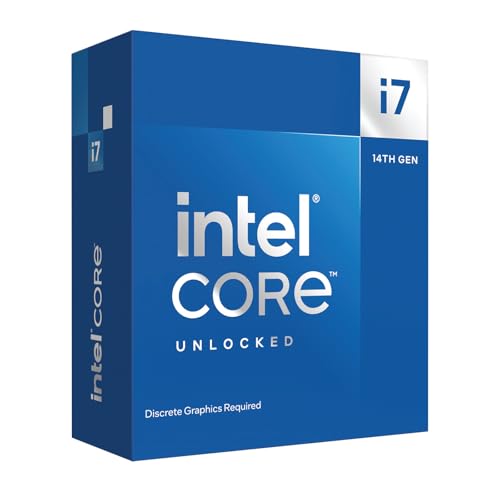
Intel® Core™ i7-14700KF Gaming Desktop Processor

Intel® Core™ i5-14600KF Gaming Desktop Processor

GMKtec K16 Gaming Mini PC AMD Ryzen 7 7735HS
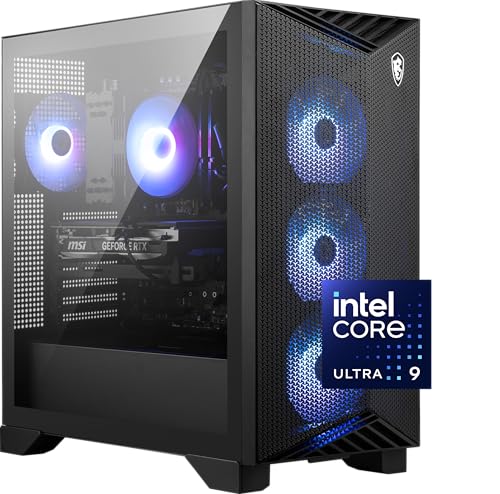
msi Aegis R2 AI Gaming Desktop Intel Core Ultra 9 285

KOTIN Prebuilt Gaming PC Ryzen 5 9600X

Micro Center CPU Motherboard Combo Intel i9-14900K

NIMO Gaming Desktop GeForce RTX-5060 Intel i5-14400F
More Details On Our Top Picks
For a custom tower that needs to handle modern games, streaming, and demanding desktop work, the i7-14700KF offers a substantial core layout: 8 performance cores for demanding foreground tasks and 12 efficiency cores for background workloads. That combination suits you during long gaming sessions with voice chat, browsers, and recording software open.
The KF suffix means processor graphics aren’t included, so a separate graphics card is required. You also need an Intel 600 or 700 Series board, with a BIOS update potentially needed on some models, while DDR4 and DDR5 memory support gives your build more flexibility.
Strong Points
- 20 cores give you room for gaming alongside streaming, compiling, or video work.
- Unlocked operation suits enthusiasts who plan careful tuning with suitable cooling.
- PCIe 5.0 and PCIe 4.0 support leaves room for newer expansion hardware.
- DDR4 compatibility can help you reuse compatible memory during a platform refresh.
Things To Consider
- The lack of integrated graphics means troubleshooting requires a separate graphics card.
- A 125W base power rating calls for a capable cooler and a well-ventilated case.
Key Specs
Who It Suits Best
You’ll get the most from this processor as an enthusiast building a powerful graphics-card-based tower for gaming and production work.
Consider Something Else When
GMKtec K16 suits you better for a small desk or living-room setup where a complete compact computer matters more than upgrade flexibility.
Custom builders who want strong gaming performance without moving into the i7’s larger core count may find the i5-14600KF a sensible middle ground. Its 6 performance cores and 8 efficiency cores cover high-frame-rate play, everyday multitasking, and many creative workloads without making the processor the entire focus of the build.
Like the i7-14700KF, this unlocked chip requires a dedicated graphics card because it has no integrated display engine. The 125W base power figure also points toward a proper CPU cooler, particularly in a compact case with limited airflow.
What We Like
- 14 total cores provide strong capacity for gaming and everyday productivity.
- Support for both DDR4 and DDR5 helps you tailor a new build around existing parts.
- PCIe 5.0 and 4.0 compatibility keeps the platform suitable for current expansion hardware.
Trade Offs
- No integrated graphics limits setup troubleshooting before your graphics card is installed.
- Unlocked tuning can add cooling and configuration work that casual builders may not want.
- Owners should plan careful cooler installation and regular dust cleaning around a performance-focused tower.
At A Glance
Made For
This processor fits you well as a DIY builder targeting a strong gaming tower with room for streaming and general creative use.
Not Your Match When
Intel Core i7-14700KF suits you more when heavy rendering, large multitasking sessions, and longer-term CPU headroom matter as much as gaming.
A small desk doesn’t rule out gaming, and the GMKtec K16 approaches the category from a different direction than the standalone Intel processors above. Its Ryzen 7 7735HS combines 8 cores and 16 threads with Radeon 680M integrated graphics, giving you a compact computer that avoids the space and assembly demands of a conventional tower.
You get 32GB of LPDDR5 memory and a 512GB SSD, while USB4, Oculink, HDMI, USB-C, and dual 2.5GbE LAN connections make the little chassis unusually flexible for a home office or entertainment setup. You may find the integrated graphics better suited to sensible settings than to a large, demanding gaming tower, but the space savings are meaningful.
Highlights
- Compact construction works well on crowded desks, shelves, or media centers.
- 32GB of LPDDR5 memory supports browser-heavy work and multitasking from day one.
- USB4 and Oculink expand connection options beyond a typical small computer.
- Dual 2.5GbE LAN ports suit networked storage or specialized home setups.
- Integrated Radeon 680M graphics let you avoid a separate graphics card.
Room For Improvement
- The 512GB drive can fill quickly after several large game installations.
- Integrated graphics have less upgrade freedom than the dedicated GPUs in the prebuilt desktops.
Feature Snapshot
Right Fit For
You’ll appreciate this mini PC most for compact rooms, portable workstations, casual gaming, and setups that value low desk clutter.
Look Elsewhere When
KOTIN Ryzen 5 9600X suits you better for higher-demand 1080p or 1440p gaming through its dedicated RTX 5060 Ti graphics card.
You get a complete high-end system here rather than a component that still needs a case, board, and graphics card. The Intel Core Ultra 9 285 is paired with a GeForce RTX 5070 Ti, 32GB of DDR5 memory, and a 2TB M.2 NVMe SSD, a fast solid-state storage format that helps keep game and application loading responsive.
That combination makes sense for demanding gaming, VR-ready setups, and creative work where a balanced desktop saves you from matching parts yourself. Air cooling keeps the design straightforward, although your room temperature, case placement, and dust routine can affect how comfortable the system remains during long sessions.
Upsides
- RTX 5070 Ti graphics provide a strong foundation for modern high-resolution gaming.
- 2TB of NVMe storage gives you useful space for a substantial game library.
- 32GB DDR5 memory supports current games, streaming, and demanding desktop software.
- USB Type-C adds a convenient connection for compatible modern accessories.
- A complete tower reduces the compatibility work involved in a custom build.
Points To Note
- Air cooling is easy to understand and maintain, but fan noise and heat depend on workload and room airflow.
Technical Sheet
Best Suited To
This desktop fits you as a serious gamer or creator seeking a ready-made system for demanding play, VR, and large applications.
A Better Fit Elsewhere
NIMO i5-14400F suits you more for a first gaming desktop where a lighter component mix and 1TB of storage cover your routine.
KOTIN takes a practical midrange route with the Ryzen 5 9600X, 16GB of DDR5 memory, an RTX 5060 Ti with 8GB of graphics memory, and a 1TB SSD. For a typical gaming desk, that pairing gives you a dedicated graphics card without the larger CPU and storage footprint of the MSI Aegis R2.
The digital-display CPU cooler and ARGB tower add visual flair, while a 650W 80+ Gold power supply and WiFi 7 support round out the parts list. The honest read is that 16GB may eventually feel tight beside heavy streaming or creative applications, but it remains a straightforward starting point for gaming.
Bright Spots
- Ryzen 5 9600X offers a modern six-core, 12-thread foundation for gaming and multitasking.
- RTX 5060 Ti graphics target both 1080p and 1440p play.
- 1TB SSD capacity gives you a useful starting library without immediate storage expansion.
- WiFi 7 suits newer wireless networks and flexible desk placement.
Small Caveats
- 16GB RAM leaves less breathing room for simultaneous gaming, streaming, and content creation.
- ARGB lighting and the cooler display add style, though they don’t improve frame output.
- Prebuilt ownership still calls for checking cable access and cleaning the tower’s air paths.
Quick Facts
Who Will Love This
You’ll find this tower appealing as a new PC owner seeking modern 1080p or 1440p gaming without assembling individual components.
Swap It Out When
msi Aegis R2 AI suits you better for VR, heavier creative workloads, and larger games that benefit from 32GB memory and 2TB storage.
Rather than pairing a processor with a board from scratch, this bundle gives you Intel’s Core i9-14900K alongside an ASUS TUF Gaming Z790-Plus WiFi motherboard. The chip’s 24-core layout, with 8 performance cores and 16 efficiency cores, makes it especially attractive for demanding multitasking, video creation, and CPU-heavy workflows.
Integrated Intel UHD Graphics 770 is included, which gives you a basic display path before a graphics card arrives. Depending on your cooler and case airflow, the high-end processor may demand more careful thermal planning than the i5-14600KF, but the included motherboard simplifies a major part of the build process.
Reasons To Buy
- 24 cores and 32 threads suit rendering, editing, streaming, and heavy multitasking.
- The Z790 board and LGA 1700 processor arrive as a matched platform starting point.
- Integrated UHD Graphics 770 can help with initial setup and troubleshooting.
- WiFi on the TUF Gaming motherboard supports flexible network placement.
- A high maximum clock speed gives demanding desktop tasks plenty of CPU headroom.
Areas To Watch
- You need a capable cooler and careful airflow planning for sustained heavy workloads.
- LGA 1700 ties the bundle to its listed platform, limiting future socket changes.
Details At A Glance
Whose Shelf It Belongs On
This bundle suits you as an experienced builder who wants substantial CPU capacity for gaming, creation, and workstation-style multitasking.
Reach For A Different Pick When
Intel Core i5-14600KF suits you more for a simpler gaming-first build where extreme multitasking capacity isn’t a priority.
NIMO keeps the decision straightforward with an Intel i5-14400F, GeForce RTX 5060 8GB, 32GB of DDR5 memory, and a 1TB SSD in a prebuilt ARGB tower. That recipe makes sense for you as a first-time desktop owner who wants gaming, streaming, business applications, and creative software in one ready-made system.
Four ARGB fans and a 650W power supply are listed, giving the tower a more expressive look than the compact GMKtec K16. The F-series processor lacks integrated graphics, so graphics-card troubleshooting is less flexible, and the case will still need sensible dust care in a busy room.
Plus Points
- 32GB DDR5 memory gives you useful room for gaming, streaming, and office applications.
- RTX 5060 graphics provide dedicated hardware for current games.
- 1TB SSD offers practical capacity for a starting collection.
- Four ARGB fans add airflow hardware and a customizable desktop appearance.
Worth Noting
- The i5-14400F has no integrated graphics, so the dedicated card must be installed and functioning for display output.
- Compared with KOTIN Ryzen 5 9600X, this system offers a different CPU and graphics pairing that deserves careful game-resolution matching.
- Prebuilt towers still benefit from accessible placement and periodic dust removal around fans and vents.
Core Details
Who Should Grab It
You’ll find this desktop well suited to first-time PC owners, students, streamers, and home offices that also need dedicated gaming graphics.
Another Choice May Suit
GMKtec K16 suits you better for a compact workspace, while KOTIN Ryzen 5 9600X is the stronger fit for a newer midrange custom-style platform.
How To Choose The Right Current Gaming Cpus
Match The CPU To Your Graphics Card
Your graphics card usually has the largest effect on game rendering, especially at 1440p and above, but the processor still controls game logic, background tasks, and high-refresh performance. A balanced pairing prevents you from spending heavily on a CPU while using a graphics card that can’t take advantage of it. Complete desktops such as the MSI Aegis R2 already make that pairing for you, while standalone chips require more planning.
Count Cores With Your Routine In Mind
Core count describes how many processing units can work through tasks at once. Six strong cores can suit gaming and ordinary apps, while 14, 20, or 24 cores become more useful for streaming, video editing, 3D work, code compilation, and heavy multitasking. You’ll notice the difference most during sessions where the game runs beside several demanding programs.
Check The Platform Before Assembly
A processor must match the motherboard socket and chipset. Intel’s i5-14600KF and i7-14700KF support Intel 600 and 700 Series boards, though some combinations may require a BIOS update, while the i9-14900K bundle uses the LGA 1700 platform. Memory type matters too, since DDR4 and DDR5 aren’t interchangeable on the same board.
Account For Cooling, Graphics, And Storage
Unlocked processors suit tuning enthusiasts, but you need a suitable cooler, case airflow, and power plan. KF and F chips don’t include integrated graphics, so a separate graphics card becomes essential. For complete systems, check storage capacity against your game library, because 512GB fills much faster than 1TB or 2TB.
Things Worth Knowing First
Mistakes Worth Dodging
A common mistake is treating the CPU name as the entire computer. You still need to check graphics hardware, memory, storage, motherboard compatibility, cooling, and power delivery. A standalone processor can look attractive until you add every missing component.
Another avoidable slip is choosing a compact mini PC for demanding graphics workloads without considering its integrated graphics design. GMKtec K16 saves space, but a desktop with an RTX card gives you a clearer path for demanding visual settings.
Where The Extra Money Goes
Higher-tier options generally combine more cores, stronger graphics, larger storage, more memory, or a more capable motherboard. MSI Aegis R2 bundles a Core Ultra 9 285 with RTX 5070 Ti, while the Micro Center package focuses spending on a 24-core processor and Z790 board.
Paying more makes sense for you when gaming shares time with rendering, streaming, VR, or professional applications. For straightforward 1080p play, a midrange prebuilt such as KOTIN or NIMO can leave more of the system balanced.
The Takeaway
Your best choice depends on the computer you actually plan to use. Intel Core i5-14600KF suits a focused custom gaming build, while the i7-14700KF and i9-14900K leave more room for demanding multitasking. GMKtec K16 works for compact spaces, and the MSI, KOTIN, and NIMO desktops reduce assembly decisions by pairing processors with graphics hardware. Start with your target resolution, favorite games, desk space, and workload, then choose the platform that fits those needs without paying for capacity you won’t use.
