
A trading desk often starts with a single screen and becomes a wall of charts, order windows, and market-watch tables. The right computer needs to handle those changing workloads without cluttering the workspace, and the six options below cover everything from a compact all-in-one to expandable mini PCs built for intensive multitasking.
How The Shortlist Stacks Up
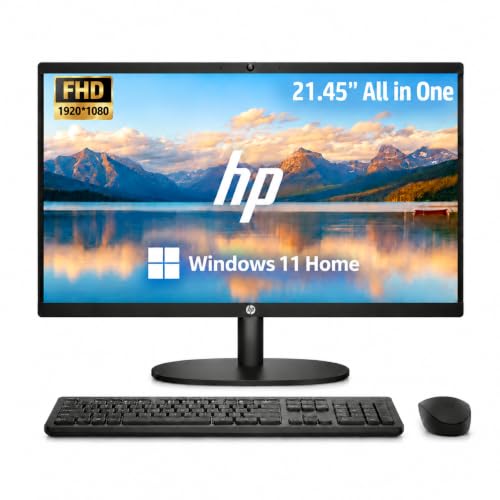
HP 23.8-Inch All-in-One 8GB/512GB

HP 23.8-Inch All-in-One 16GB/1TB

VZMORE AX9 Max AI 9 Mini PC

VZMORE iX9 Max Core Ultra 9 Mini PC

VZMORE iX7 Core Ultra 7 Mini PC

VZMORE iX5 Max Core Ultra 5 Mini PC
More Details On Our Top Picks
A one-cable trading station has appeal in a compact home office. The HP 23.8-inch display uses full HD resolution, touch input, IPS technology for broad viewing angles, and an anti-glare coating that helps with long sessions.
The computer, display, webcam, and speakers share one enclosure, reducing desk clutter. For a beginner working with one chart window, that simplicity may matter more than expandability, although a fixed display makes later multi-monitor changes less convenient.
Practical Advantages
- The all-in-one construction leaves more desk space for notes and peripherals.
- Touch controls provide a quick way to organize charts and navigate everyday applications.
- The built-in webcam and speakers suit market-review calls without extra desk hardware.
Things To Consider
- The listed 8GB of memory offers less multitasking headroom than the 16GB model below.
- A 512GB solid-state drive may require careful storage management as charts, data files, and applications accumulate.
Feature Snapshot
Who It Suits Best
This model suits a new trader working from a single full HD display in a small bedroom or home office.
Another Choice May Suit
The HP 23.8-Inch All-in-One 16GB/1TB is the stronger fit for intensive chart work and heavier multitasking.
The move from 8GB to 16GB of memory makes this HP more comfortable when a market-news feed, charting application, messaging window, and video call remain open together. The larger 1TB solid-state drive also gives research files and applications more room without an immediate external-storage decision.
Compared with the smaller HP all-in-one, the core display and enclosure remain familiar, but the memory and storage changes are more relevant during sustained use. It looks like a sensible center desk for a trader who also handles work or study in the same room.
Notable Upsides
- 16GB of RAM gives trading platforms and research tabs more room to coexist.
- The 1TB SSD reduces pressure on limited internal storage.
- The anti-glare touchscreen supports long chart reviews without a reflective surface.
- Wi-Fi 6 and Bluetooth 5.3 support modern wireless peripherals and network equipment.
Worth Noting
- The integrated 23.8-inch display still limits easy expansion into a larger multi-screen arrangement.
Made For
This model fits a remote trader balancing charts, news, messaging, and scheduled video calls from a home office.
A Better Fit Elsewhere
The VZMORE AX9 Max AI 9 Mini PC serves a trader who needs up to four displays and a more flexible desk arrangement.
The AX9 Max treats the mini PC as a compact workstation rather than a simple secondary computer. Its Ryzen AI 9 HX 470 processor has 12 cores and 24 threads, while 32GB of DDR5 memory handles several charting windows, data tools, and communication applications without relying on virtual memory as heavily.
Two 2.5GbE Ethernet ports add useful flexibility for separating market-data traffic from another connection. For a desk with several displays, the two HDMI ports and two USB4 Type-C connections provide the stronger case, although this model requires separate monitors and peripherals.
The Value In It
- Four-display support creates room for charts, news, execution tools, and research.
- The 65W performance mode gives sustained workloads more headroom.
- 32GB of fast memory supports intensive multitasking.
- Dual wired networking offers separation of data and general connections.
- The compact chassis leaves the display area entirely open for desk-mounted screens.
Trade Offs
- It costs more to assemble as a complete workstation because the display and peripherals are separate purchases.
- Its advanced AI features are most useful in compatible local software, not every trading platform.
Quick Facts
Right Fit For
This system suits an active trader running multiple screens and maintaining several data-heavy applications at once.
Where A Sibling Pick Shines
The VZMORE iX5 Max Core Ultra 5 Mini PC offers a more restrained configuration for traders who do not need the AX9 Max’s processor tier.
Intel’s Core Ultra 9 185H gives this mini PC 16 cores and 22 threads, with turbo speeds reaching 5.1GHz. That processor headroom makes more sense for a trader running analysis software, compilation tools, or several demanding applications alongside live charts than for a basic watchlist setup.
The 65W performance mode and vapor-chamber cooling are designed for sustained workloads, while four-display support makes the small chassis practical behind a multi-monitor arrangement. Compared with the AX9 Max, the iX9 Max offers more memory than its 24GB configuration but less than the AX9’s 32GB.
Good Reasons To Consider
- The Core Ultra 9 processor provides strong capacity for compute-heavy work.
- Four-display support separates charts, execution tools, and research.
- Two 2.5GbE Ethernet ports support separate network connections.
- The 135 by 131.8 by 57.7mm chassis can sit behind a compatible display or mount with VESA hardware.
Small Caveats
- Only 24GB of memory comes standard, despite support for additional capacity.
- The 65W mode prioritizes sustained performance over the lowest possible operating noise.
- A full trading setup still requires compatible monitors, a keyboard, and a mouse.
Who Will Love This
This mini PC fits a technically experienced trader who runs analytical software and values a compact, multi-screen workstation.
Reach For A Different Pick When
The VZMORE AX9 Max AI 9 Mini PC makes more sense for workloads that benefit from 32GB of memory as standard.
The iX7 splits the difference between the smaller iX5 Max and the more powerful AX9 Max. Its Core Ultra 7 356H processor has 16 cores and 16 threads, while 32GB of DDR5 memory gives trading applications and research tabs comfortable room to remain open.
Four displays are supported through a pair of HDMI 2.1 FRL ports and two USB4 Type-C connections. The 50W performance mode should suit a mixed workload of charting, communication, and document research, although the AX9 Max offers a higher 65W ceiling.
The Case For It
- 32GB of memory supports a varied collection of trading and research applications.
- Quad-display connectivity creates a useful split between charts and order management.
- Storage can expand to 5TB across two PCIe 4.0 slots.
Potential Compromises
- Its 50W maximum power setting is lower than the 65W available from the AX9 Max and iX9 Max.
- Only one wired Ethernet connection is listed, so separate network paths require added hardware.
Details At A Glance
The Right Fit
This iX7 suits a trader who wants substantial memory and four screens without moving to the top processor tier.
Consider Something Else When
The VZMORE iX9 Max Core Ultra 9 Mini PC is the stronger option for compute-intensive analysis and higher sustained power.
The iX5 Max focuses on the parts of a trading computer that matter most in a restrained two-screen setup: 32GB of memory, a 1TB solid-state drive, and abundant wired connections. Its Core Ultra 5 125H processor has 12 cores and 14 threads, which should suit charts, news, office applications, and communication tools.
Two 2.5GbE Ethernet ports are a meaningful addition to a compact mini PC. Depending on the trading software, a separate wired path may reduce clutter compared with sharing one connection, but this remains a general-purpose processor rather than the AX9 Max’s heavy-duty configuration.
Real-World Strengths
- 32GB of LPDDR5 memory provides ample room for many open trading and research applications.
- Dual 2.5GbE connections, four displays, and six USB-A ports create a flexible peripheral hub.
Practical Considerations
- The onboard LPDDR5 memory cannot be replaced like conventional removable DIMM modules.
- Separate displays and desktop accessories add to the complete setup cost.
- The Core Ultra 5 tier offers less processing headroom than the other VZMORE configurations reviewed.
Core Features
Built With In Mind
This model fits a practical trader who values memory and connectivity in a compact two-screen or three-screen setup.
Look Elsewhere When
The VZMORE AX9 Max AI 9 Mini PC fits traders who need a stronger processor and higher sustained-power ceiling.
What Matters Before Building a Trading Workstation
Display Layout Sets the Hardware Priorities
A single-screen setup can work well with an all-in-one, while multiple charts and order windows usually justify a mini PC with several video outputs. Resolution matters more than raw processor tier for legibility, so the 23.8-inch full HD HP displays suit a focused one-screen desk.
Memory Helps During Busy Market Sessions
Trading platforms, news feeds, messaging apps, and browser research can occupy substantial memory at once. The 24GB and 32GB configurations provide more room than 8GB, while the AX9 Max’s 32GB standard configuration is particularly useful for expansive research workflows.
Wired Networking Adds Control
Gigabit Ethernet provides a stable connection for data-heavy software and services. Two 2.5GbE ports also allow separate internal and external networks, which may help with NAS access, redundancy, or dedicated market-data traffic when the software and network setup support it.
Cooling Matters During Extended Work
A vapor chamber moves heat across a larger surface than two conventional heat pipes, according to VZMORE. Performance modes can then adjust processor power, with the AX9 Max and iX9 Max reaching 65W while the iX7 reaches 50W and the iX5 Max uses lower settings.
Avoiding Common Trading PC Mistakes
Pitfalls Shoppers Hit
The most frequent mistake is buying a processor-heavy machine while neglecting the display arrangement. Another is overlooking the number and speed of network connections, even though real-time charts can depend on consistent data delivery. Checking desk dimensions and display compatibility before ordering prevents a compact system from creating a crowded workstation.
When Paying More Pays Off
A higher tier earns its place when several heavy applications, four displays, and sustained processor loads are genuine requirements. Memory capacity also matters for long research sessions, while extra ports reduce the need for hubs and adapters. For a single chart and occasional research, the added processor power may remain idle.
Frequently Asked Questions
Is a Mini PC Better Than an All-in-One for Day Trading?
A mini PC offers better multi-screen and peripheral flexibility, while an all-in-one reduces desk clutter and includes a display. The better choice depends mainly on the number of monitors and the available desk area.
How Much RAM Matters for Trading Software?
Sixteen gigabytes is a practical starting point for charts, news, messaging, and research applications. Thirty-two gigabytes provides more breathing room when numerous tools stay open or data-heavy analysis runs alongside live charts.
Do Trading Computers Need Multiple Displays?
Multiple displays separate charts, news, and order management more clearly, but one well-sized screen can still support a focused setup. A computer with multiple video outputs provides more freedom once the desk and monitoring arrangement are ready.
Is Wired Ethernet Better Than Wi-Fi for Trading?
Wired Ethernet generally offers a more consistent path for data-heavy services and avoids wireless congestion. Trading platforms can work over Wi-Fi, though a wired connection is worth considering when latency consistency and network separation matter.
Can a Mini PC Replace a Desktop Trading Computer?
A capable mini PC can replace a traditional desktop while leaving room for several monitors and peripherals. The complete setup still requires compatible displays, keyboard, mouse, and any necessary storage or network accessories.
Final Verdict
The HP all-in-ones suit focused, single-screen trading desks, with the 16GB/1TB model offering the more practical balance. The VZMORE mini PCs take over as screens multiply, while the AX9 Max leads for high-end multi-screen work and the iX5 Max provides a restrained, expandable alternative.
