
A 3D-printing setup has to handle more than a printer’s control screen. I need a computer that can run slicing software, manage model files, monitor a print, and handle the occasional video call without turning the whole workspace into a bottleneck. These HP desktops cover compact, everyday, creator-focused, and higher-capacity needs, with the right choice depending on print size, software, and how much multitasking the maker expects.
The Main Contenders
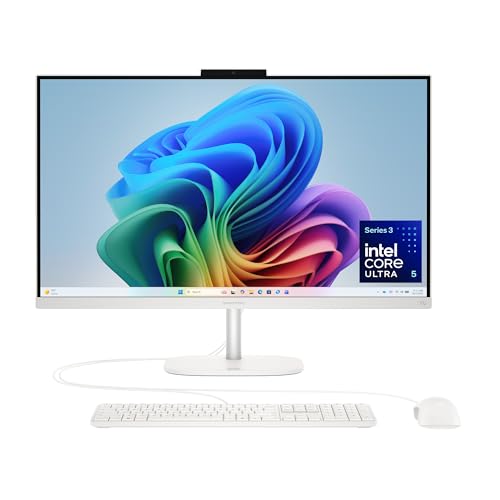
HP OmniStudio 27 inch All-in-One Desktop, Core Ultra 5 325, Jet Black

HP OmniStudio 27 inch All-in-One Desktop, Ryzen 5 220, Cotton White

HP OmniDesk Slim Desktop PC, Core i5-14400, 8 GB RAM, Meteor Silver

HP OmniStudio 27 inch All-in-One Desktop, Ryzen AI 7 445, Jet Black

HP OmniStudio 23.8 inch All-in-One Desktop, Ryzen 5 40, Cotton White
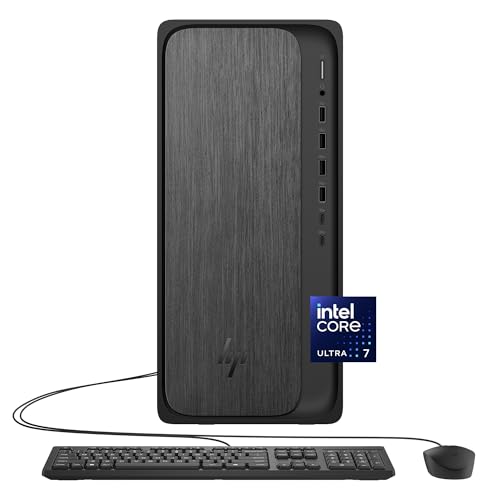
HP OmniDesk Desktop AI PC, Core Ultra 7 265, 1 TB SSD, Gray Wood
Why These Options Stand Out
The large 27-inch FHD screen gives me room to place a slicer window beside a model preview, which matters more than raw screen size when checking overhangs, supports, and layer details. I see this model as a sensible fit for makers who regularly edit models, follow print progress, and occasionally stream a build.
Compared with the more compact HP OmniStudio 23.8 inch model, this desktop offers more workspace without changing the general all-in-one approach. The Core Ultra 5 325, 16 GB of RAM, and 512 GB NVMe SSD form a practical foundation for everyday slicing and multitasking.
The Case For It
- The 27-inch display reduces window juggling when comparing a slicer preview with other references.
- 16 GB of RAM helps keep model files, applications, and a print monitor open together.
- The 512 GB PCIe NVMe SSD provides fast local storage for sliced files and project folders.
- An adjustable stand supports better viewing angles during long modeling sessions.
- Windows 11 Home and Microsoft Copilot provide a ready-to-use starting point for everyday work.
Points To Note
- Intel Graphics are integrated, so demanding rendering or GPU-assisted workflows deserve closer scrutiny.
- The 27-inch all-in-one format needs adequate desk depth and a clear viewing position.
Key Specs
Who It Suits Best
Creators who spend long sessions editing models, comparing renderings, and monitoring prints will find the large display especially useful.
A Better Fit Elsewhere
The HP OmniDesk Slim Desktop PC fits makers who value a smaller footprint and a simpler everyday setup over a large all-in-one display.
The Ryzen 5 220 and Radeon 740M pairing gives this model a more balanced starting point for makers who want a large display without moving to the Ryzen AI 7 configuration. I would pair it with standard slicer workflows, model preparation, and general productivity rather than expecting it to replace a dedicated graphics workstation.
Its 16 GB of RAM is the detail I notice most, since it leaves more room for several open applications than an 8 GB configuration. The 27-inch FHD panel also makes this a comfortable station for reviewing a print from the side.
A Favorable Mix
- 16 GB of RAM supports multitasking between a slicer, file browser, and print monitor.
- Radeon 740M graphics offer a dedicated-looking upgrade path over basic Intel graphics, though still integrated.
- The large FHD display makes model inspection and print monitoring easier.
- Windows 11 Home keeps the setup straightforward for general productivity tasks.
Trade Offs
- The 512 GB SSD may fill quickly with many high-resolution project assets and archived models.
- The 27-inch footprint requires more desk space than the smaller OmniStudio model.
- Integrated Radeon graphics may not suit advanced rendering or other graphics-heavy workloads.
Made For
Everyday makers and students who want a roomy screen, 16 GB of memory, and a capable everyday processor for routine printing tasks.
Consider Something Else When
The HP OmniStudio 27 inch All-in-One Desktop with Ryzen AI 7 445 is the better fit for creators who need stronger integrated graphics and more demanding 3D applications.
The Slim design makes this a practical answer for a small apartment workshop or a crowded maker desk. Unlike the 27-inch OmniStudio models, it keeps the physical footprint modest while retaining a Core i5-14400 processor, 512 GB SSD, and easy-access ports for a straightforward setup.
I see the 8 GB of RAM as the main limitation for heavier multitasking, but it can still handle a slicer, a browser, and basic file management for many home projects. The Meteor Silver finish gives it a restrained look that blends easily into a workspace.
Useful Strengths
- The slim enclosure leaves more usable space around a compact printer setup.
- The Core i5-14400 provides a familiar desktop processor for everyday modeling and slicing.
- A 512 GB SSD gives project files quick local access.
- Microsoft Copilot is included for quick text-based organization and everyday assistance.
Minor Gripes
- 8 GB of RAM offers less breathing room than the 16 GB OmniStudio configurations.
- Intel UHD Graphics 730 is aimed at general graphics rather than demanding 3D rendering.
- The smaller screen size may be less convenient for detailed model inspection.
Quick Facts
Right Fit For
Beginners and home makers working in a small space will appreciate the slim footprint and straightforward configuration.
Look Elsewhere When
The HP OmniStudio 23.8 inch All-in-One Desktop is a better fit for makers who want a larger display without taking on the full size of a 27-inch model.
For a maker who regularly opens 3D modeling packages, this is the most creator-focused configuration in the group. The Ryzen AI 7 445 processor and Radeon 840M graphics provide a stronger foundation than the Ryzen 5 220 model, while the 27-inch display gives those applications room to breathe.
I would consider this desktop for regular rendering, detailed CAD work, and a print workflow that stays busy throughout the day. The 16 GB of RAM helps with demanding applications, although the 512 GB SSD remains a more modest storage choice than the 1 TB option in the HP OmniDesk Desktop AI PC.
Real-World Strengths
- Radeon 840M graphics provide a substantial step up for visual 3D applications and model previews.
- The Ryzen AI 7 445 processor suits demanding desktop workloads and active multitasking.
- 16 GB of RAM is well matched to CAD, sculpting, and slicing workflows.
- The 27-inch FHD display creates a useful canvas for detailed 3D work.
Honest Caveats
- The 512 GB SSD can become restrictive for creators with extensive archives.
- The large all-in-one format needs a desk with sufficient depth.
- It remains an integrated-graphics system rather than a dedicated graphics workstation.
Who Will Love This
Technically experienced makers and 3D creators who regularly model, render, and print will find this configuration especially compelling.
Reach For A Different Pick When
The HP OmniDesk Desktop AI PC is a better fit for makers who prioritize storage capacity and a tower-style workspace over an all-in-one display.
A 23.8-inch all-in-one makes sense when the printer, filament, and computer all need to share one modest work surface. The Ryzen 5 40 processor and AMD Radeon graphics target everyday maker tasks, while the 512 GB SSD provides a useful home for sliced files, documentation, and active projects.
The main comparison with the HP OmniDesk Slim Desktop PC is size and convenience. This model provides a complete display-and-computer arrangement in a more compact screen format, but its 8 GB of RAM is less generous for heavy multitasking.
Notable Gains
- The 23.8-inch display is easier to accommodate on a compact maker desk.
- The all-in-one design reduces the number of separate desk components.
- 512 GB of storage is useful for keeping several print projects organized.
- The Cotton White finish gives the workspace a clean, light appearance.
Small Caveats
- 8 GB of RAM may feel limited with several demanding applications open.
- Integrated Radeon graphics are less suitable for advanced rendering.
- The smaller screen offers less simultaneous workspace than the 27-inch models.
Feature Snapshot
Whose Shelf It Belongs On
Home studios and apartment workspaces benefit from the compact screen size and integrated desktop design.
Another Choice May Suit
The HP OmniStudio 27 inch All-in-One Desktop with Ryzen 5 220 is a better fit for makers who want more display area and 16 GB of memory.
The 1 TB SSD is the detail that separates this desktop from most of the other models here. I see it as a better match for a growing print library, multiple active projects, and a maker who keeps reference files, firmware, and archived designs close at hand.
The Intel Core Ultra 7 265 and 16 GB of RAM also make this a capable general-purpose workstation for 3D-related work. Compared with the HP OmniDesk Slim Desktop PC, the storage increase is substantial, although the display size and overall desk arrangement still need to match the maker’s setup.
What It Does Well
- The 1 TB SSD provides generous room for model libraries, sliced files, and project backups.
- The Core Ultra 7 265 processor handles demanding desktop tasks and active multitasking.
- 16 GB of RAM gives creator applications more room to operate.
- Microsoft Copilot adds a convenient assistant for everyday organization and writing tasks.
Practical Considerations
- Intel Graphics are integrated, so advanced rendering requires careful consideration.
- The larger 1 TB drive does not remove the need to organize project files.
- A separate display may be worth considering for a very large modeling workspace.
Key Product Details
Best Suited To
Print farms, educators, and makers with a substantial model archive will get the most practical value from the larger storage capacity.
Swap It Out When
The HP OmniStudio 27 inch All-in-One Desktop with Core Ultra 5 325 is a better fit for makers who prefer a complete large-screen setup over a separate desktop arrangement.
What Matters Most for a 3D Printing Computer
Processor and Graphics
I look at the processor first because slicing, modeling, and file management all benefit from responsive application handling. The Ryzen AI 7 445 and Core Ultra 7 265 configurations provide a higher starting point for demanding workflows, while integrated Radeon 840M graphics deserve a closer look for visualization-heavy projects. I would avoid judging a computer by processor naming alone and check the specific applications used in the maker’s workflow.
Memory for Open Applications
16 GB gives me more confidence when a slicer, model editor, browser, and print monitor are open together. The 8 GB models can still serve lighter routines, but multitasking has less breathing room. I would consider 16 GB the more comfortable target for a frequently used maker computer.
Storage and Display Space
A 512 GB SSD handles active projects, while 1 TB suits larger archives. Screen size changes the workflow too: 23.8 inches suits a tighter desk, and 27 inches gives detailed work more room. I would measure the available desk first, since the largest display is not automatically the most practical setup.
Common Mistakes in 3D Printing Computer Choices
Wrong Turns To Avoid
A common mistake is focusing on processor names while overlooking RAM, graphics, and desk space. I would check the actual slicer and modeling software, then consider how many applications remain open during a print. Buying a large all-in-one without measuring the workspace can also create an avoidable fit problem.
What Separates Premium From Basic
The higher-tier configurations add more memory, faster processors, stronger integrated graphics, or larger storage. Those benefits matter most for frequent modeling, detailed rendering, extensive archives, and continuous multitasking. A lightweight home printer setup may not need every extra specification, so paying more only makes sense when the maker will regularly use the added capacity.
Frequently Asked Questions
Can an all-in-one desktop run 3D printing software?
Yes, an all-in-one desktop can run common slicer and modeling applications, depending on its processor, memory, and graphics. The 16 GB models provide more comfortable multitasking than the 8 GB options.
Is 16 GB of RAM enough for 3D printing?
It is enough for many home and educational workflows, especially when a slicer and a few supporting applications are open. I would look for 16 GB when modeling, rendering, and print monitoring happen at the same time.
Does a larger monitor help with 3D modeling?
A larger monitor can make model inspection and software comparison more comfortable. A 27-inch display offers more workspace, while 23.8 inches can fit a smaller desk more easily.
Should I choose a 512 GB or 1 TB SSD?
512 GB suits active projects and a moderate model library, while 1 TB is more comfortable for extensive archives, multiple printers, and larger project libraries. I would choose based on the number and size of files expected to remain on the computer.
Are integrated graphics suitable for 3D printing computers?
Integrated graphics can handle many everyday printing tasks and light modeling work. Creators using advanced rendering or graphics-heavy applications should examine the specific graphics specification more closely.
Final Verdict
I find the HP OmniStudio 27 inch with Ryzen AI 7 445 the strongest fit for active 3D creators, while the HP OmniDesk Desktop AI PC makes the most sense for large model libraries. The smaller OmniStudio and Slim Desktop models suit tighter spaces and lighter routines, giving makers a practical path without paying for capacity they may never use.
