
A 64GB desktop makes sense for heavy multitasking, large creative files, development work, and software that treats memory as more than a luxury. I checked the six configurations below, and none actually includes 64GB of RAM, so I would not treat any of them as a true match without confirming the exact memory listing. These remain useful everyday systems, with several providing 16GB and one carrying 1TB of storage.
How The Shortlist Stacks Up
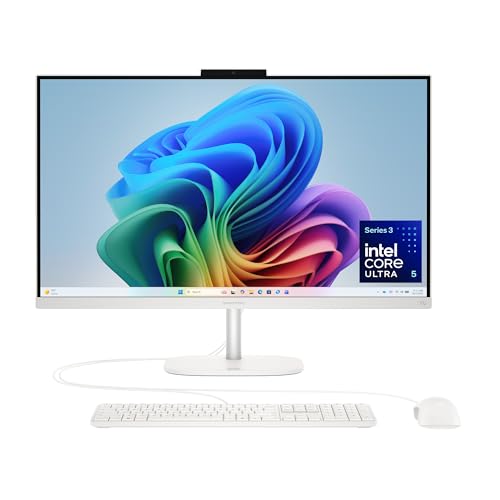
HP OmniStudio 27-Inch All-in-One Desktop Ultra 5 325, 16GB

HP OmniStudio 27-Inch All-in-One Desktop Ryzen 5 220, 16GB

HP OmniDesk Slim Desktop PC Intel Core i5-14400, 8GB RAM

HP OmniStudio 27-Inch All-in-One Desktop Ryzen AI 7 445, 16GB

HP OmniStudio 23.8-Inch All-in-One Desktop Ryzen 5 40, 8GB
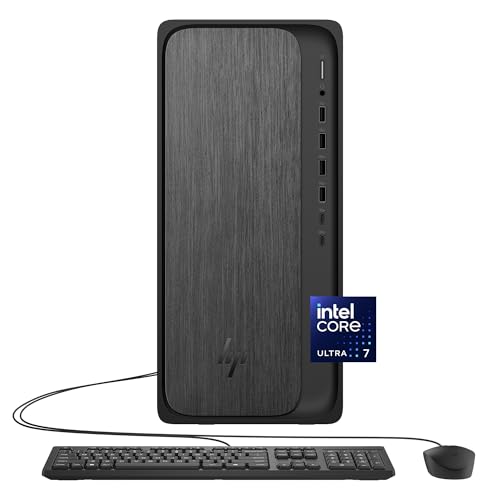
HP OmniDesk Desktop AI PC Intel Core Ultra 7 265, 16GB, 1TB
The Details Behind The Selections
The large FHD panel and adjustable stand make this the most desk-conscious design in the group. I can see its appeal for a home studio where a separate monitor would occupy additional space, while the Jet Black finish keeps the setup looking orderly rather than clinical.
Unlike the separate HP OmniDesk Slim Desktop PC, this model combines the display and computer in one enclosure. The Core Ultra 5 325, 16GB of DDR5 memory, and 512GB NVMe drive form a sensible platform for browsing, calls, media, and moderate creative work, but 64GB is not part of the configuration.
Useful Touches
- The adjustable stand supports different viewing positions throughout the day.
- Built-in Intel graphics avoid the need for a separate graphics card in everyday work.
- An FHD infrared camera, HDR automatic switching, and Windows Hello support convenient sign-in and calls.
- HP Eye Ease adjusts the display output to reduce blue light while retaining color.
Points To Note
- The 16GB memory configuration falls well short of a true 64GB build.
- Integrated graphics may not suit 3D rendering or games that depend on a discrete GPU.
Feature Snapshot
Who It Suits Best
This model suits a home creative or office worker who values a large adjustable display and wants one cable-conscious central computer.
A Better Fit Elsewhere
The HP OmniDesk Desktop AI PC offers 1TB of storage for people who keep larger local project libraries.
This Cotton White configuration brings the same large-screen all-in-one format as the opening model, but it uses an AMD Ryzen 5 220 processor and Radeon 740M graphics. I see it as a straightforward option for a shared family computer, remote-work desk, or media room that needs Windows 11 and a sizable display.
The 16GB memory and 512GB SSD align with ordinary home-office demands, including browsing, streaming, video calls, and several applications open at once. A listed protection plan adds accidental-damage and breakdown coverage subject to its terms, which may ease the transition for an unfamiliar desktop user.
Useful Highlights
- The 27-inch FHD screen gives documents, calls, and entertainment a generous canvas.
- 16GB of RAM supports routine multitasking better than the 8GB configurations in this group.
- The Cotton White finish gives a shared workspace a lighter, less utilitarian look.
Honest Caveats
- It still falls short of the requested 64GB memory capacity.
- Radeon 740M is integrated graphics, so graphics-heavy work needs careful software compatibility checks.
- A 27-inch all-in-one requires sufficient desk depth for comfortable placement.
The Right Fit
This system fits households needing an attractive, large-screen Windows desktop for communication, browsing, and entertainment.
Where A Sibling Pick Shines
The HP OmniStudio Ryzen AI 7 445 model is the stronger fit for more demanding mixed applications and graphics-oriented work.
A separate display and mouse give this slim desktop more flexibility around a compact office. The Core i5-14400 provides a familiar platform for writing, spreadsheets, remote work, and school tasks, while easy-access ports and listed Wi-Fi support make the setup less fussy in a busy home office.
The honest limitation appears in its 8GB memory, half the amount found in the 27-inch OmniStudio models. I would consider it a practical everyday system, though the exact configuration remains a considerable distance from a true 64GB workstation.
The Good Stuff
- The slim enclosure leaves more freedom when choosing a monitor and desk arrangement.
- Intel UHD Graphics 730 handles standard office visuals without a discrete card.
- The 512GB SSD gives active applications and documents a fast local home.
- Microsoft Copilot is available through the keyboard for everyday assistance.
Practical Considerations
- Only 8GB of RAM may become restrictive as the number of open applications grows.
- A monitor is a separate consideration in a desktop setup.
- It does not satisfy a literal 64GB memory requirement.
Quick Facts
Made For In Mind
This desktop suits students, office workers, and households that value a small footprint over a large integrated display.
Another Choice May Suit
The HP OmniStudio Ryzen 5 220 model is the better fit for a desk built around one large all-in-one screen.
The Ryzen AI 7 445 configuration is the AMD-focused option with the strongest specification profile here: 16GB of memory, Radeon 840M graphics, and a 27-inch FHD display. I see it as the most compelling choice for a desk that must handle demanding applications, frequent multitasking, and occasional graphics-heavy work without a separate tower.
Compared with the Ryzen 5 220 model, the processor and graphics pairing moves up a tier while retaining the same all-in-one convenience. The storage remains a more modest 512GB, which may matter for locally stored footage, libraries, or multiple large project files.
Strengths Worth Knowing
- The Ryzen AI 7 processor targets demanding everyday and mixed-workload tasks.
- Radeon 840M graphics provide a stronger starting point than basic integrated graphics.
- Sixteen gigabytes of RAM gives active applications more room to coexist.
- The 27-inch panel keeps the workspace visually contained.
Less-Strong Areas
- The configuration does not reach 64GB memory.
- Storage-heavy creators may outgrow 512GB sooner than general users.
Feature Rundown
Built With In Mind
This model suits a power-oriented home office handling complex applications, frequent multitasking, and graphics-sensitive daily work.
Look Elsewhere When
The HP OmniDesk Desktop AI PC is the better fit when storage capacity matters more than having a 27-inch display built in.
The 23.8-inch screen makes this the most compact OmniStudio display in the group. I can picture it fitting a smaller kitchen-office, apartment desk, or shared study area better than the 27-inch versions, while the Cotton White finish adds a lighter appearance to the room.
The Ryzen 5 40 processor, 8GB of RAM, and 512GB SSD form a practical baseline for documents, browsing, streaming, and video calls. Compared with the HP OmniDesk Slim Desktop PC, it saves the need for a separate monitor, but it also gives up the larger workspace and the opportunity to choose a different display.
What Earns Its Place
- The smaller FHD display suits space-conscious desks and rooms.
- The all-in-one format reduces the number of separate desktop components.
- The 512GB SSD provides fast local storage for everyday files.
Possible Compromises
- Eight gigabytes of memory is the most restrictive part of the specification.
- It does not meet the requested 64GB capacity.
- A smaller panel provides less working space than the 27-inch alternatives.
Who Will Love This
This all-in-one fits apartment dwellers, students, and home workers who want a complete computer without a large display or separate tower.
Reach For A Different Pick When
The HP OmniStudio 27-Inch All-in-One Desktop Ultra 5 325 model is the better fit for a larger visual workspace and 16GB of memory.
This separate desktop combines the highest Intel processor designation in the group with 16GB of memory and 1TB of storage. I see it as the practical choice for a home office that keeps large project folders, media, and applications on a local drive rather than relying on cloud storage.
Compared with the opening OmniStudio Ultra 5 325, the Core Ultra 7 265 occupies a more capable processor tier, while the SSD doubles from 512GB to 1TB. The Gray Wood finish, listed ports, reliable Wi-Fi support, and Microsoft Copilot round out a modern general-purpose setup, but memory remains below 64GB.
Noteworthy Benefits
- The Core Ultra 7 265 provides a strong foundation for demanding everyday work.
- A 1TB SSD offers the most storage capacity in this lineup.
- The separate desktop format leaves monitor size and placement open to the owner’s preference.
Factors To Consider
- Sixteen gigabytes of RAM is not equivalent to the requested 64GB configuration.
- Intel Graphics remains an integrated solution rather than a dedicated GPU.
- A separate display adds another component to budget and plan for.
Essential Details
Whose Shelf It Belongs On
This desktop suits a serious home office that values processor capability and 1TB of local storage more than an integrated display.
Swap It Out When
The HP OmniDesk Slim Desktop PC is the better fit for a smaller workstation where physical footprint matters more than storage capacity.
What 64GB Memory Actually Changes
Confirm The Memory Configuration
A genuine 64GB configuration should show 64GB in the product specifications or the selected memory option. In this group, four models show 16GB and two show 8GB, so the distinction is important rather than technical.
Balance Processor And Graphics
Memory handles active data, while the processor and graphics influence how quickly that work runs. A larger-memory system still benefits from a capable processor, and graphics-intensive software deserves a separate compatibility check.
Account For Desk Space
An all-in-one combines the computer and display, which can reduce cable clutter and free up desk space. A separate desktop allows more control over monitor size and placement but requires another display.
Verify Memory Upgradability
I would check the exact model’s memory configuration and expansion options before purchase. Confirming the available slots, supported capacity, and whether memory is soldered prevents an expensive mismatch.
Common Mistakes With High-Memory Desktops
Mistakes Worth Dodging
The largest mistake is treating a processor model, AI label, or storage capacity as evidence of 64GB memory. I would also avoid buying around a vague “high-memory” description without locating the exact RAM figure, and check the physical dimensions before choosing an all-in-one.
The Case For Spending Up
A faster processor, stronger integrated graphics, and larger SSD can improve everyday responsiveness even when memory remains at 16GB. The extra capacity becomes worthwhile for large local files, heavy multitasking, or demanding applications, provided the exact memory specification supports that work.
Frequently Asked Questions
Does This Roundup Include A 64GB Desktop?
No. Every listed configuration has either 8GB or 16GB of RAM. None matches the requested 64GB capacity.
Which Model Has The Most Memory?
Four models provide 16GB of RAM. Even so, 16GB remains substantially below the 64GB target for memory-intensive workloads.
Which Model Has The Most Storage?
The HP OmniDesk Desktop AI PC Intel Core Ultra 7 265 leads this group with a 1TB SSD. Every other model carries a 512GB SSD.
Which Model Fits The Smallest Workspace Best?
The HP OmniDesk Slim Desktop PC is the clearest space-saving choice because it uses a separate display. The 23.8-inch HP OmniStudio is the smaller all-in-one alternative.
Which Model Has An Adjustable Display Stand?
The HP OmniStudio 27-Inch All-in-One Desktop Ultra 5 325 includes an adjustable stand. It gives a home studio more flexibility in positioning the 27-inch panel.
Final Verdict
None of these six desktops actually includes 64GB of RAM, and I would not substitute a 16GB model without first confirming the exact memory option. For general productivity, the Core Ultra 7 265 desktop offers the strongest storage setup, while the Ryzen AI 7 445 all-in-one provides the most capable AMD configuration for mixed workloads. A literal 64GB requirement calls for a different product set.
