
A drafting table buried under rolled drawings and a monitor full of floor plans solve very different parts of an architect’s day. I’ve grouped both analog drafting equipment and capable desktop computers here, with the decisions based on screen space, processing power, memory, storage, and hands-on drawing support.
The Main Contenders

DJAR 5-Position Drafting Table

HP OmniStudio 27-inch All-in-One Desktop, Ryzen 5 220

HP OmniDesk Slim Desktop, Core i5-14400

HP OmniStudio 23.8-inch All-in-One Desktop, Ryzen 5 40

HP OmniStudio 27-inch AI Desktop, Ryzen AI 7 445
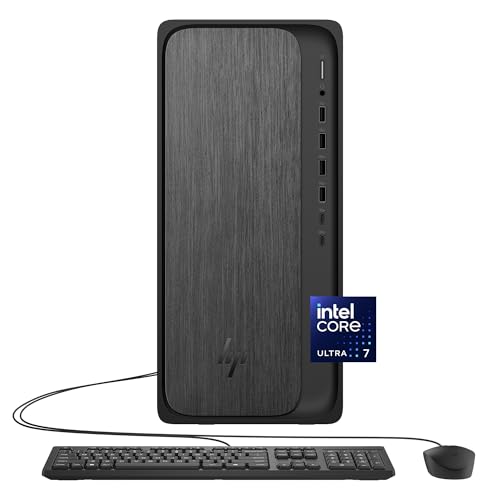
HP OmniDesk Desktop AI PC, Core Ultra 7 265
More On The Choices That Made The List
A sheet of paper that slides across a flat desk is difficult to sketch on properly. The DJAR 5-Position Drafting Table answers that problem with German beech wood, a smooth finish, and support that adjusts from flat to 70 degrees, giving a physical drafting surface to students, illustrators, and architects working by hand.
Its five positions and included T-ruler make it more useful than a simple display stand. I’d see it beside a computer as a companion for detail sketches, though it does not replace a digital workstation or handle the file management and modeling tasks of a modern architecture office.
Practical Pluses
- The five-position surface supports flat work and several steeper drawing angles.
- German beech wood gives the frame a substantial, smooth-looking foundation.
- The included T-ruler helps maintain straight lines and consistent measurements.
- A rubber cord provides a simple way to secure paper or other light material.
- The frame folds down for corner storage between sessions.
Points To Note
- This is an analog drawing aid rather than a computer for digital plans and models.
- The listed dimensions and raised working height deserve checking against the intended desk.
Key Specs
Made For
Students, illustrators, and architects who regularly draw plans, elevations, or details on paper.
A Better Fit Elsewhere
The HP OmniStudio 27-inch All-in-One Desktop, Ryzen 5 220 suits professionals whose drafting work happens primarily in digital design software.
Drafting a floor plan while keeping a specification sheet visible calls for more screen area than a compact office display offers. The HP OmniStudio 27-inch All-in-One Desktop pairs a 27-inch full high-definition screen with 16 GB of random-access memory, or RAM, and Radeon 740M integrated graphics.
The 512 GB solid-state drive provides a practical base for drawings, reference documents, and active project files. Compared with the HP OmniStudio 23.8-inch All-in-One Desktop, Ryzen 5 40, this model offers a larger panel and more memory, although the shared 512 GB capacity may become tight for extensive local archives.
Everyday Perks
- The 27-inch display gives architects more room to compare plans and details.
- 16 GB of RAM supports multitasking across drafting, browser, and communication applications.
- Radeon 740M graphics are a meaningful consideration for visually oriented work.
- The all-in-one design reduces the number of separate desk components.
Trade Offs
- Full HD resolution on a 27-inch panel may feel less detailed for fine technical drawings than a higher-resolution display.
- 512 GB of storage requires active file management for large project libraries.
Feature Snapshot
Right Fit For
Architecture students and working professionals who need a large display for digital drafting and visual design.
Consider Something Else When
The HP OmniDesk Desktop AI PC, Core Ultra 7 265 is a better fit for architects who prioritize one terabyte of local project storage over an all-in-one display.
Not every architecture desk can accommodate a large all-in-one computer. The HP OmniDesk Slim Desktop takes a different approach, using a Core i5-14400 processor and a compact chassis that leaves more room for drawing tools, reference books, or a separate monitor.
That makes it a practical starting point for documentation, floor-plan viewing, and routine design applications. The 8 GB of RAM and 512 GB SSD are the main constraints, particularly for a professional juggling several demanding programs and locally stored project revisions.
What Stands Out
- The slim enclosure supports a compact and uncluttered workstation.
- The Intel Core i5-14400 provides a recognizable processor tier for everyday work.
- Windows 11 Home and Microsoft Copilot are included for general productivity.
Possible Compromises
- 8 GB of RAM is modest for heavy multitasking and memory-intensive design applications.
- 512 GB of storage offers limited room for extensive archives of drawings, models, and textures.
- Intel UHD Graphics 730 is a basic graphics configuration for a display-dependent workflow.
Who Will Love This
Students and early-career architects working from a compact dorm, home office, or shared studio desk.
Reach For A Different Pick When
The HP OmniStudio 27-inch All-in-One Desktop, Ryzen 5 220 better serves professionals who want a larger screen and twice the listed memory.
A cramped studio desk benefits from a computer that combines its display and system in one unit. The HP OmniStudio 23.8-inch All-in-One Desktop, Ryzen 5 40 takes that route with a 23.8-inch full HD panel, an AMD Ryzen 5 40 processor, and Radeon graphics.
For routine drafting, document review, and design work, the combination is coherent and space-conscious. Compared with the 27-inch HP OmniStudio models, it preserves more physical desk area, but its 8 GB of RAM is the more consequential limitation for a busy professional workflow.
Well-Handled Touches
- The integrated 23.8-inch display keeps the footprint compact on a studio desk.
- Radeon graphics provide a dedicated visual component for design-oriented tasks.
- The 512 GB SSD gives active documents and applications a fast internal drive.
Details To Watch
- The 8 GB of RAM may be restrictive when several large applications run together.
- Full HD detail on a 23.8-inch screen prioritizes compactness over fine-text density.
Quick Facts
Best Suited To
Architecture students and small-studio professionals who value a coordinated, compact workstation with a moderate screen size.
Swap It Out When
The HP OmniStudio 27-inch All-in-One Desktop, Ryzen 5 220 makes more sense when screen area and 16 GB of RAM take priority over saving desk space.
Higher-resolution previews and complex visual models can make architecture work demanding on both the processor and graphics hardware. The HP OmniStudio 27-inch AI Desktop, Ryzen AI 7 445 brings an artificial intelligence-focused Ryzen 7 processor, 16 GB of RAM, and Radeon 840M integrated graphics to a 27-inch full HD all-in-one.
Its larger memory allowance and newer Radeon 840M designation make it a sensible upper-tier option for visual workflows. Compared with the HP OmniStudio 27-inch All-in-One Desktop, Ryzen 5 220, the memory matches, but the processor tier and graphics designation differ, making this the more advanced configuration for demanding visual work.
Strengths Worth Knowing
- Ryzen AI 7 445 provides a higher-tier processor platform for complex applications.
- Radeon 840M graphics suit the visual demands of rendering and model preparation.
- 16 GB of RAM gives active design and communication programs room to coexist.
- The 27-inch full HD display supports a broad working area for plans and references.
- A 512 GB SSD keeps the system responsive for frequently accessed project files.
Less-Strong Areas
- The 512 GB drive may be modest for extensive local libraries of drawings, models, and source textures.
- Full HD resolution leaves some fine-detail work better suited to a higher-resolution display.
Built With In Mind
Architecture professionals and advanced students focused on rendering, model preparation, and visually demanding digital workflows.
Look Elsewhere When
The HP OmniDesk Desktop AI PC, Core Ultra 7 265 is a better match for architects who need one terabyte of storage and prefer a separate monitor arrangement.
Architecture projects accumulate layers, reference images, model assets, and revision files faster than a small local drive can comfortably hold. The HP OmniDesk Desktop AI PC, Core Ultra 7 265 approaches that issue directly with a one-terabyte SSD, 16 GB of RAM, and an Intel Core Ultra 7 265 processor.
Microsoft Copilot and Windows 11 Home add everyday productivity tools, while Intel Graphics handle standard visual output. I’d regard this configuration as a storage-focused workhorse rather than a specialized all-in-one, making monitor choice a separate part of the decision for many architects.
Everyday Advantages
- One terabyte of SSD storage provides substantial room for project archives.
- 16 GB of RAM supports multitasking between design, documentation, and communication tools.
- The Core Ultra 7 265 provides a high-end processor tier for demanding professional work.
- Microsoft Copilot is accessible from the keyboard for everyday writing and organization tasks.
Small Limitations
- A separate monitor may be needed for a large drafting workspace.
- The listed Intel Graphics configuration is less specific than the Radeon options in the OmniStudio models.
The Numbers That Matter
Whose Shelf It Belongs On
Working architects, studio teams, and advanced students with substantial local project libraries and monitor flexibility.
Another Choice May Suit
The HP OmniStudio 27-inch AI Desktop, Ryzen AI 7 445 better serves users who want a coordinated computer and larger display without managing a separate monitor.
What Matters In An Architecture Workstation
A useful architecture computer starts with the software and workload. A student producing assignments may operate comfortably with an Intel Core i5 and 8 GB of RAM, while a professional running detailed models, renderings, and browser-based reference tools has more reason to favor 16 GB. The central processing unit, or CPU, affects how quickly those tasks respond, while the graphics component handles on-screen modeling and visual output.
Screen size is the next practical decision. A 23.8-inch panel conserves desk space, while a 27-inch display makes side-by-side plan comparisons more comfortable. I’d also examine the native resolution against the software’s output, since full HD can look less detailed on a larger panel than on a smaller one.
Storage deserves attention because architectural files are commonly revised and cross-referenced. A 512 GB solid-state drive can handle active projects, but a one-terabyte model offers more room for drawing archives, rendered images, textures, and versioned models. Cloud storage helps, though keeping current working files locally still matters for everyday access.
Memory And Multitasking
The difference between 8 GB and 16 GB is especially relevant in a busy studio. Eight gigabytes can be enough for focused drafting or document work, yet running a design program, a large browser session, and communication applications leaves less room for active files. Sixteen gigabytes provides a more comfortable margin for multitasking.
Display And Footprint
All-in-one systems appeal to architects with limited desk space because the screen and computer share one base. A separate desktop can offer greater flexibility over monitor placement, although that means allocating room and managing another display. The right answer depends more on desk geometry and working habits than on the architecture label.
Storage And Graphics
A larger solid-state drive is useful for extensive project libraries, while a distinct Radeon graphics configuration may make more sense for visual design work. The HP OmniStudio models offer different combinations of screen size, memory, and graphics, whereas the HP OmniDesk Desktop AI PC leads this group in listed storage capacity.
Avoiding Common Architecture Computer Traps
Mistakes Worth Dodging
Choosing a computer only by screen size overlooks the work happening behind the display. Memory, graphics, and storage can matter more once large drawings and models are involved. I’d match the computer to the actual software and file volume rather than assume a larger panel or newer processor label covers every requirement.
Where The Extra Money Goes
Higher-tier configurations commonly add memory, processing capability, graphics, or storage. That extra capacity is most useful for large models, frequent rendering, several applications at once, and local archives. For basic drafting and documentation, a compact model with 8 GB of RAM may still be the more sensible fit.
Frequently Asked Questions
Is 8 GB of RAM enough for architecture work?
Yes for basic drafting, coursework, and document review, though 16 GB is more comfortable for complex models and multitasking. I’d consider 8 GB a starting point rather than a comfortable professional margin.
Is a 27-inch monitor better for architecture?
It offers more room for comparing plans, details, and reference documents. The benefit depends on desk size and screen resolution, since full HD may feel less detailed on a larger display.
Do architecture students need one terabyte of storage?
Not always, because active assignments may fit comfortably within 512 GB. A one-terabyte drive becomes more valuable when a project includes large models, textures, renders, and multiple revisions.
Should I buy an all-in-one or a separate desktop?
An all-in-one suits compact workspaces and simpler setups. A separate desktop offers more freedom in monitor size and placement, which can be helpful for a dedicated drafting station.
Is an AI-labeled desktop necessary for architecture?
No. Artificial intelligence features may support particular software workflows, but processor power, memory, graphics, display quality, and storage remain more broadly useful architectural considerations.
Final Verdict
My practical shortlist starts with the HP OmniStudio 27-inch All-in-One Desktop, Ryzen 5 220 for a balanced visual workspace, and the HP OmniDesk Desktop AI PC, Core Ultra 7 265 for larger local project libraries. The DJAR 5-Position Drafting Table earns a place as an analog companion, not a substitute for a digital workstation. Match the machine to the drawings, models, and screen space you actually use, and the choice becomes much less complicated.
