
Machine-learning work often starts on a kitchen table, in a dorm room, or beside a second monitor, with notebooks and datasets taking up more space than expected. I focus on processor capability, memory, graphics, and storage, while separating practical local experimentation from the much heavier demands of training large models. The six HP desktops below cover different compromises, from compact everyday setups to higher-capacity configurations for serious experimentation.
The Essentials At A Glance
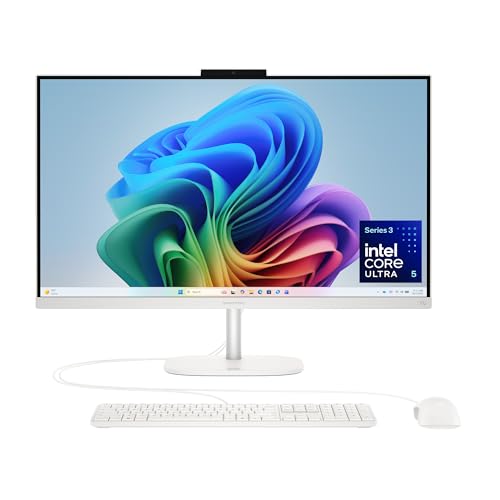
HP OmniStudio 27-inch All-in-One AI Desktop Core Ultra 5 325 Jet Black

HP OmniStudio 27-inch All-in-One Desktop Ryzen 5 220 Cotton White

HP OmniDesk Slim Desktop Core i5-14400 Meteor Silver S03-0012

HP OmniStudio 27-inch All-in-One AI Desktop Ryzen AI 7 445 Jet Black

HP OmniStudio 23.8-inch All-in-One Desktop Ryzen 5 40 Cotton White
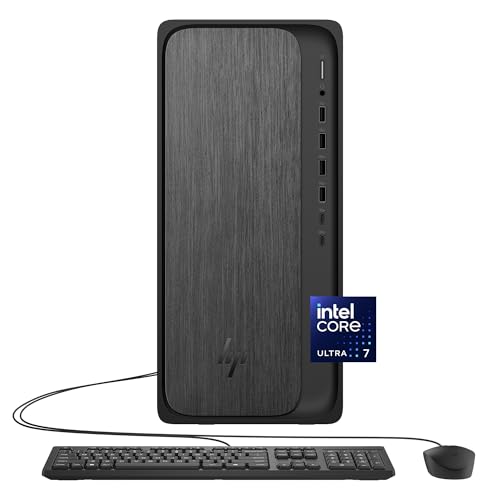
HP OmniDesk Desktop AI PC Core Ultra 7 265 1TB SSD Gray Wood
A Closer Look At Each Pick
The HP OmniStudio 27-inch All-in-One AI Desktop Core Ultra 5 325 Jet Black combines a Core Ultra 5 325 processor, 16 GB of DDR5 memory, and a 512 GB NVMe SSD in one tidy enclosure. For my desktop-based machine-learning work, that combination suits Python notebooks, data preparation, documentation, and moderate local experimentation without the cable management required by a separate tower and monitor.
The adjustable 27-inch screen makes it pleasant for long sessions, while the FHD infrared camera, HDR switching, and AI noise reduction improve video calls and remote collaboration. Unlike the HP OmniStudio 27-inch All-in-One Desktop Ryzen 5 220 Cotton White, this model adds a more elaborate camera and audio feature set, though the AMD version is the more relevant choice for Radeon 840M-class experimentation.
Real-World Strengths
- DDR5 memory supports smoother multitasking across notebooks, datasets, browser tabs, and development tools.
- The NVMe SSD reduces the storage delay involved in opening applications and moving active project files.
- The built-in camera, microphone noise reduction, and Windows Hello support simplify remote work.
- HP Eye Ease and the adjustable stand make the large display more practical for extended sessions.
- DTS spatial audio adds value for media work alongside development tasks.
Things To Consider
- For larger local models and substantial datasets, 16 GB of memory and 512 GB of storage may require careful project management.
Key Specs
Made For
I favor this model for a home developer who wants a polished all-in-one for Python learning, lightweight model experiments, and frequent video collaboration.
Where Another Pick Suits Better
The HP OmniDesk Desktop AI PC Core Ultra 7 265 1TB SSD Gray Wood suits a developer who prioritizes processor tier and twice the listed storage over a large integrated display.
The HP OmniStudio 27-inch All-in-One Desktop Ryzen 5 220 Cotton White offers a more straightforward path into local AI development. Its Ryzen 5 220 processor, Radeon 740M graphics, 16 GB of memory, and 512 GB SSD provide enough resources for introductory courses, small datasets, and lighter model experimentation in a space-saving format.
Compared with the HP OmniStudio 27-inch All-in-One AI Desktop Core Ultra 5 325 Jet Black, this model matches the large display, memory, and storage capacity while changing platforms and finish. I see the Cotton White design as especially fitting for a study room, and the included protection plan adds coverage for accidental damage, breakdowns, setup help, and repairs without an added repair charge.
Where It Excels
- The all-in-one design reduces desk clutter while retaining a large FHD workspace.
- Sixteen gigabytes of memory gives lightweight projects more breathing room than an 8 GB configuration.
- The included protection plan covers accidental damage and provides round-the-clock technical assistance.
Minor Gripes
- The Radeon 740M is integrated graphics, so accelerator-heavy model work is better aligned with the Radeon 840M configuration in the HP OmniStudio 27-inch All-in-One AI Desktop Ryzen AI 7 445 Jet Black.
- A 512 GB drive leaves less room for multiple environments, model files, and large datasets than a 1 TB system.
Who It Suits Best
I recommend it to a student or new developer working mostly with course notebooks, small datasets, and CPU-assisted models.
Consider Something Else When
The HP OmniStudio 27-inch All-in-One AI Desktop Ryzen AI 7 445 Jet Black makes more sense for local AI projects that benefit from a higher-tier processor and Radeon 840M graphics.
The HP OmniDesk Slim Desktop Core i5-14400 Meteor Silver S03-0012 is built around a Core i5-14400 processor, 8 GB of RAM, and a 512 GB SSD. For me, it is most convincing as a quiet, compact workstation for learning Python, running smaller notebooks, and handling standard development tasks away from a demanding training environment.
Its slim form separates the computer from the display, giving me freedom to use an existing monitor or arrange a compact multi-screen workspace. Compared with the HP OmniStudio 23.8-inch All-in-One Desktop Ryzen 5 40 Cotton White, it offers more flexibility in display placement, but both configurations share the practical 8 GB memory limitation.
The Helpful Details
- The i5-14400 provides a capable platform for everyday development and CPU-based model workflows.
- A compact tower works well in a small office where a full-size all-in-one would dominate the desk.
Room For Improvement
- Eight gigabytes of memory can become restrictive when a notebook, browser, editor, and virtual environment are all active.
- The 512 GB SSD requires careful organization for environments, checkpoints, and datasets.
- UHD 730 graphics are better suited to general visual work than GPU-intensive model training.
Quick Facts
The Right Fit
I would choose it for a beginner who mainly runs small educational projects and wants a compact tower instead of an integrated display.
Swap It Out When
The HP OmniDesk Desktop AI PC Core Ultra 7 265 1TB SSD Gray Wood better fits an established developer with larger storage demands and heavier multitasking.
The HP OmniStudio 27-inch All-in-One AI Desktop Ryzen AI 7 445 Jet Black has the most compelling specification balance in this group for local AI experimentation. It combines a Ryzen AI 7 445 processor, Radeon 840M graphics, 16 GB of memory, and a 512 GB SSD with a 27-inch FHD display, creating a capable general-purpose platform without requiring a separate graphics card.
Compared with the Ryzen 5 220 version, the Radeon 840M represents a higher-positioned graphics option for locally accelerated tasks. I would still keep expectations realistic, since the Ryzen AI name does not transform integrated graphics into a workstation-class accelerator, but the combination appears better aligned with small model experimentation than the lower-tier configurations.
Notable Gains
- The Ryzen AI 7 445 provides a higher-tier processor option for parallel development and model-processing tasks.
- Radeon 840M graphics offer a more useful starting point for local AI experimentation than the lower-tier Radeon 740M configuration.
- Sixteen gigabytes of memory supports concurrent notebooks, code editors, and data tools.
- The large display reduces the need for constant window switching during analysis work.
- The included protection plan provides accidental-damage coverage, technical support, and repair service without added repair charges.
Potential Drawbacks
- Sixteen gigabytes and 512 GB can still feel limited once environments, model weights, and sizable datasets are included.
- The all-in-one format offers less freedom to add internal graphics hardware than a conventional tower.
Technical Sheet
Who Should Grab It
I favor it for a technically engaged developer running small-to-medium local models who wants strong integrated specifications in a clean workstation.
Reach For A Different Pick When
The HP OmniDesk Desktop AI PC Core Ultra 7 265 1TB SSD Gray Wood better fits a developer who needs more storage for datasets, checkpoints, and multiple environments.
The HP OmniStudio 23.8-inch All-in-One Desktop Ryzen 5 40 Cotton White prioritizes a smaller footprint and an uncluttered workspace. Its Ryzen 5 40 processor, Radeon graphics, 8 GB of memory, and 512 GB SSD handle everyday computing and light development, including smaller notebooks, scripts, and data-cleaning exercises.
The 23.8-inch FHD panel takes up less room than the 27-inch OmniStudio models, which matters in a compact apartment or shared office. Compared with the HP OmniStudio 27-inch All-in-One Desktop Ryzen 5 220 Cotton White, it saves physical space but also halves the listed memory, so I would keep project sizes measured accordingly.
Where It Delivers
- The smaller all-in-one format suits compact desks and shared workspaces.
- The built-in design keeps power, display, and computer connections in a single unit.
Some Limits To Know
- Eight gigabytes of RAM is the main constraint for memory-intensive notebooks and multiple development environments.
- The 512 GB drive will require active management once datasets and project dependencies accumulate.
- Integrated Radeon graphics fit general AI experimentation better than accelerator-heavy model training.
Built With In Mind
I would choose it for someone starting machine-learning coursework in a small room where desk space matters more than expandable graphics.
A Better Fit Elsewhere
The HP OmniStudio 27-inch All-in-One Desktop Ryzen 5 220 Cotton White suits a developer who wants more memory and a larger display within a similar all-in-one design.
The HP OmniDesk Desktop AI PC Core Ultra 7 265 1TB SSD Gray Wood stands apart through its 1 TB SSD and Core Ultra 7 265 processor. Those specifications make it the most practical fit in this group for developers who accumulate datasets, saved model states, virtual environments, and project files on one machine.
Compared with the HP OmniStudio 27-inch All-in-One AI Desktop Core Ultra 5 325 Jet Black, it matches the 16 GB memory but doubles the listed storage and separates the tower from the display. I like that arrangement for flexible multi-monitor work, although the listed Intel graphics configuration still calls for realistic expectations about large-scale model training.
What Works In Its Favor
- The Core Ultra 7 265 provides a high processor tier for development and local compute tasks.
- A 1 TB SSD reduces pressure from large datasets, model checkpoints, and multiple project environments.
- Sixteen gigabytes of memory accommodates several concurrent development tools.
- The tower format allows the display to be positioned independently of the computer.
- The included protection plan adds accidental-damage coverage and technical assistance.
Where It May Fall Short
- Large local models can still exceed 16 GB of available memory even with a spacious SSD.
- The generic Intel graphics listing gives less specificity for accelerator-focused software than the Radeon 840M configuration.
Feature Overview
Whose Shelf It Belongs On
I would place it in a serious home or professional development setup where storage-heavy projects matter more than an all-in-one display.
Another Choice May Suit
The HP OmniStudio 27-inch All-in-One AI Desktop Ryzen AI 7 445 Jet Black better fits a developer who prioritizes Radeon 840M graphics and a unified 27-inch workspace.
What Actually Matters For Local AI Work
Start With The Workload
I begin with the model and software involved. A desktop handling notebooks, data cleaning, and smaller local models can work well with an efficient processor, while repeated model training, large datasets, and specialized frameworks place much greater pressure on memory and graphics hardware. A label such as “AI PC” describes features and processor design, not a guarantee of large-model training capability.
Memory And Storage
Random-access memory, commonly called RAM, determines how much active data the system can handle at once. I find 16 GB more comfortable for several development tools and virtual environments, while 8 GB is workable for smaller exercises but easier to exhaust. Storage deserves similar attention because datasets, checkpoints, and package environments can grow quickly, making the 1 TB configuration more accommodating than 512 GB.
Graphics And Software Compatibility
Graphics processing accelerates many machine-learning operations, and integrated graphics solutions can support smaller local workloads. I would check the selected framework against the exact graphics configuration before committing, especially for GPU-focused libraries. A higher-tier processor or Radeon graphics option may help, but software support remains just as important as the hardware label.
The Physical Workspace
An all-in-one reduces cable clutter and places the computer behind the display, while a slim tower gives me more freedom to arrange multiple screens. Screen size can influence productivity, but it does not directly determine model-training capability. I would prioritize processor, memory, and storage according to the project, then choose the chassis that suits the room.
Common Traps Before The First Purchase
Common Shopping Slip Ups
I see many shoppers focus on an “AI” label while overlooking memory or graphics. Another mistake is assuming a large screen accelerates model training, although a display mainly improves the working area. I also check framework support and storage needs before purchase, rather than treating processor branding as the only deciding factor.
What The Higher Tier Buys
A higher-tier processor can improve parallel and compute-heavy work, while additional memory helps keep large projects active. More storage reduces the need to move datasets and checkpoints between drives. For basic coursework, the lower configurations may suffice; for sustained experimentation, I prefer the extra capacity in the Ryzen AI 7 445 or Core Ultra 7 265 models.
Frequently Asked Questions
What Specs Matter Most For Desktop For Machine Learning?
RAM, processor capability, graphics support, and storage are the core considerations. I would choose 16 GB for broader local experimentation and 1 TB when datasets or multiple environments are likely to accumulate.
Are These Desktops Suitable For Training Large Language Models?
They are better suited to learning, small models, inference, and CPU-assisted experiments than large-model training. I would need more memory and a substantially stronger accelerator for demanding training jobs.
How Much RAM Is Enough For Local AI Projects?
Eight gigabytes can handle small notebooks and basic scripts, but 16 GB gives me more room for active tools and larger datasets. Memory pressure often appears when several virtual environments run alongside a browser and editor.
Is A 512 GB SSD Enough For Machine Learning?
It can be enough for code, selected datasets, and a few environments. I would expect to manage storage carefully or use separate storage once model checkpoints and larger datasets are added.
Should I Choose An All-in-One Or A Desktop Tower?
I would choose an all-in-one for a simpler, unified workspace and a tower for flexible display placement or greater storage configuration options. The processor and memory specifications should drive the decision more than the chassis style.
