
Flexible filament rewards patience, but the right spool makes the learning curve much gentler. You’re usually balancing stretch, surface feel, printer compatibility, and how much wobble your setup can handle, especially for phone cases, soft grips, wearables, and small parts that need bend without cracking. This roundup focuses on practical choices that make sense for home desks, hobby shops, and busy garages. A few of these lean softer and friendlier for detailed work, while others feel more like workhorse TPU for everyday use.
Quick Look At The Shortlist
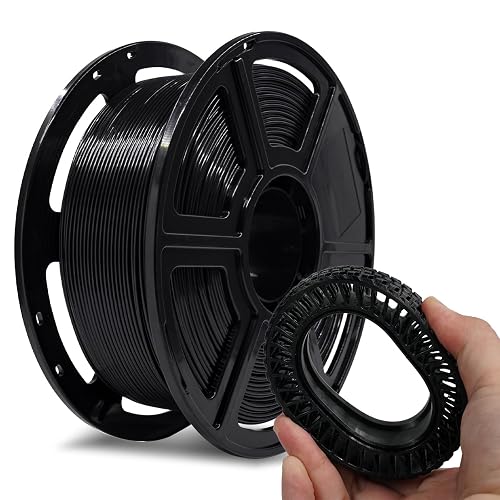
FLASHFORGE PLA Flexible 1.75 mm, 4X longer stretch 3D Printer Filament 1Kg (2.2lbs)

FLASHFORGE PLA Flexible 1.75 mm, 4X longer stretch 3D Printer Filament 1Kg (2.2lbs)
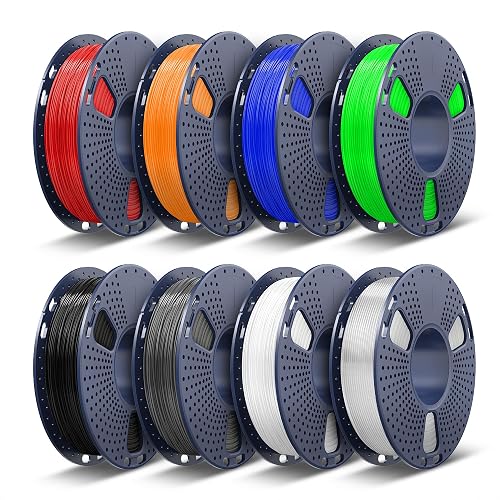
TECBEARS TPU Filament 1.75mm, 95A 3D Printer Filament, 250G Spool, 8 Rolls, 2KG

ELEGOO TPU Filament 1.75mm Black 1KG, 95A Flexible Soft 3D Printing Filament
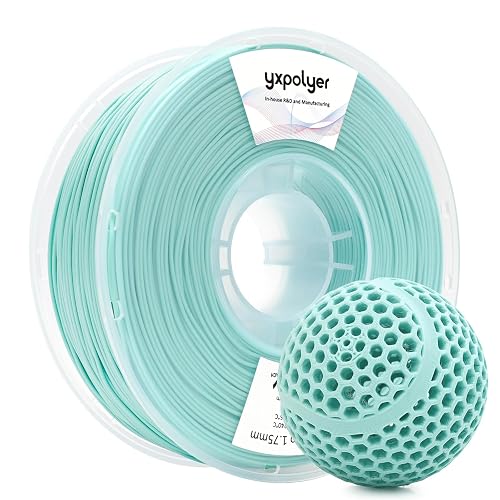
YXPOLYER Flexible PLA Food-Safe 92A Soft PLA 3D Printer Filament | 1.75mm 1KG

Official Creality TPU Filament 1.75mm 1KG, 95A Shore | Flexible 3D Printer Filament

Black TPU Filament 1.75mm 250g, 95A Flexible 3D Printer Filament
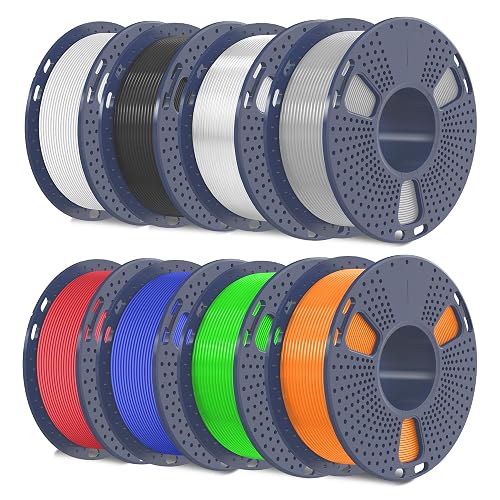
SUNLU TPU Filament 1.75mm(250g*8,8 Packs,95a TPU) | 3D Printer Filament
More Details On Our Top Picks
FLASHFORGE’s flexible PLA sits in a friendlier zone than many TPU spools, so it makes sense for soft accessories, bent accents, and parts that should give a little without feeling floppy. The 1.75 mm diameter and stated dimensional accuracy of plus or minus 0.02 mm matter because cleaner, steadier feed usually means fewer surprises in the extruder, especially on hobby printers with modest tuning.
That also makes it a sensible starting point for you if a TPU spool has felt too stretchy in the past. The trade-off is simple, PLA-based flexibility usually won’t match the rubbery feel of true TPU, so it suits light flex rather than deep compression.
Strong Points
- PLA-flex formulation gives you a softer feel without jumping straight to very rubbery material.
- 1 kg spool suits longer projects, so you can print a batch of small soft parts without reloading as often.
- Stated 0.02 mm tolerance helps support steadier extrusion, which matters on detailed prints and thin walls.
- Works well for accessories, grips, and decorative pieces that need some bend but not heavy deformation.
Things To Consider
- PLA-flex style material usually gives you less stretch than TPU, so it is not the right pick for very squishy parts.
- Flexible filament still asks for slow, careful feeding, so a direct-drive setup often feels easier than a loose Bowden path.
- Storage matters, since any flexible filament benefits from staying dry and neatly wound.
Feature Snapshot
Who It Suits Best
Home hobbyists who want flexible material without jumping into very soft TPU will get the most from this spool.
Where A Sibling Pick Shines
TECBEARS TPU Filament 1.75mm, 95A 3D Printer Filament fits better for you if you want a more rubber-like result and broader color variety.
Same family, same 1.75 mm format, but this spool earns its place as a straightforward flexible-PLA option for routine prints. It suits the kind of desk work where you want pliable phone stands, soft clips, or small accessories that do not need the squishier feel of TPU.
The honest read is that you are mostly choosing this for consistency with a softer edge, not for dramatic elasticity. That makes it easier to recommend for casual makers than for anyone chasing high compression or repeated bending.
What We Like
- The 1 kg spool size supports repeat printing without constant spool changes.
- Flexible PLA profile can feel less demanding than TPU for basic soft accessories.
- Dimensional accuracy at plus or minus 0.02 mm helps maintain steadier feed behavior.
- Good fit for small household parts, desk tools, and decorative pieces with a soft touch.
Minor Gripes
- It still asks for careful tuning, especially in the feed path and retraction settings.
- PLA-flex style material tends to be less rubbery than TPU, so feel expectations matter.
- Flexible filaments usually store best in dry, sealed conditions, which adds a little upkeep.
Core Details
Who Will Love This
You’ll appreciate this spool most for everyday soft prints on a standard desktop setup.
Look Elsewhere When
ELEGOO TPU Filament 1.75mm Black 1KG, 95A Flexible Soft 3D Printing Filament suits you better when you want a more classic TPU feel and a black-only spool.
TECBEARS takes a different angle from the FLASHFORGE spools, because you get eight small 250 g rolls instead of one large one. That makes it handy for sample pieces, color checks, or a school-style setup where you want several shades without committing to a full kilo of each.
The 95A shore rating puts it in the familiar TPU range, so you can expect a rubber-like feel for parts that need real flex. In most hobby spaces, that format is easier to live with than a giant single spool sitting on the bench forever.
Upsides
- Eight separate rolls give you more color options for small projects and mixed displays.
- 250 g spools are easier to store, move, and swap during short print sessions.
- 95A TPU is a familiar flexible grade for grips, covers, and bendable utility parts.
- 2 kg total weight supports a lot of small prints across the full bundle.
- Good match for makers who want to compare colors before scaling up a project.
Areas To Watch
- Small spools are convenient, but they can feel less efficient for a single large project.
- TPU often benefits from slower, cleaner feeding, so your printer setup matters.
- More rolls means more storage planning, which is worth considering on crowded desks.
Feature Rundown
Best Suited To
You should look at this bundle for colorful hobby work, quick experiments, and smaller TPU parts.
Swap It Out When
SUNLU TPU Filament 1.75mm, 8 Packs, 95A TPU makes more sense if you want a similar multi-pack from a brand with a stronger focus on fast-print packaging.
ELEGOO keeps the pitch refreshingly plain, a single black 1 kg TPU spool that should feel familiar to anyone printing flexible parts on a standard FDM machine. That makes it a tidy choice for grips, feet, cable-friendly accessories, or replacement bits where color variety matters less than getting a clean black finish.
Compared with TECBEARS’ eight-roll bundle, this one is less about range and more about a straightforward all-purpose spool. The trade-off is obvious, you lose the convenience of multiple colors, but you also avoid sorting through smaller rolls for every project.
Highlights
- Single black spool gives you a simple setup for uniform parts.
- 95A TPU sits in a familiar flexible range for everyday utility prints.
- 1 kg size is practical for repeated use without becoming bulky.
- Compatible with most FDM printers, which lowers the barrier for common desktop setups.
Worth Noting
- Black-only presentation limits color-driven projects.
- Flexible TPU usually works best with careful feed settings and patient loading.
- Large single spools can take up more shelf space than small sample rolls.
Details At A Glance
Right Fit For
You’ll get the most from this spool if you want a plain black TPU option for everyday functional prints.
A Better Fit Elsewhere
YXPOLYER Flexible PLA Food-Safe 92A Soft PLA 3D Printer Filament suits you better when you want a softer-PLA approach for playful prototypes and pet-themed shapes.
YXPOLYER stands out because it is framed around soft PLA with a 92A profile, which puts it in a slightly different lane from the TPU-heavy spools above. That softer-feeling approach can be useful for pet toys, bouncy demo parts, and playful shapes where you want some give without going full rubbery.
The mint green color helps too, especially for display pieces or novelty prints that need to look cheerful rather than industrial. The catch is that this style of material is still specialized, so it suits planned projects better than spontaneous “print anything” use.
Best Bits
- Soft PLA profile gives you a different feel from the TPU options in this list.
- 92A hardness points to a flexible material that still keeps shape fairly well.
- Mint green color works nicely for toys, prototypes, and visible display parts.
- 1 kg spool is handy for repeat printing of themed pieces.
- Useful for dog toys and bouncy object designs that need a playful texture.
Small Caveats
- Specialty use makes it less universal than the plain TPU spools here.
- Soft filaments usually call for careful handling and tidy storage.
- Project planning matters more, since this kind of material is best matched to a clear use case.
Technical Sheet
The Right Fit
This suits you best for playful prints, pet-oriented shapes, and soft display parts with a friendlier look.
Skip It When
FLASHFORGE PLA Flexible 1.75 mm, 4X longer stretch 3D Printer Filament fits better for general flexible accessories, because it leans toward a simpler everyday profile.
Creality keeps this one straightforward, a 1 kg, 1.75 mm TPU spool with a 95A shore rating and stated dimensional accuracy of plus or minus 0.03 mm. That combination is useful for you if your printer already handles flexible filament reasonably well and you want a familiar middle-ground material rather than something unusually soft.
Compared with the ELEGOO spool, this pick adds the accuracy note, which may matter to you more than the branding. The trade-off is that it still asks for the same patient filament handling flexible TPU usually demands, so it rewards a calm setup more than a rushed one.
Reasons To Buy
- 95A TPU gives you a common flexible behavior profile for utility parts.
- 1 kg spool size works well for repeated everyday printing.
- Plus or minus 0.03 mm tolerance gives a useful clue about feed consistency.
- Fits most FDM printers, so it stays accessible for many desktop setups.
Points To Note
- It still needs careful feeding, especially on setups that dislike soft material.
- Accuracy is good to note, though flexible filament still depends on printer tuning.
- Single-spool format is practical, but it does not offer the color variety of bundle packs.
Feature Card
Built With In Mind
You should consider this for standard FDM printing where you want a dependable TPU profile without unusual softness.
Another Choice May Suit
SUNLU TPU Filament 1.75mm, 8 Packs, 95A TPU fits you better if multiple 250 g rolls sound more practical than a single large spool.
This 250 g black spool is the kind of small package that makes sense when you want to sample TPU without committing to a heavy roll. It’s useful for first prints, calibration pieces, or a compact project where a little material goes a long way.
Because it uses the familiar 95A range, you still get a classic flexible feel rather than a novelty material. The trade-off is obvious too, a small spool can disappear quickly on larger parts, so it is more about learning and short runs than bulk production.
Plus Points
- 250 g size is easy to store and handy for trying TPU on a new printer.
- Black finish works well for parts that should look plain and clean.
- 95A hardness keeps it in the familiar flexible TPU lane.
- Good match for sample runs, calibration pieces, and compact accessories.
Room For Improvement
- Small capacity means you may run out quickly on larger jobs.
- Single-color format keeps things simple, but it limits visual variety.
- Flexible filament still benefits from tidy storage and careful handling after opening.
At A Glance
Whose Shelf It Belongs On
This belongs with hobbyists who want a small, low-commitment TPU spool for short projects.
Reach For A Different Pick When
ELEGOO TPU Filament 1.75mm Black 1KG, 95A Flexible Soft 3D Printing Filament suits you better for larger everyday TPU work.
SUNLU follows the same multi-spool idea as TECBEARS, but it leans harder into compact 250 g packs and a fast-print TPU profile. That makes it feel especially practical for you if your projects move between colors often or you prefer smaller portions that are easier to store.
The stated plus or minus 0.03 mm accuracy adds a useful quality cue, though flexible printing still rewards a careful setup. In a small workshop, this kind of eight-pack bundle can feel like a shelf of paint tubes, handy when you want one color for each quick idea.
Standout Traits
- Eight smaller spools give you flexibility in storage and project planning.
- 250 g format is convenient for quick swaps and short print runs.
- 95A TPU suits typical flexible parts that need some give.
- Stated plus or minus 0.03 mm accuracy helps set expectations for feed consistency.
- Useful for makers who like to spread projects across several colors or mini batches.
Honest Caveats
- Small rolls are convenient, but they are not the best fit for a single large part.
- Bundle packaging can mean more label sorting and shelf organization.
- Flexible TPU still asks for patient printer settings and clean filament paths.
Quick Facts
Who Should Grab It
You’ll get the most out of this bundle for mixed-color TPU projects and frequent small prints.
Where A Sibling Pick Shines
TECBEARS TPU Filament 1.75mm, 95A 3D Printer Filament fits better if you want a similar multi-roll setup with the same 2 kg total weight.
How To Choose The Right Flexible 3d Printing Filaments
Match The Material To The Job
Flexible filament is not one single thing. PLA-flex styles feel softer and easier for light-bend parts, while TPU usually brings the rubber-like stretch that suits grips, feet, and protective covers. Shore hardness, which is the material’s firmness rating, helps you gauge how squashy the result will feel, so a 92A option and a 95A TPU do not behave the same way.
Check Your Printer’s Tolerance
Not every desktop printer handles flexible material with the same ease. Direct-drive setups usually feed soft filament more smoothly than long Bowden paths, because the material has less room to buckle before reaching the hot end. A spool with tight dimensional accuracy also helps, since steadier diameter often means steadier extrusion.
Think About Project Size And Storage
Small 250 g rolls make sense for sample runs, color experiments, and parts you only need in short bursts. Larger 1 kg spools are more efficient for repeated use, but they ask for more shelf space and a little more attention to dry storage. For a busy bench, the right size often matters as much as the material itself.
Buy For Flexibility, Not Miracles
Flexible filament works best when your goal is gentle give, not constant abuse. A softer spool can feel wonderful on a phone case or tool grip, yet a very bendy part may lose its shape faster than a rigid print. That trade-off is normal, and it’s the reason the “best” choice depends on how much stretch you actually need.
Things Worth Knowing First
Common Shopping Slip Ups
One common mistake is grabbing TPU when a softer PLA-based filament would be easier to manage on a basic printer. Another is overlooking spool size, then ending up with too little material for the project or too much for a tiny desk setup. A quick look at hardness, diameter, and spool weight saves a lot of second-guessing.
What The Higher Tier Buys
More expensive flexible filament often pays for tighter diameter control, better winding, and more consistent packaging. That matters most on printers that are already tuned well, because the material can feed more cleanly and waste less time on jams or guesswork. The upgrade makes sense when you print flexible parts often, not just once in a while.
Frequently Asked Questions
What is the easiest flexible filament for a beginner?
Flexible PLA is usually the gentler starting point because it behaves a bit more like standard filament than very soft TPU. You still need careful feed settings, but the material often feels less demanding.
Is 95A TPU too soft for most desktop printers?
No, 95A sits in a very common flexible range and works for many standard FDM setups. The bigger concern is printer setup and feed path quality, not the number by itself.
Why do some flexible filament packs use small 250 g rolls?
Small rolls help with storage, color variety, and short projects. They also reduce waste risk when you only need a little material for samples or prototypes.
Does dimensional accuracy really matter for flexible filament?
Yes, because soft filament can be harder to push cleanly through the printer. A tighter diameter range usually gives you steadier feeding and fewer surprises.
Should you choose PLA-flex or TPU for utility parts?
TPU usually makes more sense for parts that need repeated bend and a rubber-like feel. PLA-flex works better for lighter soft parts where ease of printing matters more than deep stretch.
Final Thoughts
The right flexible filament depends on how much give you need and how patient your printer feels that day. FLASHFORGE and YXPOLYER make sense for softer, more specialized work, while the TPU options from ELEGOO, Creality, SUNLU, and TECBEARS feel more at home on utility prints and repeat projects. For small experiments, the 250 g spools are easier to live with. For steadier daily use, the 1 kg rolls are the safer bet. Match the spool to the job, and the whole category becomes a lot less fussy.