
Finding a gaming laptop that balances raw GPU muscle with day-to-day usability is harder than it looks. You might want desktop-class frame rates, but you also need a machine that does not sound like a jet engine during a video call. The options here span from genuine RTX 4070 power to newer 50-series chips that trade blows in different price tiers. Each pick serves a specific type of gamer, from competitive esports regulars to budget-conscious starters. Understanding where each model compromises helps you avoid paying for features you will never push to their limits.
The Shortlist At A Glance

ASUS ROG Strix G16 (2025) Gaming Laptop
ASUS TUF Gaming F16 (2025) Gaming Laptop

Alienware 16 Aurora Gaming Laptop (RTX 5050)
ASUS TUF Gaming F16 Gaming Laptop (RTX 4050)

MSI Katana 15 Gaming Laptop (RTX 4070)
Alienware 16 Aurora Gaming Laptop (RTX 5060)
More Details On Our Top Picks
ASUS positions the ROG Strix G16 as a serious esports contender, and the specs back that up. The 16-inch FHD+ panel runs at 165Hz with a 3ms response time, meaning fast-paced shooters stay visually clean during quick camera flicks. Powering the experience is an Intel Core i7-14650HX paired with NVIDIA’s RTX 5060, a combination that should handle modern titles at high settings without breaking much sweat. The inclusion of Wi-Fi 7 gives you headroom for future router upgrades, a nice forward-looking touch.
Daily usability benefits from 16GB of DDR5 memory and a 1TB PCIe 4.0 SSD, so load times stay short and multitasking feels smooth even with Discord, a browser, and a game running together. ROG Intelligent Cooling uses dual fans and tri-fan design to manage thermals, which matters in long ranked sessions. You may notice the fans get loud under sustained load, a common trait for slim chassis pushing high-wattage chips. For most competitive gamers, though, the trade-off is worth it.
Strong Points
- 165Hz refresh with 3ms response keeps fast motion sharp in competitive play
- Wi-Fi 7 support future-proofs your networking setup for next-gen routers
- 1TB Gen4 SSD provides ample game storage without needing an immediate upgrade
- ROG Intelligent Cooling sustains performance during extended sessions
Things To Consider
- Fan noise ramps up noticeably under heavy GPU load
- The RTX 5060 sits below the 4070 tier in raw rasterization horsepower
Quick Facts
Made For
Competitive gamers who prioritize high refresh rates and low response times in titles like Valorant or Apex Legends.
A Better Fit Elsewhere
Shoppers wanting true RTX 4070 rasterization power should look at the MSI Katana 15 for higher frame rates in demanding AAA titles.
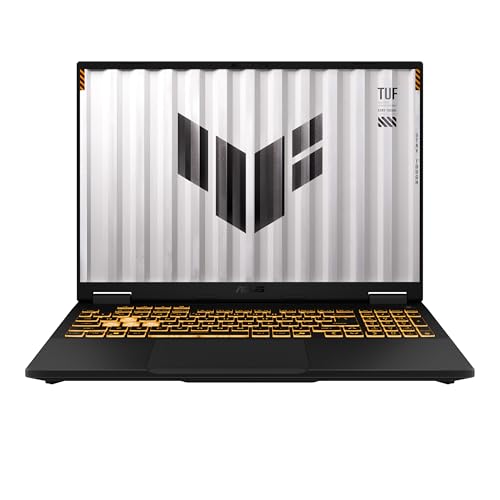
Where the ROG Strix G16 leans into competitive speed, the TUF Gaming F16 trades a little flash for rugged practicality. ASUS equips this model with an Intel Core i5-13450HX and an RTX 5050, a step down in GPU power but still capable of solid 1080p gaming. The 16-inch FHD+ display matches the Strix at 165Hz, so you are not sacrificing smoothness. NVIDIA Advanced Optimus dynamically switches between the dedicated and integrated graphics, extending battery life during non-gaming tasks.
The 512GB PCIe Gen4 SSD is the main compromise here. Modern AAA games regularly exceed 80GB, so you may need to manage your library carefully or add a second drive. Wi-Fi 6E keeps wireless connectivity fast, though it lacks the Wi-Fi 7 future-proofing found on the Strix G16. TUF chassis are known for their durability, and this model continues that tradition with a reinforced build that tolerates daily transport in a backpack better than most thin-and-lights.
Highlights
- 165Hz display matches pricier options for competitive smoothness
- NVIDIA Advanced Optimus extends battery life by switching graphics modes automatically
- TUF chassis durability holds up well to frequent travel
Worth Noting
- 512GB storage fills up fast with modern game sizes
- RTX 5050 lacks the rasterization headroom for ultra settings in demanding titles
- Wi-Fi 6E is fast but not as forward-looking as Wi-Fi 7
Right Fit For
Students and commuters who need a durable daily laptop that doubles as a capable gaming machine.
Consider Something Else When
Shoppers needing more storage out of the box will prefer the 1TB SSD on the ASUS ROG Strix G16.
Alienware takes a different approach with the 16 Aurora, leaning into premium materials and a quieter aesthetic rather than aggressive gaming styling. The anodized aluminum lid gives it a clean, professional feel that blends into an office environment better than the TUF or ROG Strix. Inside, an Intel Core 7 240H handles CPU duties alongside the RTX 5050. The 16-inch WQXGA display runs at 120Hz with 300 nits brightness, prioritizing resolution and color detail over raw refresh speed.
That display choice tells you who this laptop targets: players who value visual fidelity over competitive frame rates. At 2560×1600, games look crisp, but the RTX 5050 will need to work harder to maintain smooth frames at that resolution. You may find yourself dropping to 1080p for demanding titles. The aluminum lid does attract fingerprints, and owners commonly report needing a microfiber cloth to keep it looking clean.
Upsides
- WQXGA resolution delivers sharper image detail than standard FHD panels
- Anodized aluminum lid looks premium and resists minor scuffs
- Subtle design works well in mixed-use professional and gaming settings
- 120Hz refresh is smooth enough for most single-player experiences
Trade Offs
- 120Hz falls short of the 165Hz standard found on the ASUS picks
- Aluminum lid requires frequent wiping to maintain a clean appearance
- RTX 5050 may struggle at native WQXGA resolution in demanding games
Who Will Love This
Professionals who want a gaming-capable laptop that does not look like a gaming laptop.
Look Elsewhere When
Competitive players who need 165Hz refresh rates should step up to the ASUS ROG Strix G16.
This TUF F16 variant steps down to an Intel Core 5 210H and RTX 4050, positioning itself as the most budget-conscious option in the lineup. The 144Hz FHD+ IPS-level display keeps motion reasonably smooth, though it drops slightly from the 165Hz panels on the other ASUS models. Like its newer sibling, it includes NVIDIA Advanced Optimus for battery management during everyday tasks. The 512GB PCIe Gen4 SSD matches the 2025 TUF model, meaning storage fills up at the same rate.
The RTX 4050 is the real talking point here. It uses a previous-generation architecture compared to the 50-series chips, so frame rates in heavy AAA titles will be lower. For esports and mid-tier games, though, the difference is less noticeable. Wi-Fi 6 connectivity is adequate, though it lacks the 6E or 7 bands found on the other picks. The TUF build remains sturdy, and the embossed logo adds a subtle touch without screaming “gaming laptop.”
Bright Spots
- 144Hz IPS panel offers smooth visuals for the price tier
- TUF chassis durability matches the more expensive F16 variant
- Advanced Optimus helps stretch battery life during non-gaming use
Room For Improvement
- RTX 4050 uses last-generation architecture with less DLSS headroom
- 512GB storage requires active game-library management
- Wi-Fi 6 lacks the 6GHz band for less-congested wireless
At A Glance
Best Suited To
First-time laptop gamers who want a capable starter machine without stretching their budget.
Reach For A Different Pick When
Shoppers wanting next-gen GPU architecture should consider the ASUS TUF Gaming F16 (2025) with its RTX 5050.
Here is the one you came for. The MSI Katana 15 packs a genuine NVIDIA RTX 4070, the highest raw GPU tier in this lineup. Combined with an Intel Core i7-13620H and a 165Hz QHD display, this machine targets gamers who want to push settings sliders to the right without watching frame rates collapse. The QHD resolution at 165Hz is a sweet spot for the 4070, giving you enough pixel density for visual clarity without overloading the GPU.
MSI’s Cooler Boost 5 handles thermal management with a dual-fan setup designed to push sustained loads. The 1TB NVMe SSD matches the ROG Strix G16 for storage capacity, and 16GB of DDR5 keeps multitasking responsive. The chassis is distinctly gamer-flavored, which may not suit every environment. Fan noise under load is a known trait, and the 15.6-inch form factor is slightly more compact than the 16-inch options on this list.
Reasons To Buy
- RTX 4070 delivers the strongest rasterization performance in this lineup
- QHD 165Hz panel hits the resolution-refresh sweet spot for this GPU tier
- 1TB NVMe SSD stores a large game library without immediate upgrades
- Cooler Boost 5 sustains performance during extended gaming sessions
- DDR5 memory keeps system responsiveness snappy under heavy multitasking
Small Caveats
- Gamer-centric chassis design may feel out of place in professional settings
- Dual-fan cooling gets loud under sustained GPU load
Feature Snapshot
Who Should Grab It
Enthusiasts who want maximum GPU horsepower for high-setting AAA gaming at QHD resolution.
Swap It Out When
Shoppers who prefer a subtler aesthetic for mixed-use environments will find the Alienware 16 Aurora (RTX 5050) more appropriate.
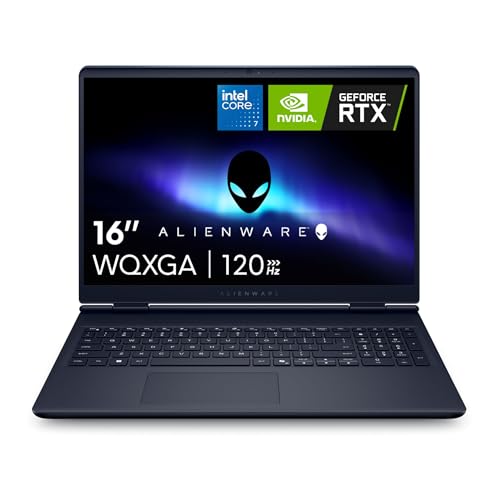
This second Alienware 16 Aurora swaps the RTX 5050 for an RTX 5060, giving you more GPU headroom while keeping the same premium aluminum chassis and Intel Core 7 240H processor. The WQXGA display and 300 nits brightness carry over, so you still get that sharp 2560×1600 resolution. The 5060 chip handles that resolution better than the 5050, making this the more balanced Alienware option for someone who wants both fidelity and frame rate.
Compared to the MSI Katana 15’s RTX 4070, the 5060 here uses newer architecture, which brings improved DLSS performance and power efficiency. Raw rasterization numbers may favor the 4070, but the 5060 closes the gap with better upscaling tech. The anodized aluminum lid still requires regular cleaning to avoid visible smudging. You get the same subtle, professional aesthetic as the 5050 Aurora, just with more graphical muscle.
Plus Points
- RTX 5060 handles WQXGA resolution better than the 5050 variant
- Newer GPU architecture brings improved DLSS and power efficiency
- Premium aluminum chassis suits mixed-use environments
Points To Note
- Aluminum lid shows fingerprints and needs frequent cleaning
- 120Hz refresh is lower than the 165Hz panels on ASUS and MSI picks
Perfect Match For
Upgrade-focused shoppers who want next-gen GPU architecture in a premium, understated chassis.
Where A Sibling Pick Shines
Shoppers prioritizing raw rasterization power over newer architecture should consider the MSI Katana 15 with its RTX 4070.
What Matters Most Before Choosing 4070 Gaming Laptops
GPU Tier And Architecture Generation
The GPU is the heart of any gaming laptop, and the difference between an RTX 4070 and a 5060 is more nuanced than a simple tier number. The 4070 uses the Ada Lovelace architecture, offering strong raw rasterization performance that handles demanding AAA titles at high settings. The 5060 uses a newer architecture with improved DLSS upscaling and better power efficiency, which can translate to smoother frame rates in supported games and longer battery life. Shoppers who play DLSS-supported titles benefit from the newer chip, while those who prioritize brute-force rasterization may prefer the 4070. Check which games you play most and whether they support DLSS before deciding.
Display Resolution Versus Refresh Rate
Panel choice shapes your gaming experience as much as the GPU. A 165Hz FHD+ display keeps motion crisp for competitive shooters, where spotting a fast-moving target matters more than pixel density. A 120Hz WQXGA panel prioritizes image sharpness and color detail, which suits story-driven games and creative work. Pushing WQXGA resolution demands more GPU horsepower, so pairing a lower-tier GPU with a high-res screen can create a bottleneck. Match your display to your gaming habits rather than chasing the highest number on a spec sheet.
Storage Capacity And Expansion
Modern AAA games regularly demand 80GB or more of installation space. A 512GB SSD fills up after installing just a handful of large titles, leaving you constantly uninstalling and reinstalling. A 1TB drive gives you breathing room for a proper library. Most gaming laptops include a second M.2 slot for adding a drive later, but checking compatibility and performing the upgrade yourself adds effort. For most shoppers, starting with 1TB avoids immediate storage anxiety.
Thermal Design And Noise
Gaming laptops generate significant heat under load, and the cooling solution dictates how long the machine can sustain peak performance. Dual-fan systems like MSI’s Cooler Boost 5 or ASUS’s ROG Intelligent Cooling are designed to push heat out fast, but they get loud. Thinner chassis tend to ramp fans earlier and louder than thicker builds. Shoppers who game with headsets will barely notice, but anyone sharing a room or taking calls on the same machine should factor noise into their decision.
Before You Click Buy
Traps First Timers Fall Into
The most common misstep is chasing the highest GPU tier while ignoring the display pairing. An RTX 4070 paired with a low-resolution panel wastes potential, while a weaker GPU driving a WQXGA screen creates a frustrating bottleneck. Another frequent mistake is underestimating storage needs. Starting with 512GB means managing your game library within weeks, especially with modern install sizes. Plan for the storage you will need in a year, not just what fits today.
The Upgrade Payoff
Higher-tier models cost more because they combine better GPUs, faster displays, and premium chassis materials. The jump from an RTX 5050 to a 5060 or 4070 brings tangible frame-rate improvements and longer viability before the machine feels outdated. Premium builds like the Alienware Aurora also add aluminum lids and better thermal designs that extend the laptop’s usable lifespan. For shoppers who game daily or want a machine that stays relevant for several years, spending up pays off in sustained performance and build longevity.
Frequently Asked Questions
Is an RTX 4070 laptop better than an RTX 5060?
The RTX 4070 generally offers stronger raw rasterization, while the RTX 5060 benefits from newer architecture with improved DLSS and power efficiency. Your choice depends on whether you prioritize brute-force frame rates or upscaling-assisted performance.
How much storage do you need on a gaming laptop?
512GB fills up quickly with modern AAA games that often exceed 80GB per install. A 1TB SSD gives you comfortable room for a proper library without constant uninstalling.
Does refresh rate matter for non-competitive gaming?
A 120Hz display is smooth enough for most single-player and story-driven experiences. Competitive shooters benefit more from 165Hz panels because fast camera movements stay visually cleaner.
Are thicker gaming laptops quieter?
Thicker chassis generally allow more airflow, which can mean lower fan speeds under similar loads. Thinner designs tend to ramp fans earlier and louder to manage the same thermal output.
Can you upgrade the SSD on these gaming laptops?
Most gaming laptops include a second M.2 NVMe slot for storage expansion. Check your specific model’s documentation to confirm compatibility before purchasing a second drive.
Bottom Line
Finding the right gaming laptop means matching GPU power to your actual playing habits, not just chasing the biggest number. The MSI Katana 15 delivers the strongest raw graphics performance here, while the ASUS ROG Strix G16 balances speed and features for competitive play. Alienware’s Aurora models trade a little refresh rate for premium aesthetics and display sharpness. Pick the combination of GPU, display, and build that fits your routine, and you will have a machine that stays relevant for years.
