
Choosing a processor for a gaming PC means balancing frame rates, platform costs, multitasking, and upgrade plans. You may be replacing an older chip, building a fresh system, or pairing a new CPU with a graphics card for 1080p or higher-resolution play. This shortlist covers affordable AM4 options, newer AM5 choices, Intel’s hybrid-core design, and gaming-focused 3D V-Cache models. You’ll also see the practical trade-offs around cooling, motherboard compatibility, memory, and installation, so you can match your processor to your actual setup rather than chasing specifications alone.
The Shortlist At A Glance


AMD Ryzen 5 5500 Desktop Processor with Wraith Stealth Cooler

More Details On Our Top Picks
Six performance cores handle demanding game threads, while eight efficiency cores take on background work. That hybrid layout suits a desktop where you game, stream, keep several browser tabs open, and return to productivity tasks without changing hardware.
The unlocked design leaves room for manual tuning, though you’ll need a compatible motherboard and capable cooling approach. Compared with the AM5 Ryzen 7 7700X, this chip gives you broader DDR4 or DDR5 platform flexibility, but the Intel socket and BIOS requirements deserve attention before installation.
Strong Points
- 14 total cores give you useful headroom for gaming alongside streaming or editing.
- Support for both DDR4 and DDR5 can help you reuse existing memory or choose a newer platform.
- PCIe 5.0 and PCIe 4.0 support leaves room for current and later expansion hardware.
- The unlocked multiplier suits enthusiasts who enjoy careful performance tuning.
- The processor’s 125W base power makes a substantial cooler sensible for sustained workloads.
Things To Consider
- The KF designation means you need a separate graphics card for display output.
- Motherboard compatibility can involve a BIOS update on some 600-series boards, so installation planning matters.
Key Specs
Who It Suits Best
You’ll get the most from this processor in a gaming and productivity desktop that needs many cores, flexible memory support, and room for manual tuning.
Where Another Pick Suits Better
AMD Ryzen 5 7600X suits you better for a simpler six-core AM5 build with a clear future upgrade path.
For an existing AM4 desktop, the Ryzen 7 5800X3D offers a focused way to refresh gaming without moving to a new socket. Its 3D V-Cache places extra L3 cache, a fast-access memory pool, close to the processing cores, which can help game workloads that benefit from holding more data nearby.
You get eight cores and 16 threads, plus a 4.5 GHz maximum boost, so everyday multitasking remains comfortable. The catch is platform age: DDR4-3200 and PCIe 4.0 support keep the upgrade practical, but a new build may make more sense with AM5. You’ll also need to plan for a separate cooler.
What We Like
- Large cache capacity is well suited to gaming-focused systems.
- Eight cores and 16 threads handle game play, voice chat, and background applications together.
- Keeping an AM4 motherboard and DDR4 memory can simplify a system refresh.
Worth Noting
- The cooler is not included, adding a separate installation decision.
- New systems lose the newer memory and expansion options available on AM5.
- Older boards may need firmware preparation before the processor is installed.
Feature Snapshot
Made For
You’re the right match for this chip when you already own an AM4 desktop and want a gaming-focused refresh without replacing the core platform.
Consider Something Else When
AMD Ryzen 7 9800X3D is a better fit for you when a new AM5 build and higher-end gaming focus justify the larger platform investment.
Eight cores and 16 threads give the Ryzen 7 8700F a useful middle ground for gaming, recording, and creative software. Its Zen 4 architecture and 5.0 GHz maximum boost point toward a responsive desktop, while DDR5 support places it firmly in newer-system territory.
Compared with the older AM4 Ryzen 7 5800X3D, this option gives you a fresher memory platform and unlocked tuning. You’ll need a discrete graphics card, though, and you may find the total system cost rises once an AM5 board and DDR5 kit join the build.
Highlights
- Eight cores and 16 threads suit gaming beside streaming or content creation.
- Zen 4 architecture provides a modern foundation for an AM5 desktop.
- DDR5 support helps you start with newer system memory.
- Unlocked operation gives experienced users room to tune settings.
Trade Offs
- A separate graphics card is required, so this chip is not suited to display-free basic builds.
- AM5 installation requires a compatible motherboard and DDR5 memory rather than older AM4 parts.
Quick Facts
Right Fit For
You’ll appreciate this processor in a fresh AM5 gaming desktop that also handles recording, editing, or other threaded workloads.
Not Your Match When
AMD Ryzen 5 5500 is a better fit for you when you already plan to use an AM4 board and a separate graphics card on a tighter build.
A six-core, 12-thread layout keeps the Ryzen 5 5500 sensible for an entry-level gaming desktop using a discrete graphics card. The included Wraith Stealth cooler also removes one component from your installation list, which is handy for a first build or a straightforward office-to-gaming conversion.
Its 4.2 GHz maximum boost and DDR4-3200 support fit an established AM4 platform. You may find it less comfortable than the Ryzen 7 7700X for heavy editing or long multitasking sessions, but the simpler thermal setup and unlocked design make this a practical starting point.
Upsides
- Six cores and 12 threads cover mainstream gaming and daily desktop work.
- The bundled Wraith Stealth cooler simplifies parts planning and initial installation.
- DDR4-3200 support works well for an AM4 system built around existing memory.
Room For Improvement
- A discrete graphics card remains necessary for gaming and display output.
- The six-core design gives you less long-term multitasking room than the eight-core options here.
- For sustained heavy workloads, you may prefer a larger cooler than the included unit.
At A Glance
Who Will Love This
You’ll find the Ryzen 5 5500 a sensible match for a first gaming PC using AM4 memory and a discrete graphics card.
Look Elsewhere When
Intel Core i5-14600KF suits you more when streaming, editing, and background applications matter as much as gaming.
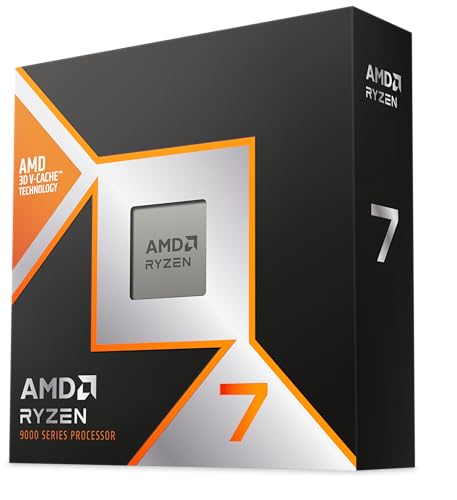
High-refresh-rate gaming puts a premium on consistent CPU capability, and the Ryzen 7 9800X3D targets that exact role with eight cores, 16 threads, and 96MB of L3 cache. Its Zen 5 architecture and 5.2 GHz maximum boost also give you a newer foundation than the Ryzen 7 5800X3D.
The AM5 socket keeps the upgrade path current, while the 3D V-Cache design favors game workloads over sheer core count. You’ll need DDR5 memory, a compatible board, and careful cooler selection, so this processor makes more sense for a fresh performance-focused build than a low-cost replacement.
Bright Spots
- 96MB of L3 cache is tailored toward demanding gaming workloads.
- Zen 5 architecture and up to 5.2 GHz boost support a modern high-refresh-rate system.
- Eight cores and 16 threads remain useful for streaming and everyday creative work.
- Improved thermal behavior compared with the previous generation may help support higher operating speeds.
- AM5 and DDR5 provide a current platform for a new desktop.
Small Caveats
- The platform requirements raise the complexity of a full system build.
- You’ll need to budget space and airflow for a suitable cooling solution.
Core Details
Built With In Mind
You’ll benefit most from this processor in a new AM5 gaming desktop paired with a strong graphics card and a high-refresh display.
Swap It Out When
AMD Ryzen 7 5800X3D suits you better when your existing AM4 system needs a gaming refresh without a complete platform change.
Six cores and 12 threads make the Ryzen 5 7600X a clear starting point for an AM5 gaming desktop. The 5.3 GHz maximum boost is useful for fast game response, while the unlocked design gives you optional tuning later rather than forcing a complex setup on day one.
Compared with the AM4 Ryzen 5 5500, this chip asks you to move to DDR5 and a newer socket, but that change gives your build a more current base. Integrated Radeon graphics are included, though a discrete card remains the sensible route for serious gaming. The honest trade-off is the 105W power rating, which calls for deliberate cooling and airflow planning.
Reasons To Buy
- Up to 5.3 GHz boost gives you strong burst performance for games and everyday software.
- Six cores and 12 threads keep the build balanced without requiring an eight-core chip.
- Socket AM5 and DDR5 create a newer foundation for later upgrades.
- Unlocked operation appeals to enthusiasts who want manual control.
Points To Note
- AM5 means your older AM4 motherboard and DDR4 memory cannot carry over.
- The 105W rating makes a suitable cooler and good case airflow important during long sessions.
Technical Sheet
The Right Fit
You’re well matched with the Ryzen 5 7600X for a first AM5 gaming build that values speed, tuning control, and future platform flexibility.
A Better Fit Elsewhere
AMD Ryzen 7 7700X suits you more when you regularly stream, edit, or run several demanding applications beside your games.
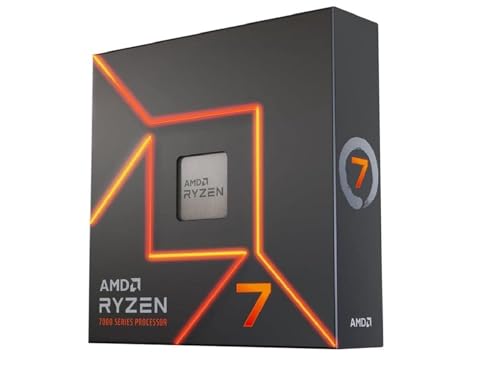
For gaming that shares time with streaming, editing, or frequent multitasking, eight cores and 16 threads give the Ryzen 7 7700X comfortable room to work. Its Zen 4 design reaches up to 5.4 GHz, and the AM5 socket pairs it with DDR5 memory for a current desktop foundation.
Compared with the six-core Ryzen 5 7600X, this option adds processing capacity without moving into the specialized 3D V-Cache category. You’ll still need a cooler for the 105W chip, and you may find the 9800X3D more compelling for a display built around very high refresh rates rather than mixed use.
Best Bits
- Eight cores and 16 threads suit gaming, streaming, and content creation together.
- Up to 5.4 GHz boost supports responsive everyday desktop use.
- AM5 and DDR5 give you a current platform for future component changes.
- Integrated Radeon graphics can help with basic display setup and troubleshooting.
- Unlocked operation leaves tuning available for experienced users.
Honest Caveats
- The 105W rating calls for deliberate cooler selection rather than an undersized solution.
- Moving from AM4 requires a new motherboard and DDR5 memory.
- Gaming-only systems may not need the extra cores compared with the Ryzen 5 7600X.
Feature Rundown
Whose Shelf It Belongs On
You’ll find the Ryzen 7 7700X a strong match for an AM5 desktop used for gaming, streaming, editing, and general multitasking.
Another Choice May Suit
AMD Ryzen 5 7600X is a better fit for you when gaming is the main task and you want a leaner six-core AM5 build.
How To Choose The Right Mid Range Gaming Processors
Start With Your Current Platform
Your motherboard determines the easiest path. AM4 chips such as the Ryzen 5 5500 and Ryzen 7 5800X3D use DDR4-era systems, while the Ryzen 5 7600X, Ryzen 7 7700X, Ryzen 7 8700F, and Ryzen 7 9800X3D require the newer AM5 direction and DDR5 memory.
That distinction affects the whole build, not just the processor. An AM4 upgrade can preserve your board and memory, while AM5 may cost more to assemble but gives you a newer base for later component changes.
Match Cores To Your Routine
Six cores and 12 threads remain a sensible target for gaming, especially with a capable graphics card. You benefit from eight cores and 16 threads when your PC also handles streaming, video work, large projects, or heavy background multitasking.
Intel’s i5-14600KF takes a different approach with performance and efficiency cores. That hybrid design can suit you when gaming shares the desktop with many open applications, but the missing processor graphics means a separate graphics card is essential.
Understand Cache And Clock Speed
Clock speed describes how quickly cores can cycle through instructions, while cache is fast on-chip storage that keeps frequently needed data close to those cores. A higher boost figure can help short tasks feel responsive, but gaming performance also depends on the game engine, graphics card, memory, and resolution.
The Ryzen 7 5800X3D and Ryzen 7 9800X3D use 3D V-Cache as a gaming-focused feature. You gain a large cache pool, though those models make less sense when you mainly run general applications that don’t benefit from that design.
Plan Cooling And Installation
A processor’s power rating helps you choose a cooler and case airflow strategy. The Ryzen 5 5500 includes a Wraith Stealth cooler, which simplifies a basic build, while the other listed processors require more cooling planning.
Check the motherboard socket, firmware support, memory type, and graphics requirements before opening the box. You’ll avoid a frustrating installation by confirming those four details first, especially with older boards receiving newer processors.
Things Worth Knowing First
Mistakes Worth Dodging
You can overspend on cores that your graphics card or monitor won’t meaningfully use. A six-core Ryzen 5 7600X may serve a gaming-first desktop better than an eight-core choice when streaming and editing aren’t part of your routine.
Platform mismatch causes another common headache. Confirm AM4 versus AM5, DDR4 versus DDR5, cooler support, and discrete graphics requirements before you choose a processor.
Where The Extra Money Goes
Higher-tier chips often combine newer architecture, larger cache, more cores, or stronger boost targets. The Ryzen 7 9800X3D, for example, adds Zen 5 and 96MB of L3 cache for a gaming-focused AM5 build.
That upgrade makes more sense for high-refresh gaming, frequent content creation, or a system you plan to keep for several hardware cycles. You’ll see less value from it in a basic 1080p desktop where the graphics card remains the limiting component.
Final Verdict
You can choose a sensible mid-range processor by matching the socket, memory, cooling, and core count to your existing parts and daily routine. The Ryzen 5 5500 keeps an AM4 build straightforward, while the Ryzen 5 7600X opens a newer AM5 path. For mixed workloads, the Ryzen 7 7700X and Intel Core i5-14600KF offer useful headroom, while the 3D V-Cache models target gaming-first systems. Take your time with compatibility checks, and let your actual games and applications guide the final choice.
