
Choosing a processor means matching core count, platform, memory, and workload rather than chasing a single impressive number. You need a different kind of chip for a gaming tower, a creator workstation, or a practical home upgrade. This shortlist covers current high-end options alongside AM4 models that can extend an existing build without replacing every component. You’ll also see where each processor makes sense, what installation details deserve attention, and which alternative better suits your setup.
Your Shortlist At A Glance

Intel Core Ultra 9 Processor 285K

AMD Ryzen 5 5500 6-Core, 12-Thread
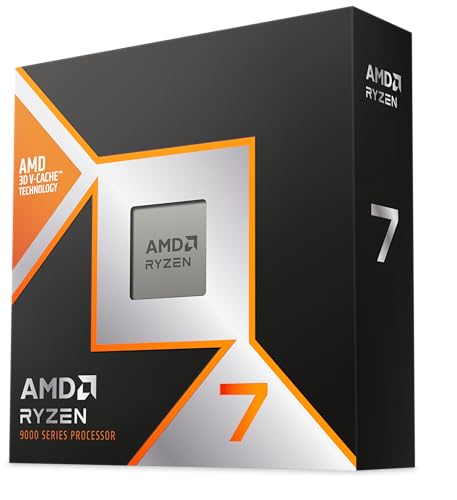
AMD Ryzen 7 9800X3D 8-Core, 16-Thread

AMD Ryzen 5 9600X 6-Core, 12-Thread

AMD Ryzen 7 5800XT 8-Core, 16-Thread

AMD Ryzen 7 7800X3D 8-Core, 16-Thread

AMD Ryzen 9 9900X 12-Core, 24-Thread
More Details On Your Top Picks
For demanding gaming, rendering, and heavy multitasking, the 285K takes a workstation-minded approach. Its hybrid layout combines eight performance cores with 16 efficiency cores, so you have substantial parallel capacity without relying on a single core type for every task.
PCIe 5.0 and DDR5 support suit a new enthusiast build, while compatibility with Intel 800 Series chipset motherboards sets a clear platform requirement. You may find the 125W base power calls for thoughtful cooling and case airflow, but serious creators gain useful room for sustained workloads.
Strong Points
- Twenty-four total cores give you strong multitasking capacity for editing, compiling, and streaming.
- Up to 5.7 GHz boost speed helps responsive gaming and lightly threaded work.
- DDR5 and PCIe 5.0 support leave room for newer memory and expansion hardware.
- An unlocked design suits enthusiasts who want manual tuning.
- The platform makes sense for a fresh, high-end desktop rather than a small upgrade.
Things To Consider
- You need an Intel 800 Series motherboard, DDR5 memory, and a cooling plan that matches the chip’s power profile.
- Installation and firmware preparation may feel excessive for a basic office computer.
Key Specs
Who It Suits Best
You’ll get the most from this processor in a new enthusiast desktop for gaming, content production, and demanding multitasking.
Where Another Pick Suits Better
AMD Ryzen 9 9900X suits you better for a modern AMD AM5 workstation with 12 cores and 24 threads.
A six-core, 12-thread layout gives you a sensible starting point for a gaming desktop, school computer, or general home system. The included Wraith Stealth cooler simplifies a first build, especially for someone assembling a complete machine rather than selecting every cooling part separately.
The AM4 socket and DDR4-3200 support make this chip a natural match for an existing affordable platform. You need a separate graphics card for gaming, and the older memory standard limits long-term platform expansion, yet the straightforward installation remains appealing for practical builds.
What We Like
- Six cores and 12 threads handle everyday software, gaming, and light creation comfortably.
- The bundled cooler reduces the number of parts you need to source.
- Unlocked operation gives experienced builders room for manual tuning.
Worth Noting
- You must add a discrete graphics card for gaming, which affects the complete system plan.
- AM4 and DDR4 place this option behind newer platforms for future upgrades.
- Dust buildup around the stock cooler can make routine cleaning worthwhile in a busy room.
At A Glance
Made For
You’ll appreciate this processor in an entry-level gaming desktop or affordable AM4 replacement that already includes a separate graphics card.
Consider Something Else When
AMD Ryzen 5 9600X is a better fit for your new build when you want the AM5 platform and DDR5 memory support.
Gaming-focused desktops benefit from the 9800X3D’s eight cores, 16 threads, and large 96MB L3 cache. L3 cache is fast on-chip memory that can keep frequently needed game data close to the processor, which is especially useful in CPU-sensitive titles.
Compared with AMD Ryzen 7 7800X3D, this newer Zen 5 design aims at higher clock speeds and improved thermal behavior. You may find the specialized gaming focus less valuable for a workstation dominated by rendering or long production jobs, but dedicated gamers get a clear reason to choose it.
Highlights
- Eight cores and 16 threads give you a strong base for modern games and streaming.
- The 96MB L3 cache is well suited to game workloads that benefit from nearby data.
- Up to 5.2 GHz provides substantial headroom for responsive play.
- The AM5 platform supports a newer memory and motherboard ecosystem.
Trade Offs
- A gaming-specialized design may not be the most sensible use of your budget for heavy rendering.
- You need to plan cooling and motherboard compatibility before installation.
Technical Sheet
Right Fit For
You’re the right match for this processor when gaming is the main purpose of a new AM5 desktop and streaming is part of the routine.
Not Your Match When
Intel Core Ultra 9 Processor 285K fits you better for broad creation workloads that need a much larger mixed-core layout.
New AM5 builds often need a processor that stays sensible rather than reaching for workstation counts. The Ryzen 5 9600X gives you six cores, 12 threads, Zen 5 architecture, and a boost ceiling of 5.4 GHz, a combination that suits gaming and everyday creative work.
DDR5-5600 support helps keep the surrounding platform current, while an unlocked design appeals to hands-on enthusiasts. One thing worth considering is the added planning around motherboard firmware, memory, and cooling, especially compared with the simpler AM4 route offered by the Ryzen 5 5500.
Upsides
- Six cores and 12 threads cover gaming, office work, and moderate content creation.
- Up to 5.4 GHz gives you a responsive feel in lightly threaded tasks.
- DDR5-5600 support suits a fresh system with current-generation memory.
- Unlocked operation leaves room for manual performance tuning.
Room For Improvement
- The AM5 platform requires a new motherboard and DDR5 memory for a full build.
- Manual tuning adds setup complexity and makes cooling selection more important.
- You may prefer more cores for frequent video exports or code compilation.
Feature Snapshot
Who Will Love This
You’ll find the 9600X appealing for a new AM5 gaming desktop that also handles schoolwork, office software, and occasional creative projects.
Reach For A Different Pick When
AMD Ryzen 7 9800X3D suits you more when your desktop is built primarily around demanding games.
Keeping an AM4 desktop alive can be more practical than replacing the motherboard, memory, and processor together. The Ryzen 7 5800XT gives that older platform eight cores and 16 threads, plus a 4.8 GHz maximum boost for gaming and general creation.
DDR4-3200 and PCIe 4.0 support keep the surrounding hardware familiar, while the included Wraith Prism cooler adds visual flair through RGB lighting. You may find this route especially attractive for an established system, though a fresh build gets a longer upgrade path from the Ryzen 5 9600X and its AM5 platform.
Bright Spots
- Eight cores and 16 threads provide useful headroom for gaming, streaming, and multitasking.
- You can reuse an AM4 motherboard and DDR4 memory when compatibility lines up.
- The bundled Wraith Prism cooler simplifies parts planning and adds adjustable RGB lighting.
- PCIe 4.0 support works naturally with a wide range of existing expansion hardware.
- Unlocked operation gives you an enthusiast-oriented tuning option.
Points To Note
- AM4 limits your access to newer DDR5-based platform upgrades.
- Confirm motherboard support and firmware before removing your existing processor.
Quick Facts
Built With In Mind
You’ll benefit most as an AM4 desktop owner seeking more core capacity without moving to a new memory and motherboard platform.
Swap It Out When
AMD Ryzen 5 9600X is the better route for your new build and gives you a current AM5 foundation.
The 7800X3D stays focused on gaming with eight cores, 16 threads, and a large cache design. That makes it a compelling center for a dedicated gaming tower, especially alongside a capable graphics card and a fast display.
Compared with the Ryzen 7 9800X3D, this older AM5 option may appeal to you when the surrounding platform and gaming priorities matter more than moving to the newest architecture. Its listed 2,200 MHz graphics frequency and 89°C maximum operating temperature add useful planning details, although the processor still needs a suitable cooling setup.
Plus Points
- Eight cores and 16 threads support gaming with streaming or background applications.
- The built-in large-cache approach is tailored to game workloads.
- AM5 compatibility gives you access to DDR5-based system builds.
- The 5 nm manufacturing process supports a compact modern desktop design.
Minor Gripes
- The gaming-first design may not justify its place in a workstation centered on rendering.
- You need careful cooler and motherboard planning during installation.
- Owners of an AM4 system face a complete platform change rather than a direct drop-in upgrade.
Feature Rundown
Whose Shelf It Belongs On
You’re a strong match for this chip with a dedicated AM5 gaming system and little need for heavy workstation throughput.
Another Choice May Suit
AMD Ryzen 7 9800X3D is a stronger fit for your new gaming build when you want the newer eight-core X3D design.
Choose the Ryzen 9 9900X for a desktop that needs to game, stream, edit, and keep several demanding applications open. Its 12 cores and 24 threads offer more parallel capacity than the Ryzen 5 9600X, while the Zen 5 architecture and up to 5.6 GHz boost keep single-task response strong.
The 76MB cache and DDR5-5600 support reinforce its modern AM5 positioning. You may find the extra cores unnecessary for a graphics-card-led gaming system, but the broader workload range makes this a sensible middle ground between a gaming specialist and the larger hybrid layout of Intel Core Ultra 9 Processor 285K.
Best Bits
- Twelve cores and 24 threads give you useful headroom for production and multitasking.
- Up to 5.6 GHz supports quick response during gaming and everyday interaction.
- The 76MB cache supports workloads that benefit from readily available local data.
- DDR5-5600 support fits a current AM5 desktop build.
Small Caveats
- You’ll need an AM5 motherboard and DDR5 memory, so it isn’t a simple AM4 refresh.
- Cooling, firmware, and case airflow deserve attention during installation and long sessions.
- For gaming alone, the Ryzen 7 9800X3D may align more closely with your priorities.
Core Details
Who Should Grab It
You’ll benefit most as a creator, streamer, or multitasking enthusiast building a new AM5 desktop for mixed workloads.
Look Elsewhere When
AMD Ryzen 5 5500 fits you better for a straightforward AM4 gaming or home computer with a separate graphics card.
How To Choose The Right Pc Processors
Match Cores To Your Workload
Core count describes how many independent processing units you have, while threads represent the work paths those cores can handle. Six cores and 12 threads fit gaming, office work, and light creation, whereas 12 cores and 24 threads make more sense for editing, rendering, compiling, or frequent multitasking.
Gaming alone doesn’t always reward the highest count. A cache-focused model such as the Ryzen 7 9800X3D may suit you more than a broader workstation chip when your main routine involves game performance and streaming.
Check The Platform Before The Chip
Your motherboard socket, chipset, and memory type must match the processor. AM4 models such as the Ryzen 5 5500 and Ryzen 7 5800XT use DDR4-oriented systems, while the AM5 choices here use newer DDR5 platforms. Intel Core Ultra 9 Processor 285K requires an Intel 800 Series chipset motherboard.
That distinction changes the complete upgrade cost and installation workload. An existing AM4 desktop points toward the 5800XT, while a fresh build gives you more freedom to choose AM5 or Intel 800 Series hardware.
Plan Cooling, Power, And Expansion
Processor base power helps you think about cooling and airflow, but your complete system also includes the graphics card, storage, memory, and motherboard. The 285K lists 125W base power, so you’ll want a case and cooler selected with sustained workloads in mind.
PCIe support determines how your processor communicates with expansion hardware. PCIe 5.0 offers a newer connection standard, while PCIe 4.0 remains useful for many current graphics and storage devices. Match the feature to your planned hardware rather than paying for capacity you won’t use.
Keep Your Upgrade Horizon Realistic
A lower-cost AM4 refresh can be sensible for a system you already own. Starting from scratch, the AM5 processors offer a newer foundation, but the motherboard and DDR5 requirements add to the build plan. For long-term flexibility, prioritize the platform that leaves you comfortable with your next upgrade rather than focusing only on today’s frame rates.
What To Weigh Before You Buy
Mistakes Worth Dodging
A common mistake is choosing the processor first and checking the motherboard later. Confirm the socket, chipset, firmware support, memory generation, and cooler arrangement before you commit to the rest of the system.
You’ll also want to budget for a discrete graphics card with the Ryzen 5 5500, then account for cooling, memory, storage, and airflow. A processor’s core count cannot compensate for an unbalanced complete build.
Where The Extra Money Goes
Higher-tier models generally give you more cores, larger cache capacity, newer platform support, or stronger boost behavior. Those gains matter most during rendering, compiling, streaming, and other workloads that keep several processing paths busy.
Gaming-focused chips direct more of their design toward cache and game responsiveness. Paying more makes sense for you when the workload regularly benefits from that specific advantage, not when your desktop mainly handles browsing, office software, and occasional play.
Final Verdict
Your best match depends on the computer you’re building, not a universal ranking. Choose AMD Ryzen 5 5500 or Ryzen 7 5800XT for an AM4 refresh, Ryzen 5 9600X for a balanced AM5 system, and Ryzen 7 9800X3D or 7800X3D for gaming-focused builds. AMD Ryzen 9 9900X suits mixed creation and play, while Intel Core Ultra 9 Processor 285K gives demanding enthusiasts a high-capacity hybrid design. Check platform compatibility first, then select the core count and cache profile that fit your daily work.
