
You need a processor that keeps 1080p gaming responsive without forcing an unnecessary platform rebuild. Your choice becomes more complicated once you weigh frame pacing, motherboard compatibility, memory type, cooling, and the kind of games you play after work or during a long weekend session. This roundup covers affordable six-core options, gaming-focused chips with 3D V-Cache, and higher-tier models for streaming or creative workloads. You’ll also find practical trade-offs for installation, cooling, upgrades, and long-term fit.
The Shortlist At A Glance




More Details On Our Top Picks
AM4 owners wanting more gaming life from an existing system have a clear reason to consider the Ryzen 7 5800X3D. Its 3D V-Cache design places extra L3 cache, a fast-access memory pool, close to the processor cores, which can help game data stay readily available during play.
Eight cores and 16 threads suit gaming alongside voice chat, recording, or background apps. The honest catch is platform age: you need a compatible AM4 motherboard and DDR4 memory, while a separate high-performance cooler is expected. You may find that combination appealing for a focused upgrade, rather than a new build.
Strong Points
- Large 96MB L3 cache is tailored to demanding game workloads.
- Eight cores and 16 threads leave room for streaming and multitasking.
- DDR4-3200 support can help existing AM4 systems avoid a full memory change.
- PCIe 4.0 support on compatible X570 and B550 boards suits modern graphics cards and storage.
- The 4.5 GHz maximum boost specification supports quick game and application response.
Things To Consider
- A separate cooler adds installation work and should be matched to the processor’s heat output.
- AM4 and DDR4 limit the forward upgrade path compared with newer platforms.
Key Specs
Who It Suits Best
You’ll get the most value from this chip as an AM4 owner seeking smoother 1080p gaming without replacing your board and memory.
Consider Something Else When
Choose the AMD Ryzen 5 9600X for a new AM5 build and a longer platform path.
Ten cores give the Core i9-10850K a useful multitasking angle for a desktop that handles games, recording, browser tabs, and editing sessions. Its 3.6 GHz base speed and LGA1200 socket point toward an older Intel platform, so compatibility deserves attention before installation.
Compared with the cache-focused Ryzen 7 5800X3D, this Intel option leans more toward broad threaded work than a specialized gaming design. You may find it sensible for an existing compatible system, particularly with a suitable cooler already in hand, but a new build needs older platform hardware.
What We Like
- Ten cores offer useful capacity for simultaneous gaming and production tasks.
- The 3.6 GHz base frequency provides a defined starting point for everyday workloads.
- The LGA1200 format can suit a compatible upgrade path without changing every internal part.
Worth Noting
- The pre-owned format makes condition and included accessories worth checking on the listing.
- Older socket and platform support reduce flexibility for future upgrades.
- A compatible cooling solution is an important installation requirement.
At A Glance
Made For
You’re a strong match for this option when you already own an LGA1200 desktop and want extra cores for gaming beside heavier desktop work.
Not Your Match When
The AMD Ryzen 7 7800X3D suits high-refresh gaming systems built around a newer AM5 platform.
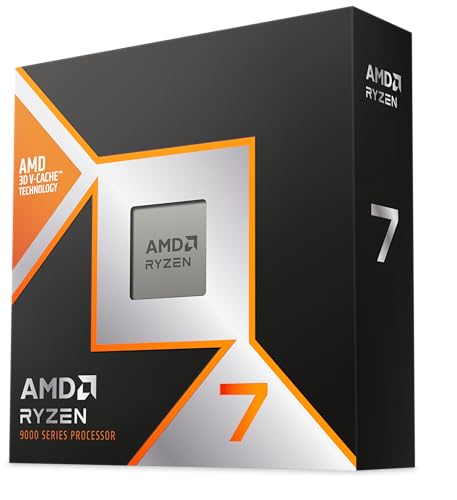
For a new gaming desktop where high frame rates matter, the Ryzen 7 9800X3D brings eight cores, 16 threads, and AMD’s newer Zen 5 architecture together with 3D V-Cache. Cache acts like a nearby holding area for frequently needed game data, reducing the distance between the processor and useful instructions.
The 5.2 GHz maximum boost and 96MB L3 cache give this model considerable headroom for competitive games, high-refresh monitors, and streaming. Compared with the Ryzen 7 7800X3D, it represents a newer design, though you’ll need an AM5 board, DDR5 memory, and a carefully planned cooling setup. For most 1080p systems, that can be more capability than your graphics card needs.
Highlights
- Eight cores and 16 threads support gaming, streaming, and creative workloads.
- Zen 5 architecture gives this chip a current-generation foundation.
- 96MB of L3 cache is well suited to cache-sensitive game engines.
- Up to 5.2 GHz boost supports strong responsiveness in lightly threaded tasks.
- Improved thermal behavior compared with the prior generation may help higher clock operation.
Trade Offs
- AM5, DDR5, and cooling costs can make the complete platform substantially more involved.
- You may see less benefit in a standard 1080p build paired with a modest graphics card.
Technical Sheet
Right Fit For
You’ll appreciate this model most in an enthusiast AM5 desktop driving a high-refresh 1080p display while streaming or recording.
Look Elsewhere When
The AMD Ryzen 5 5500 makes more sense for a first build where the included cooler and AM4 parts keep installation straightforward.
A first gaming build benefits from fewer parts to source, and the Ryzen 5 5500 includes AMD’s Wraith Stealth cooler. Six cores and 12 threads give you a practical base for 1080p gaming with a discrete graphics card, meaning a separate video card is required for game rendering.
The 4.2 GHz maximum boost and unlocked design leave room for tuning, although manual overclocking adds heat and setup work. Compared with the Ryzen 5 7600X, this chip uses the older AM4 and DDR4 ecosystem, but its bundled cooler can simplify a modest desktop. The honest read is straightforward: it’s a sensible starting point, not a long-range enthusiast platform.
Upsides
- Six cores and 12 threads cover everyday gaming and general desktop use.
- The included Wraith Stealth cooler reduces the number of separate installation parts.
- DDR4-3200 support fits many established AM4 memory kits.
- Unlocked operation gives experienced users a tuning option.
Room For Improvement
- A discrete graphics card is required, so the processor cannot serve as a complete graphics solution.
- The AM4 platform offers less upgrade flexibility than newer AM5 choices.
- Overclocking can increase cooling demands and maintenance attention.
Quick Facts
Best Suited To
You’ll find the Ryzen 5 5500 most useful for an entry-level 1080p desktop using an existing or affordable AM4 motherboard.
A Better Fit Elsewhere
The AMD Ryzen 5 9600X better serves you when a new AM5 build and DDR5 memory are already part of the plan.
Six cores and 12 threads make the Ryzen 5 9600X a clean fit for a new gaming system that also handles schoolwork, editing, and everyday multitasking. Its Zen 5 architecture, 5.4 GHz maximum boost, and 38MB cache give you a modern foundation without moving into the eight-core tier.
DDR5-5600 and AM5 support matter more than the headline speed for long-term planning, since both place this chip on a newer motherboard platform than the Ryzen 5 5500. You’ll need to supply a cooler, and the motherboard must support the AM5 socket. For a fresh build, that balance may be easier to justify than spending more on a cache-heavy eight-core part.
Reasons To Buy
- Zen 5 cores provide a current platform base for gaming and desktop work.
- Up to 5.4 GHz boost supports quick response in lightly threaded applications.
- Six cores and 12 threads suit 1080p gaming, streaming, and general multitasking.
- DDR5-5600 support pairs with newer AM5 memory configurations.
- Unlocked operation gives you manual tuning flexibility.
Points To Note
- A separate cooler is needed, adding planning to installation.
- AM5 and DDR5 require more new components than an AM4 upgrade.
Feature Snapshot
Who Will Love This
You’re well matched with this processor for a new AM5 1080p gaming desktop that needs strong everyday responsiveness without eight cores.
Swap It Out When
The AMD Ryzen 7 9800X3D suits you better for high-refresh competitive gaming combined with heavier streaming or creation work.
The Ryzen 5 7600X gives you six cores, 12 threads, and a 4.7 GHz base frequency in the AM5 family. That makes it a useful middle ground for 1080p gaming, especially with a graphics card that benefits from consistent CPU attention during high-refresh play.
Its 5.3 GHz overclocking speed and unlocked design appeal to enthusiasts, while integrated Radeon graphics can help with basic display output during setup or troubleshooting. You may find the 105 W rating worth considering for cooler selection and case airflow. Compared with the newer Ryzen 5 9600X, this is the earlier AM5 route, often attractive when the surrounding platform parts already line up.
Bright Spots
- Six cores and 12 threads provide a capable gaming and desktop baseline.
- AM5 support gives you access to a current motherboard and memory ecosystem.
- Up to 5.3 GHz overclocking speed suits hands-on tuning.
Small Caveats
- The 105 W rating calls for deliberate cooler and airflow planning.
- Manual tuning requires extra setup and monitoring rather than a plug-in approach.
- Its older Zen 4 design may be less appealing beside newer AM5 choices.
- A separate cooler adds to the installation list.
Feature Rundown
The Right Fit
You’ll suit this model best as a hands-on PC builder creating an AM5 gaming desktop with a capable cooler and strong case airflow.
Another Choice May Suit
The AMD Ryzen 5 5500 is a better match for you when an AM4 board, DDR4 memory, and included cooler simplify the build.
High-refresh 1080p gaming places unusual emphasis on steady processor output, and the Ryzen 7 7800X3D answers with eight cores, 16 threads, and a large gaming-oriented cache design. Its Zen 4 architecture and 5 nm process give you a strong AM5 foundation for a desktop built around a discrete graphics card.
Compared with the Ryzen 5 7600X, the extra cores and cache create more breathing room for streaming, browser tabs, and background software. The catch is platform planning: you need AM5 hardware, DDR5 memory, and a separate cooler. For most 1080p systems, you may only see the full benefit with a fast graphics card and a monitor that can display high frame rates.
Best Bits
- Eight cores and 16 threads suit gaming beside streaming or recording.
- Large built-in cache is designed around demanding game workloads.
- Zen 4 and 5 nm construction provide a modern AM5 platform base.
- The 2200 MHz graphics frequency specification can assist basic display output.
- An 89°C maximum operating temperature specification helps guide cooling planning.
Areas To Watch
- AM5 and DDR5 raise the surrounding build requirements over AM4 choices.
- A separate cooler is needed, so installation takes more planning.
Core Details
Whose Shelf It Belongs On
You’ll benefit most from this processor in an AM5 gaming desktop with a high-refresh 1080p monitor and a strong discrete graphics card.
Where A Sibling Pick Shines
The AMD Ryzen 5 9600X suits you better for a newer six-core AM5 build focused on balanced gaming and everyday work.
How To Choose The Right Processors For 1080p Gaming
Match CPU Strength To Your Graphics Card
At 1080p, your graphics card often finishes frames quickly enough that the processor becomes more visible, especially with a high-refresh monitor. Six cores and 12 threads remain a sensible starting point for gaming, chat, browsers, and ordinary background software. Eight cores and 16 threads make more sense for streaming, recording, simulation games, or heavy multitasking.
A powerful processor won’t automatically make every game faster. Your graphics card, game engine, monitor refresh rate, and settings still shape the result, so match the chip to the complete system rather than focusing on the CPU alone.
Understand Cache, Cores, And Boost Speed
L3 cache is a fast memory area built into the processor. Gaming-focused chips with larger cache pools can suit titles that repeatedly access the same data, while additional cores help more with streaming, editing, and multitasking.
Boost speed describes the higher frequency a processor can reach under suitable conditions. It can help short workloads feel quick, but cooling, motherboard settings, and the application itself affect how often the chip reaches that level.
Check Socket And Memory Beforehand
AM4 processors, such as the Ryzen 5 5500 and Ryzen 7 5800X3D, use DDR4 memory and require a compatible AM4 motherboard. AM5 choices, including the Ryzen 5 9600X, Ryzen 5 7600X, and Ryzen 7 7800X3D, use DDR5 memory and need an AM5 board.
Intel’s Core i9-10850K uses the FCLGA1200 socket. A socket mismatch prevents installation, so confirm your motherboard model, BIOS support, memory type, and cooler mounting hardware before choosing a processor.
Plan Cooling And the Complete Build
A processor that ships without a cooler adds another part to your list. Check cooler compatibility, case clearance, airflow, and the processor’s stated thermal requirements before assembly.
The included Wraith Stealth cooler makes the Ryzen 5 5500 easier to plan, while higher-output or unlocked models deserve more deliberate cooling choices. You’ll also need a discrete graphics card for the Ryzen 5 5500, so include that requirement in the complete system plan.
Things Worth Knowing First
Mistakes Worth Dodging
Choosing a processor before checking your motherboard can leave you with incompatible parts. AM4, AM5, and FCLGA1200 are separate platforms, and DDR4 memory doesn’t transfer directly into a DDR5 build.
You can also overspend on CPU capability while pairing it with a modest graphics card or standard-refresh display. Put more weight on your actual games, monitor, graphics card, and multitasking habits.
Where The Extra Money Goes
Higher-tier processors generally give you more cores, larger cache, newer architecture, or greater boost headroom. Those traits matter most for high-refresh gaming, streaming, content creation, and long desktop workloads.
A cache-focused eight-core model can justify the upgrade for demanding games and background tasks. A six-core chip remains a more sensible fit for straightforward 1080p play, especially when your graphics card is the limiting part.
Final Verdict
Your best match depends on the platform already in your case and the graphics card driving your monitor. Choose the Ryzen 5 5500 for a straightforward AM4 starting point, the Ryzen 7 5800X3D for an AM4 gaming upgrade, or the Ryzen 5 9600X for a fresh AM5 system. High-refresh enthusiasts can step up to the Ryzen 7 7800X3D or Ryzen 7 9800X3D, while the Core i9-10850K remains relevant for compatible older Intel desktops. Choose the processor that fits your whole build, not just your frame-rate target.
