
Running a Minecraft server smoothly comes down to how well your hardware handles single-threaded tick processing. Minecraft’s game loop runs on one main thread, which means raw clock speed matters more than core count for keeping dozens of players lag-free. You might be hosting a private world for friends or managing a public server with plugins and mods. Either way, the wrong processor turns a vibrant community into a stuttering mess. This roundup covers six options spanning budget micro PCs to enthusiast-grade desktop chips, so you can match your hardware to your exact player count and mod load.
The Shortlist At A Glance

Dell OptiPlex 7050 Micro i5-6500T 16GB 256GB SSD (Renewed)

Intel Core Ultra 7 270K Plus 24-Core up to 5.5GHz
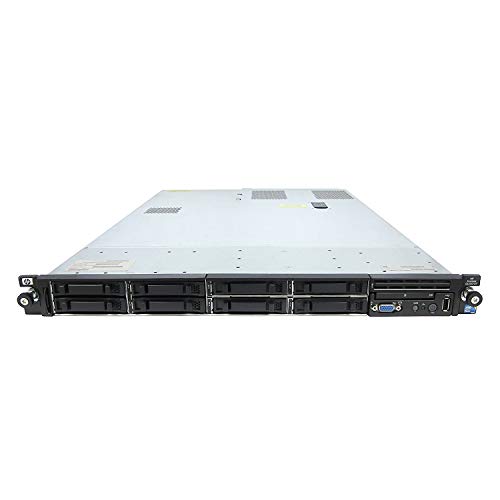
HP ProLiant DL360 G7 1U RackMount Dual X5650 Server (Renewed)
GMKtec K16 Mini PC Ryzen 7 7735HS 32GB LPDDR5

GMKtec K11 Mini Gaming PC Ryzen 9 8945HS 32GB DDR5

GMKtec M6 Ultra Mini PC Ryzen 5 7640HS 16GB DDR5 1TB SSD
More Details On Our Top Picks
Hosting a small private world for a handful of friends does not require a rack-mount beast. The OptiPlex 7050 Micro packs an Intel i5-6500T with four cores that boost to 3.1GHz, which is enough clock speed for a vanilla server handling a modest player count. The 16GB of DDR4 memory gives breathing room for the operating system and Java runtime alongside the server process. Its micro chassis slides behind a monitor or onto a shelf, drawing minimal power around the clock.
Renewed status means someone else took the depreciation hit. The 256GB SSD stores your world files and backups without mechanical disk latency. For a five-to-ten person vanilla server, this box gets the job done quietly and efficiently.
Strong Points
- Virtually silent operation suits a bedroom or office corner
- 16GB DDR4 provides enough headroom for a small server OS plus Java heap
- Tiny footprint lets you tuck it anywhere without a dedicated closet
- Windows 11 Pro arrives pre-installed, saving setup time
Things To Consider
- The i5-6500T is a 6th-generation chip, so single-thread performance trails modern Ryzen options by a wide margin
- 256GB of storage fills up fast with automated backups and large world saves
- Renewed units may show cosmetic wear and ship in generic packaging
Key Specs
Who It Suits Best
Someone hosting a private vanilla world for fewer than ten players who wants a plug-and-play, low-power solution.
Where Another Pick Suits Better
Running heavy modpacks or pushing past fifteen players, the GMKtec K16 with its Ryzen 7 7735HS delivers substantially better single-thread throughput.
Stepping up from a pre-built mini PC to a dedicated desktop chip changes the math entirely. The Intel Core Ultra 7 270K Plus combines eight performance cores with sixteen efficient cores, hitting 5.5GHz on the P-cores. Minecraft’s main game loop lives on a single thread, so that 5.5GHz ceiling directly translates to faster tick processing and fewer player complaints about block lag. The E-cores handle background tasks, garbage collection, and operating system overhead without stealing cycles from the game thread.
This is a bare processor, not a complete system. You will need a compatible Intel 800 Series chipset motherboard, DDR5 memory, and cooling. The 125W base power rating means a substantial cooler and a capable power supply belong on your shopping list.
Highlights
- 5.5GHz boost on P-cores delivers exceptional single-thread speed for tick processing
- 24 total cores let you run multiple server instances or virtual machines simultaneously
- PCIe 5.0 support future-proofs the platform for fast NVMe storage
- DDR5 memory compatibility keeps bandwidth high for chunk loading
Trade Offs
- Requires a full custom build with an 800 Series motherboard, cooler, case, and power supply
- 125W base power draws significantly more electricity than any mini PC on this list
- Building a system around this chip pushes total cost well beyond the processor alone
Right Fit For
Enthusiasts building a dedicated hosting rig for a large public server or multiple simultaneous worlds who want maximum single-thread headroom.
Look Elsewhere When
You want a plug-and-play solution without assembling a custom PC, the GMKtec K11 provides a capable Ryzen 9 platform in a ready-to-run chassis.
Enterprise hardware takes a different approach to hosting. The HP ProLiant DL360 G7 stuffs two six-core Xeon X5650 processors into a 1U rack-mount chassis, giving you twelve cores at 2.66GHz. That clock speed is modest by modern standards, but the sheer core count suits a hosting environment running multiple Minecraft instances, a database, and a web panel simultaneously. The 32GB of ECC registered RAM and eight 146GB SAS drives in a RAID configuration provide redundancy for world data.
Dual power supplies mean one can fail without taking your server offline. The trade-off is noise and power consumption; rack servers sound like hair dryers and draw significant wattage even at idle. This belongs in a garage or basement, not a living space.
Plus Points
- Dual CPUs provide twelve cores for running multiple server instances or containers
- Dual power supplies offer redundancy for uptime-critical hosting
- P410i RAID controller with eight SAS drives protects world data against disk failure
- Four gigabit NICs support network segmentation or high-bandwidth player traffic
Worth Noting
- 2.66GHz clock speed limits single-thread performance for large single-server populations
- 1U rack servers generate substantial fan noise unsuitable for residential rooms
- Ships with no operating system, requiring Linux or Windows installation from scratch
- Older DDR3 memory architecture is slow by current standards for chunk loading
Who Will Love This
Hobbyists with a rack or basement space who want to run multiple servers or experiment with virtualization alongside their Minecraft hosting.
Not Your Match When
Your goal is a single high-performance server for fifty plus players, the Intel Core Ultra 7 270K Plus with its 5.5GHz clock speed handles that workload far better.
Modern mini PCs bridge the gap between budget renewed desktops and full custom builds. The GMKtec K16 houses an AMD Ryzen 7 7735HS with eight cores and sixteen threads, boosting to 4.75GHz. That single-thread ceiling sits well above the Dell OptiPlex’s 3.1GHz, meaning noticeably smoother tick rates for mid-sized servers. The 32GB of LPDDR5 memory running at 6400MT/s handles chunk caching and multiple player connections without memory pressure.
LPDDR5 is soldered, so you cannot upgrade the RAM later. The compact chassis limits sustained thermal performance under extended all-core loads. For a server running twenty to thirty players with light mods, those caveats rarely surface.
Upsides
- 4.75GHz boost provides strong single-thread performance for smooth tick processing
- 32GB of fast LPDDR5 handles large server allocations and chunk caching
- Eight cores manage garbage collection and OS overhead without blocking the game thread
- Compact form factor fits on a desk or shelf with minimal power draw
Small Caveats
- Soldered LPDDR5 memory cannot be expanded past the factory 32GB
- Small chassis may thermal-throttle during sustained all-core loads in warm environments
Best Suited To
Server admins running a mid-sized community world with light to moderate modpacks who want a ready-to-run compact solution.
A Better Fit Elsewhere
You need maximum single-thread speed for a heavily populated server, the GMKtec K11 with its Ryzen 9 8945HS hitting 5.2GHz offers a meaningful tick-rate advantage.
Pushing clock speed higher than the K16, the GMKtec K11 relies on an AMD Ryzen 9 8945HS with eight cores and sixteen threads that boost to 5.2GHz. That frequency sits in the same league as the Intel Core Ultra 7 270K Plus, but here you get it in a pre-built mini chassis without sourcing a motherboard and cooler. The 32GB of DDR5 memory is socketed rather than soldered, leaving the door open for future expansion.
The 35W default TDP, scalable to 70W, keeps power consumption reasonable for a 24/7 server. You may find the stock cooling audible under sustained load in a quiet room, though nothing compared to the HP ProLiant’s rack fans.
Reasons To Buy
- 5.2GHz boost approaches desktop-class single-thread performance in a mini PC
- Socketed DDR5 memory allows future upgrades beyond the included 32GB
- 35W default TDP keeps electricity costs low for always-on hosting
- Three M.2 slots provide storage expansion for world backups and multiple server instances
Softer Spots
- Small chassis fans become audible during sustained all-core workloads in quiet environments
- Integrated Radeon 780M graphics are wasted on a headless server, adding cost without benefit
Built With In Mind
Admins running heavily modded servers or large communities who want near-desktop single-thread speed in a compact, low-power package.
Skip It When
You are hosting a small vanilla world for under ten players, the Dell OptiPlex 7050 Micro covers that need at a lower entry point.
Sitting at the sweet spot between the OptiPlex and the K16, the GMKtec M6 Ultra runs an AMD Ryzen 5 7640HS with six cores and twelve threads hitting 5.0GHz. That boost clock outpaces the Dell’s i5 by a wide margin while keeping the package compact. The 16GB of DDR5 is standard SO-DIMM, so upgrading is straightforward when your world outgrows the factory allocation. A 1TB SSD gives you generous room for world saves, automated backups, and plugin data without the storage anxiety of smaller drives.
For a vanilla or lightly modded server hosting fifteen to twenty players, the 7640HS handles tick processing comfortably.
Bright Spots
- 5.0GHz boost delivers strong single-thread performance at a mid-range price
- 1TB SSD provides ample storage for worlds and backups out of the box
- Socketed DDR5 memory allows easy upgrades when server demand grows
Room For Improvement
- Six cores may bottleneck when running multiple server instances alongside OS overhead
- 16GB of RAM is adequate for one server but limits running a second instance or heavy modpacks
- Compact thermal design may reduce sustained boost under continuous 24/7 load in warm rooms
Perfect Match For
Server admins hosting a single community world with light mods who want a balance of clock speed, storage, and upgradeability without paying for eight cores.
Reach For A Different Pick When
You need more than sixteen gigabytes for heavy modpacks, the GMKtec K16 ships with 32GB of fast LPDDR5 to handle larger memory allocations.
What Matters Most Before Choosing Processors For Minecraft Server
Clock Speed Dominates Tick Performance
Minecraft’s game loop processes world logic on a single main thread. Every twenty ticks per second must complete within fifty milliseconds, or players experience lag. Single-thread clock speed is the single biggest factor in keeping a server responsive. A 5.0GHz processor handles thirty players far better than a 3.0GHz chip with twice the core count. Cores help with background tasks, garbage collection, and running multiple instances, but the main game thread cares about frequency first.
Memory Capacity And Speed
Java allocates heap memory for chunks, entities, and player data. A vanilla server with ten players runs comfortably on 4GB to 8GB of allocated heap. Heavy modpacks can demand 12GB or more. Fast memory, DDR5 running at 5600MT/s or higher, reduces chunk load times and garbage collection pauses. Soldered LPDDR5 in mini PCs offers speed but no expansion path. Socketed SO-DIMM modules let you start at 16GB and upgrade when your community grows.
Storage Type And Capacity
SSDs are non-negotiable for Minecraft hosting. Chunk loading on a mechanical hard drive creates stutter even with few players. An NVMe SSD dramatically reduces world save times and server startup duration. Consider how many backups you keep; automated daily backups of a large world consume substantial space. A 256GB drive fills quickly, while 1TB gives breathing room for months of retention.
Form Factor And Power Draw
A server runs twenty-four hours a day, so power consumption matters. Mini PCs drawing 35W at idle cost far less to operate than a 125W desktop processor or a dual-CPU rack server. Noise is equally important for residential hosting. A 1U rack server belongs in a basement, not a bedroom. Micro and mini PCs stay quiet even under sustained load.
Renewed Versus New Hardware
Renewed enterprise and office hardware offers low entry cost but carries older architecture. A sixth-generation Intel i5 runs, but its single-thread performance trails modern Ryzen chips by a wide margin. New mini PCs with current-generation Ryzen processors deliver better tick performance per dollar when you account for power efficiency and clock speed. Weigh the upfront savings against the performance gap.
Things Worth Knowing First
Traps First Timers Fall Into
Many first-time server admins buy hardware based on core count alone, assuming twelve cores will outperform four. Minecraft’s single-thread nature makes that assumption costly. A 2.66GHz twelve-core Xeon processes ticks slower than a 5.0GHz six-core Ryzen 5. Another common mistake is skimping on RAM allocation; Java garbage collection pauses spike when memory is tight, causing periodic lag spikes that players notice even when average tick rate looks fine. Starting with 16GB of fast memory gives the runtime room to breathe.
The Upgrade Payoff
Higher-tier processors cost more because they push clock speeds into the 5.0GHz-plus range, where single-thread performance lives. The jump from a 4.75GHz Ryzen 7 to a 5.2GHz Ryzen 9 costs more but delivers measurably smoother tick rates under load. That upgrade pays off when your server population grows past twenty or you add heavy mods that increase per-tick computation. For a small private world, the difference is invisible. For a public server, it keeps players from leaving for a lag-free competitor.
Frequently Asked Questions
Does Minecraft server performance depend more on clock speed or core count?
Clock speed matters more because the main game loop runs on a single thread. Cores help with garbage collection, OS overhead, and running multiple instances, but the primary tick processing depends on single-thread frequency.
How much RAM does a Minecraft server need?
A vanilla server for ten players runs well with 4GB to 8GB of allocated heap. Heavily modded servers may require 12GB or more, so starting with 16GB of system memory gives comfortable headroom for the OS and Java runtime.
Can I host a Minecraft server on a mini PC?
Yes, modern mini PCs with Ryzen processors offer clock speeds above 4.75GHz and 32GB of fast memory. They handle twenty to thirty players comfortably while drawing minimal power and sitting quietly on a shelf.
Is renewed hardware reliable for a 24/7 server?
Renewed enterprise and office hardware can run reliably for years, but older processors have lower clock speeds and slower memory. The trade-off is lower upfront cost versus weaker single-thread performance for tick processing.
Do I need a dedicated GPU for a Minecraft server?
No, Minecraft server software runs headless and does not use GPU rendering. Integrated graphics or no graphics output works fine, so spending on a discrete GPU wastes money for server hosting purposes.
Final Verdict
Your ideal Minecraft server processor comes down to player count and mod load. Small vanilla worlds run fine on a renewed Dell OptiPlex or the GMKtec M6 Ultra. Mid-sized communities benefit from the K16’s eight-core Ryzen 7. Large public servers or heavy modpacks justify the K11’s 5.2GHz Ryzen 9 or the Intel Core Ultra 7 270K Plus in a custom build. Match the clock speed to your population, allocate enough RAM, and your players will never complain about lag.
