
Streaming while gaming asks a lot from your machine. You need a chip that can render frames at high speed, encode video for your broadcast, and keep background apps running without stuttering. The processors below cover the full range, from budget-friendly AM4 upgrades to next-gen platforms with DDR5 and PCIe 5.0. Whether you are building a dedicated streaming rig or a dual-purpose system that handles creative work during the day, this list will help you match the right silicon to your workload.
The Shortlist At A Glance

AMD Ryzen 9 5900XT 16-Core Unlocked Desktop Processor

AMD Ryzen 7 5800X3D Desktop Processor with 3D V-Cache

Intel Core Ultra 7 270K Plus 24-Core Processor

NIMO Gaming AI Desktop RTX-5060 16GB DDR5
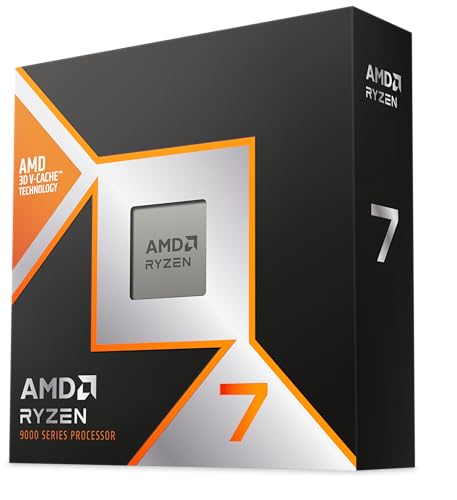
AMD Ryzen 7 9800X3D 8-Core Desktop Processor

AMD Ryzen 9 9900X 12-Core Unlocked Desktop Processor
More Details On Our Top Picks
Sixteen cores on the AM4 socket makes this chip a workstation disguised as a gaming part. For streamers running OBS, a browser, Discord, and a game simultaneously, the thread count means encoding will not compete with your frame rate. The Zen 3 architecture is a generation old now, yet it still handles heavy multitasking with confidence. You may find the DDR4 memory support limiting compared to newer DDR5 platforms, but for anyone already invested in an AM4 motherboard, the upgrade path is frictionless.
Strong Points
- 16 cores and 32 threads handle aggressive multitasking without bottlenecking your stream
- 72 MB of combined cache keeps frequently accessed game data close to the cores
- Unlocked multiplier allows overclocking for users who want to push clock speeds higher
- Drop-in compatibility with existing AM4 boards saves the cost of a full platform swap
- PCIe 4.0 support matches current-gen GPUs without bandwidth saturation
Things To Consider
- No cooler included, so you need to budget separately for a thermal solution capable of handling 16 active cores
- DDR4-3200 memory ceiling trails newer DDR5 systems in bandwidth-sensitive workloads
- Zen 3 architecture lacks the IPC improvements found in the newer Zen 5 parts on this list
Quick Facts
Who It Suits Best
Content creators and streamers who already own an AM4 motherboard and need maximum core density for multitasking without rebuilding their entire system.
A Better Fit Elsewhere
The AMD Ryzen 7 9800X3D is the stronger choice for competitive gamers who prioritize raw frame rates over parallel workload capacity.
This chip stacks an additional 64 MB of L3 cache directly on top of the die using AMD’s 3D V-Cache technology, bringing the total to 96 MB. For games, that massive pool of nearby memory reduces frame drops and smooths out stuttering in dense scenes. Unlike the 5900XT with its 16 cores, this part keeps to 8 cores and 16 threads, which means streaming and gaming simultaneously will eat up more of its capacity. The payoff is gaming performance that frequently matches or beats processors costing significantly more, all on the same AM4 platform you may already own.
Highlights
- 96 MB of stacked L3 cache dramatically reduces stutter in memory-heavy game titles
- 8 fast cores deliver excellent single-threaded performance for competitive play
- AM4 socket compatibility means no motherboard upgrade required for existing builds
- Lower power draw compared to 12 and 16-core alternatives keeps thermals manageable
Trade Offs
- 8 cores can feel tight when running heavy encoding alongside gaming and voice apps
- Max boost of 4.5 GHz is lower than non-X3D alternatives, which may impact lightly threaded tasks
- Owners commonly report that the stacked cache design limits overclocking headroom
Made For
AM4 platform owners who want maximum gaming framerates without paying for a full DDR5 platform rebuild.
Consider Something Else When
The Intel Core Ultra 7 270K Plus suits streamers who also do heavy video rendering and want next-gen PCIe 5.0 bandwidth for future expansion.
Intel takes a different route here, splitting 24 cores into 8 performance cores and 16 efficiency cores. That hybrid design lets the P-cores handle your game while the E-cores absorb background tasks like streaming software and chat windows. You get PCIe 5.0 and DDR5 support, which means this platform is built for the next several years of GPU and storage upgrades. The 125W base power draw is something to plan around, as you will want a robust cooler and a case with strong airflow to keep temperatures in check during long broadcasts.
Upsides
- Hybrid core architecture assigns gaming and background tasks intelligently for smoother streaming
- PCIe 5.0 support provides double the bandwidth of PCIe 4.0 for future GPU generations
- DDR5 memory compatibility unlocks higher data rates for bandwidth-heavy creative work
- 5.5 GHz max clock on performance cores handles single-threaded game engines with ease
Room For Improvement
- Requires an Intel 800 Series chipset motherboard, meaning a full new platform purchase
- 125W base power consumption demands a capable cooling solution and a solid power supply
Spec Overview
Right Fit For
Enthusiast builders starting from scratch who want a forward-looking platform with next-gen connectivity for both gaming and content creation.
Look Elsewhere When
Streamers on an existing AM4 motherboard will find the AMD Ryzen 9 5900XT a far more economical upgrade that skips the need for new RAM and a new board.
Not everyone wants to build a PC from parts. This NIMO desktop arrives fully assembled with an RTX 5060 GPU based on Nvidia’s Blackwell architecture, 16 GB of DDR5 memory, and a 1 TB SSD. For streamers who need a plug-and-play solution, the GPU handles ray tracing and AI-assisted encoding, which offloads streaming work from the CPU entirely. You may find the 16 GB of RAM tight for heavy multitasking, and the 1 TB drive will fill up quickly with captured video, so budget for upgrades.
Bright Spots
- RTX 5060 with GDDR7 VRAM handles modern games at 2K resolution with high frame rates
- Prebuilt format eliminates assembly time and compatibility guesswork for new streamers
- Blackwell architecture supports AI tools like Stable Diffusion for creative content production
Softer Spots
- 16 GB of DDR5 RAM is the bare minimum for simultaneous gaming and streaming
- 1 TB SSD will require management or expansion as your game library and saved streams grow
- Prebuilt systems typically offer less upgrade headroom than custom builds with standard parts
Who Will Love This
Streamers who want to unbox, plug in, and go live the same day without researching individual components.
Reach For A Different Pick When
Experienced builders who want to choose their own CPU will prefer the control and upgradeability of the AMD Ryzen 9 9900X paired with a custom motherboard.
AMD refined the 3D V-Cache formula here by moving the stacked cache below the compute dies, which improves thermal transfer compared to the older 5800X3D design. Built on the Zen 5 architecture, this chip delivers a notable IPC uplift, meaning each clock cycle does more work than the Zen 3 parts on this list. The 96 MB of L3 cache remains the star for gaming, keeping frame times smooth. For streamers, the 8-core layout is the same constraint as the older X3D part, so pairing it with a GPU that handles hardware encoding is the smart move.
Plus Points
- Zen 5 architecture brings a significant per-clock performance jump over previous generations
- Redesigned cache placement improves thermal behavior under sustained gaming loads
- 96 MB of L3 cache minimizes stutter in cache-sensitive titles like MMOs and open-world games
- Better power efficiency than the prior generation keeps total system heat lower
Minor Gripes
- 8 cores limit headroom for streamers who run heavy multitasking alongside their game
- Requires an AM5 motherboard and DDR5 memory, adding cost for those upgrading from AM4
Feature Snapshot
Perfect Match For
Competitive gamers who stream and want the highest framerates possible on a modern AMD platform.
Swap It Out When
Streamers who need more cores for video editing should step up to the AMD Ryzen 9 9900X and its 12-core layout.
This is the middle ground between the 8-core 9800X3D and the 16-core 5900XT. You get 12 cores and 24 threads on the Zen 5 architecture, which provides enough parallel capacity for software encoding alongside gaming without the thermal demands of a 16-core chip. The 5.6 GHz max boost is the highest on this list, giving it strong single-threaded performance for games that prefer frequency. It lacks the stacked V-Cache of the 9800X3D, so raw gaming framerates will be slightly lower in cache-sensitive titles, but the extra cores make up for it in streaming scenarios.
Reasons To Buy
- 12 Zen 5 cores strike a strong balance between gaming performance and streaming headroom
- 5.6 GHz max boost delivers excellent single-threaded speed for competitive titles
- Unlocked for overclocking, allowing tuners to push performance further
Points To Note
- Absence of 3D V-Cache means lower gaming framerates compared to the 9800X3D in memory-heavy titles
- Requires an AM5 motherboard and DDR5 memory, increasing total build cost for AM4 upgraders
- Cooler not included, so factor in the cost of a thermal solution rated for sustained 12-core loads
Best Suited To
Hybrid creators who split their time between competitive gaming and content production like video editing or rendering.
Not Your Match When
Pure gamers who never stream or edit will get more value from the AMD Ryzen 7 9800X3D and its cache-driven framerate advantage.
What Matters Most When Choosing Processors For Streaming And Gaming
Core Count Versus Cache Design
Streaming while gaming splits your CPU between two demanding tasks. Games typically favor high clock speeds and large cache, while encoding favors more cores. Chips with stacked 3D V-Cache excel at gaming because the massive L3 pool keeps frame data close to the processing units. Processors with 12 or 16 cores handle streaming software and background apps more gracefully. The trade-off is that cache-heavy designs often cap at 8 cores, so you must decide which workload matters more to your setup.
Platform And Memory Considerations
Older AM4 platforms use DDR4 memory and PCIe 4.0, which still perform well but limit future upgrade paths. Newer AM5 and Intel 800 Series platforms support DDR5 and PCIe 5.0, providing double the bandwidth for next-generation GPUs and fast storage. Building on a fresh platform costs more upfront since you need a new motherboard and faster RAM. For anyone already on AM4, a drop-in CPU upgrade can deliver most of the gaming benefit at a fraction of the cost.
Cooling And Power Requirements
High core count and high clock speeds generate heat. Processors like the Intel Core Ultra 7 270K Plus draw 125W at base power, requiring a substantial air or liquid cooler. None of the standalone CPUs on this list include a cooler in the box, so you must budget for one separately. A capable thermal solution keeps your chip from thermal throttling during long streaming sessions, which is when sustained loads push temperatures to their peak.
Before You Click Buy
Traps First Timers Fall Into
The most common mistake is buying a high-core processor and pairing it with a weak GPU. Games rely on your graphics card for frame generation, so a 16-core CPU will not save a budget card from bottlenecking. Another pitfall is underestimating cooling needs. High-end chips output serious heat under sustained load, and stock case fans often cannot keep up. Plan your airflow and cooler capacity before finalizing your component list.
The Upgrade Payoff
Paying more for a newer platform buys you longevity. DDR5 and PCIe 5.0 support means your system can accept faster GPUs and storage drives for years without a motherboard swap. The immediate performance jump may be modest over DDR4, but the real value shows up when you upgrade a single component later instead of rebuilding the whole machine. For streamers planning to grow their channel, that headroom is worth the extra upfront cost.
Frequently Asked Questions
Do you need more cores for streaming or gaming?
Gaming benefits most from high clock speeds and large cache, while streaming benefits from additional cores to handle encoding. A 12-core processor is a practical sweet spot for doing both simultaneously without bottlenecking either task.
Is AMD 3D V-Cache worth it for streamers?
V-Cache significantly improves gaming framerates in cache-sensitive titles, which helps competitive streamers maintain smooth visuals. The trade-off is that V-Cache designs typically cap at 8 cores, limiting headroom for heavy multitasking during broadcasts.
Can you stream with an 8-core processor?
An 8-core chip handles gaming and streaming well, especially when paired with a GPU that supports hardware encoding. You may notice tighter capacity when running multiple browser tabs, editing software, and voice apps alongside your game.
Does DDR5 make a noticeable difference for gaming?
DDR5 provides higher memory bandwidth, which helps in CPU-bound scenarios and large open-world titles. The jump from DDR4 is measurable but not dramatic for most games, so it should not be the sole reason to abandon a working AM4 system.
Why do none of these processors include a cooler?
High-performance CPUs generate more heat than standard stock coolers can manage. Manufacturers expect users to choose a thermal solution matched to their specific case, airflow setup, and overclocking plans.
Bottom Line
Finding the right processor comes down to knowing your primary workload. Competitive gamers who stream will love the cache-driven speed of the 9800X3D, while multitasking creators will appreciate the 12-core balance of the 9900X. Those on existing AM4 boards can extend their platform life with the 5900XT or 5800X3D without buying new RAM. Match the chip to your real-world habits, budget for cooling, and your streaming setup will run smooth for years.
